Sipatchin Alexandra, Wahl Siegfried, Rifai Katharina
Institute for Ophthalmic Research, University of Tübingen, 72076 Tübingen, Germany.
Carl Zeiss Vision International GmbH, 73430 Aalen, Germany.
Healthcare (Basel). 2021 Feb 9;9(2):180. doi: 10.3390/healthcare9020180.
A case study is proposed to empirically test and discuss the eye-tracking status-quo hardware capabilities and limitations of an off-the-shelf virtual reality (VR) headset with embedded eye-tracking for at-home ready-to-go online usability in ophthalmology applications.
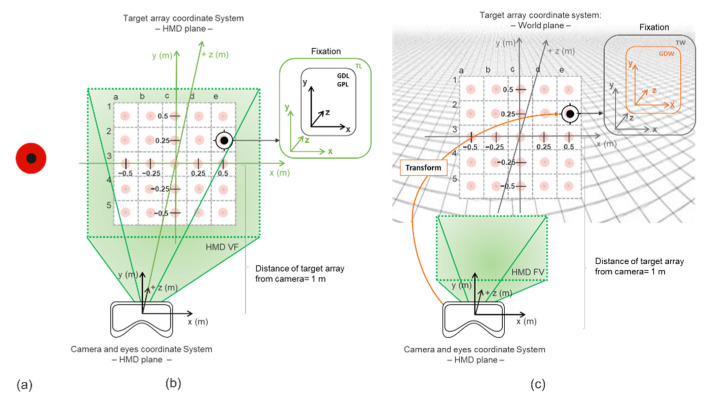
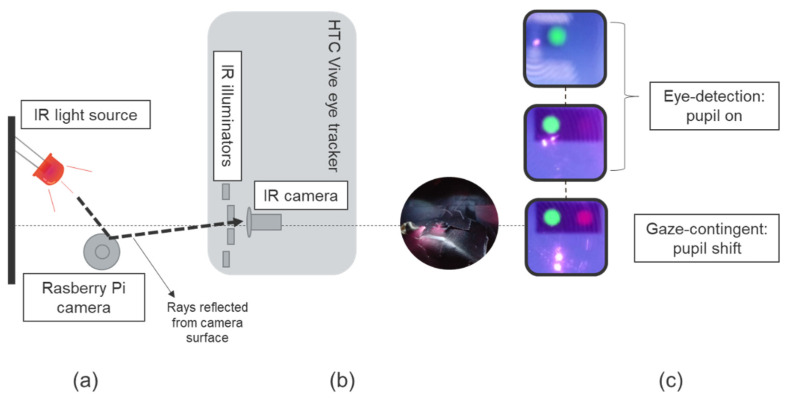
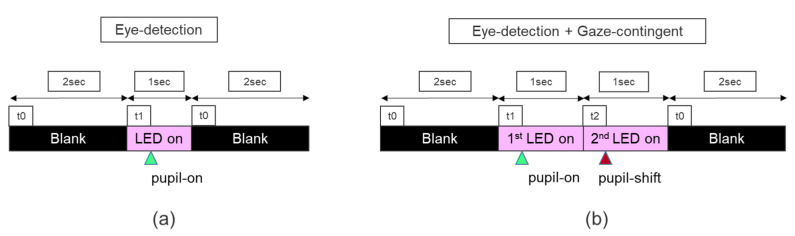
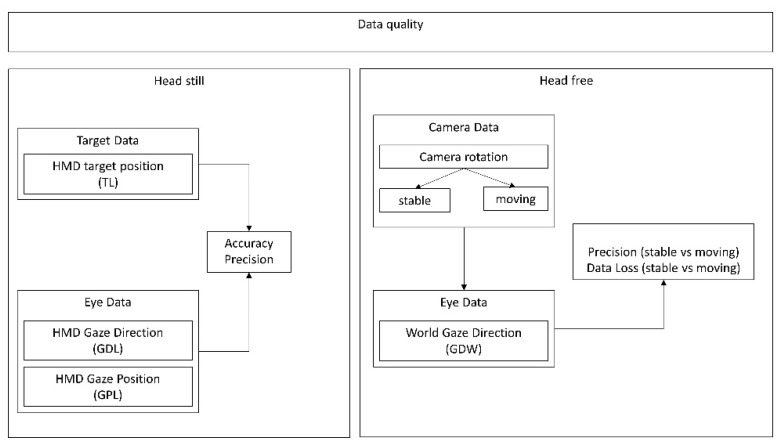
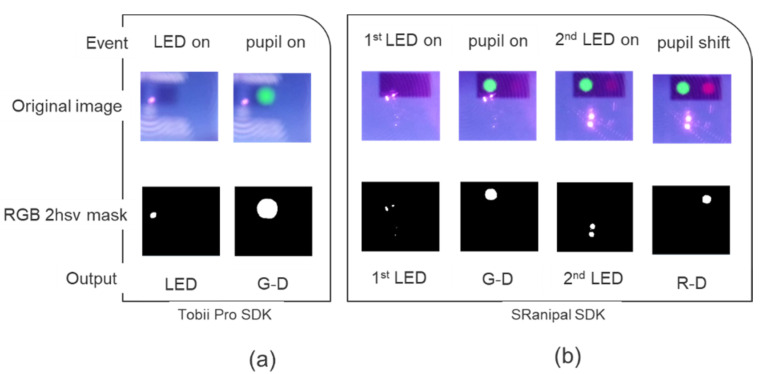
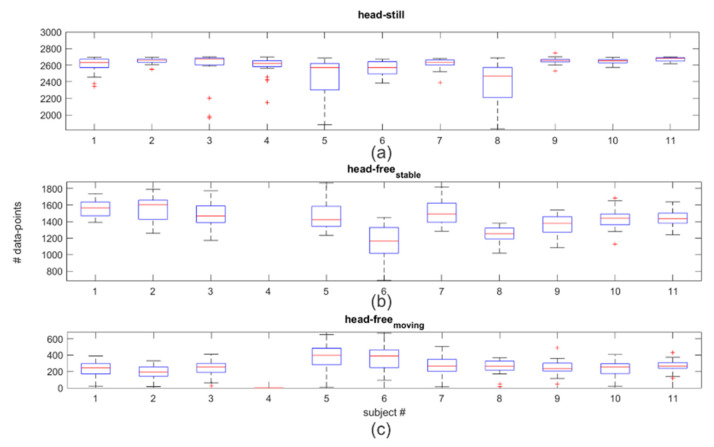
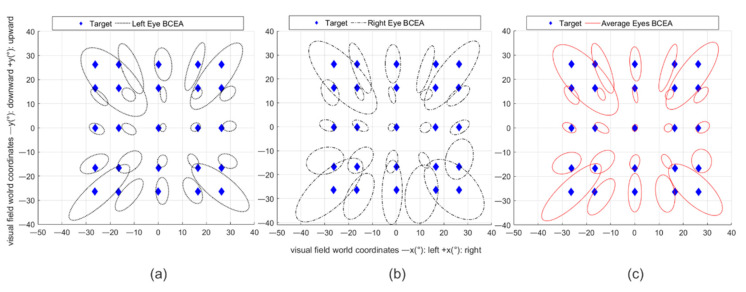
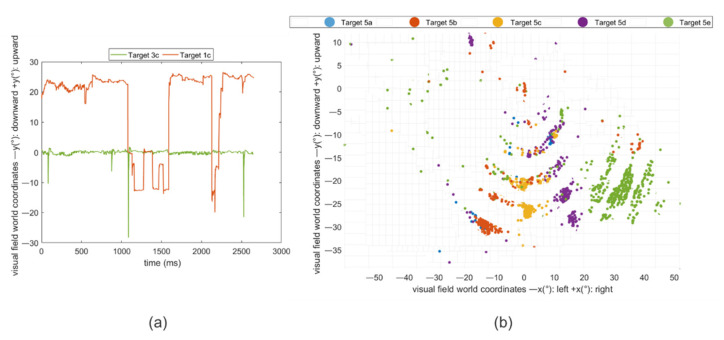
The eye-tracking status-quo data quality of the HTC Vive Pro Eye is investigated with novel testing specific to objective online VR perimetry. Testing was done across a wide visual field of the head-mounted-display's (HMD) screen and in two different moving conditions. A new automatic and low-cost Raspberry Pi system is introduced for VR temporal precision testing for assessing the usability of the HTC Vive Pro Eye as an online assistance tool for visual loss.
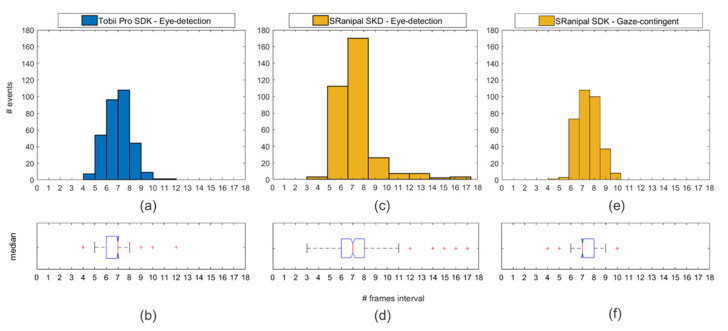
The target position on the screen and head movement evidenced limitations of the eye-tracker capabilities as a perimetry assessment tool. Temporal precision testing showed the system's latency of 58.1 milliseconds (ms), evidencing its good potential usage as a ready-to-go online assistance tool for visual loss.
The test of the eye-tracking data quality provides novel analysis useful for testing upcoming VR headsets with embedded eye-tracking and opens discussion regarding expanding future introduction of these HMDs into patients' homes for low-vision clinical usability.
本文提出一项案例研究,以实证测试和讨论一款现成的、嵌入眼动追踪功能的虚拟现实(VR)头戴式设备在眼科应用中用于居家即用型在线可用性的眼动追踪现状硬件能力和局限性。
通过针对客观在线VR视野计的新颖测试,研究HTC Vive Pro Eye的眼动追踪现状数据质量。测试在头戴式显示器(HMD)屏幕的广阔视野范围内以及两种不同的移动条件下进行。引入了一种新型自动且低成本的树莓派系统用于VR时间精度测试,以评估HTC Vive Pro Eye作为视觉丧失在线辅助工具的可用性。
屏幕上的目标位置和头部运动证明了眼动追踪器作为视野计评估工具的能力存在局限性。时间精度测试显示系统延迟为58.1毫秒(ms),证明其作为视觉丧失即用型在线辅助工具具有良好的潜在用途。
眼动追踪数据质量测试为测试即将推出的嵌入眼动追踪功能的VR头戴式设备提供了有用的新颖分析,并开启了关于未来将这些HMD引入患者家中以实现低视力临床可用性的讨论。