Gachumi George, Poudel Asmita, Wasan Kishor M, El-Aneed Anas
Drug Discovery and Development Research Group, College of Pharmacy and Nutrition, University of Saskatchewan, Saskatoon, SK S7N 5E5, Canada.
iCo Therapeutics Inc., Vancouver, BC V6Z 2T3, Canada.
Pharmaceutics. 2021 Feb 16;13(2):268. doi: 10.3390/pharmaceutics13020268.
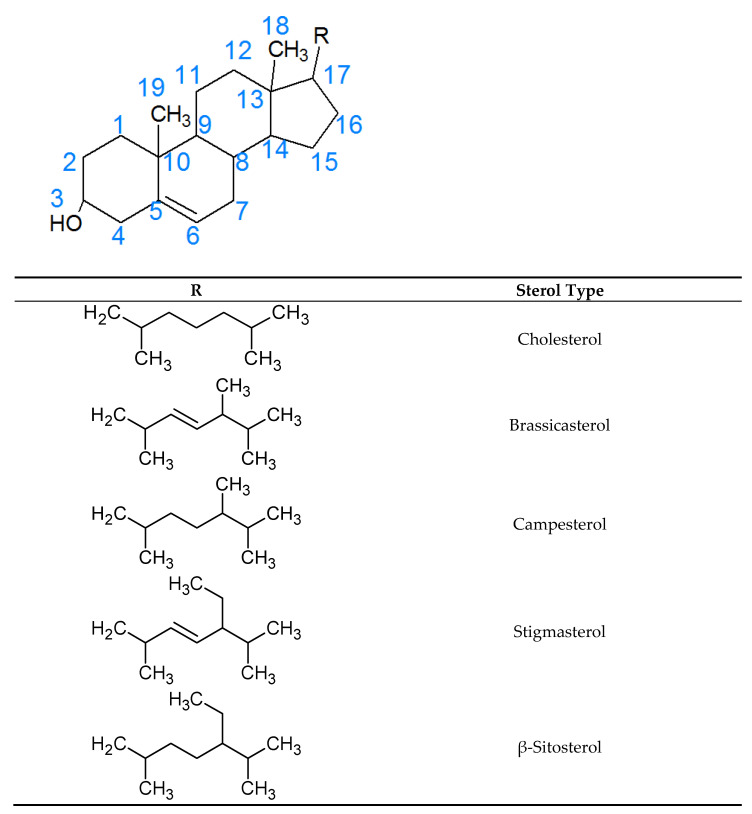
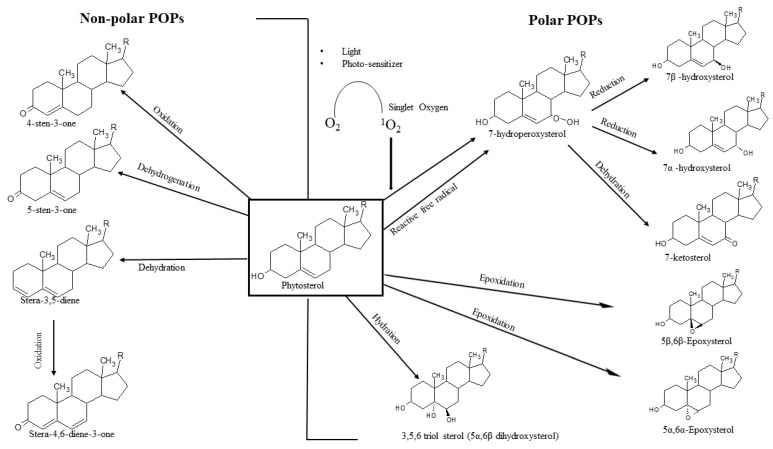
Phytosterols are a class of lipid molecules present in plants that are structurally similar to cholesterol and have been widely utilized as cholesterol-lowering agents. However, the susceptibility of phytosterols to oxidation has led to concerns regarding their safety and tolerability. Phytosterol oxidation products (POPs) present in a variety of enriched and non-enriched foods can show pro-atherogenic and pro-inflammatory properties. Therefore, it is crucial to screen and analyze various phytosterol-containing products for the presence of POPs and ultimately design or modify phytosterols in such a way that prevents the generation of POPs and yet maintains their pharmacological activity. The main approaches for the analysis of POPs include the use of mass spectrometry (MS) linked to a suitable separation technique, notably gas chromatography (GC). However, liquid chromatography (LC)-MS has the potential to simplify the analysis due to the elimination of any derivatization step, usually required for GC-MS. To reduce the transformation of phytosterols to their oxidized counterparts, formulation strategies can theoretically be adopted, including the use of microemulsions, microcapsules, micelles, nanoparticles, and liposomes. In addition, co-formulation with antioxidants, such as tocopherols, may prove useful in substantially preventing POP generation. The main objectives of this review article are to evaluate the various analytical strategies that have been adopted for analyzing them. In addition, formulation approaches that can prevent the generation of these oxidation products are proposed.
植物甾醇是一类存在于植物中的脂质分子,其结构与胆固醇相似,已被广泛用作降胆固醇药物。然而,植物甾醇的氧化敏感性引发了人们对其安全性和耐受性的担忧。存在于各种强化和非强化食品中的植物甾醇氧化产物(POPs)可能具有促动脉粥样硬化和促炎特性。因此,筛选和分析各种含植物甾醇产品中POPs的存在情况,并最终以防止POPs产生且保持其药理活性的方式设计或改性植物甾醇至关重要。分析POPs的主要方法包括使用与合适的分离技术联用的质谱(MS),特别是气相色谱(GC)。然而,液相色谱(LC)-MS有简化分析的潜力,因为它无需通常GC-MS所需的任何衍生化步骤。为减少植物甾醇向其氧化产物的转化,理论上可采用制剂策略,包括使用微乳液、微胶囊、胶束、纳米颗粒和脂质体。此外,与抗氧化剂(如生育酚)共同制剂可能在很大程度上有助于防止POPs的产生。这篇综述文章的主要目的是评估已采用的用于分析它们的各种分析策略。此外,还提出了可防止这些氧化产物产生的制剂方法。