Catalytic Longevity Foundation, San Diego, CA 92109, USA.
Saint Luke's Mid America Heart Institute, Kansas City, MO 64111, USA.
Int J Mol Sci. 2021 Feb 21;22(4):2140. doi: 10.3390/ijms22042140.
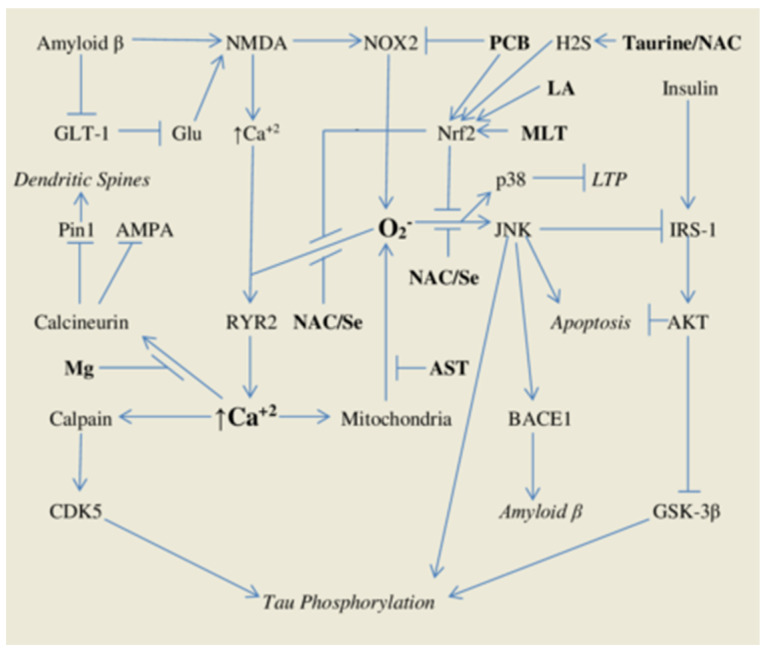
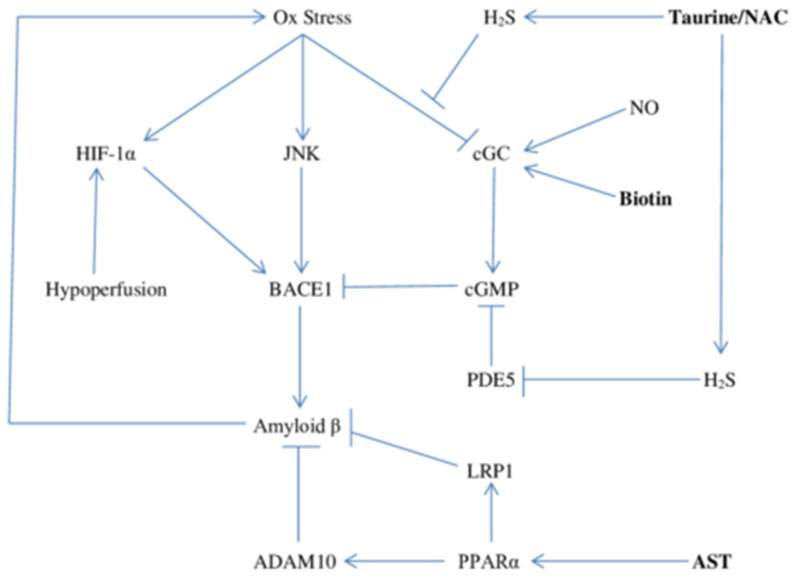
Oxidative stress and increased cytoplasmic calcium are key mediators of the detrimental effects on neuronal function and survival in Alzheimer's disease (AD). Pathways whereby these perturbations arise, and then prevent dendritic spine formation, promote tau hyperphosphorylation, further amplify amyloid β generation, and induce neuronal apoptosis, are described. A comprehensive program of nutraceutical supplementation, comprised of the NADPH oxidase inhibitor phycocyanobilin, phase two inducers, the mitochondrial antioxidant astaxanthin, and the glutathione precursor N-acetylcysteine, may have important potential for antagonizing the toxic effects of amyloid β on neurons and thereby aiding prevention of AD. Moreover, nutraceutical antioxidant strategies may oppose the adverse impact of amyloid β oligomers on astrocyte clearance of glutamate, and on the ability of brain capillaries to export amyloid β monomers/oligomers from the brain. Antioxidants, docosahexaenoic acid (DHA), and vitamin D, have potential for suppressing microglial production of interleukin-1β, which potentiates the neurotoxicity of amyloid β. Epidemiology suggests that a health-promoting lifestyle, incorporating a prudent diet, regular vigorous exercise, and other feasible measures, can cut the high risk for AD among the elderly by up to 60%. Conceivably, complementing such lifestyle measures with long-term adherence to the sort of nutraceutical regimen outlined here may drive down risk for AD even further.
氧化应激和细胞质钙离子增加是阿尔茨海默病(AD)中神经元功能和存活受损的关键介质。描述了这些扰动出现的途径,然后阻止树突棘形成,促进 tau 过度磷酸化,进一步放大淀粉样 β 生成,并诱导神经元凋亡。营养补充的综合计划,包括 NADPH 氧化酶抑制剂藻蓝蛋白、二期诱导剂、线粒体抗氧化剂虾青素和谷胱甘肽前体 N-乙酰半胱氨酸,可能具有重要的潜力,可以对抗淀粉样 β 对神经元的毒性作用,从而有助于预防 AD。此外,营养抗氧化策略可能会抵制淀粉样 β 寡聚体对星形胶质细胞清除谷氨酸的不利影响,以及大脑毛细血管从大脑中输出淀粉样 β 单体/寡聚体的能力。抗氧化剂、二十二碳六烯酸(DHA)和维生素 D 具有抑制小胶质细胞产生白细胞介素-1β 的潜力,白细胞介素-1β 增强了淀粉样 β 的神经毒性。流行病学表明,通过健康的生活方式,包括谨慎的饮食、定期剧烈运动和其他可行的措施,可以将老年人患 AD 的高风险降低 60%。可以想象,通过长期坚持这里概述的营养方案,补充这些生活方式措施可能会进一步降低 AD 的风险。