• 文献检索
  • 文档翻译
  • 深度研究
  • 学术资讯
  • Suppr Zotero 插件Zotero 插件
  • 邀请有礼
  • 套餐&价格
  • 历史记录
应用&插件
Suppr Zotero 插件Zotero 插件浏览器插件Mac 客户端Windows 客户端微信小程序
定价
高级版会员购买积分包购买API积分包
服务
文献检索文档翻译深度研究API 文档MCP 服务
关于我们
关于 Suppr公司介绍联系我们用户协议隐私条款
关注我们

Suppr 超能文献

核心技术专利:CN118964589B侵权必究
粤ICP备2023148730 号-1Suppr @ 2026

文献检索

告别复杂PubMed语法,用中文像聊天一样搜索,搜遍4000万医学文献。AI智能推荐,让科研检索更轻松。

立即免费搜索

文件翻译

保留排版,准确专业,支持PDF/Word/PPT等文件格式,支持 12+语言互译。

免费翻译文档

深度研究

AI帮你快速写综述,25分钟生成高质量综述,智能提取关键信息,辅助科研写作。

立即免费体验

微生物电化学系统:原理、构建与生物传感应用。

Microbial Electrochemical Systems: Principles, Construction and Biosensing Applications.

机构信息

Nanoscience Program, University of Science and Technology (UST), Zewail City of Science and Technology, 6th October City, Giza 12578, Egypt.

National Research Centre (NRC), Applied Organic Chemistry Department, El Bohouth st., Dokki, Giza 12622, Egypt.

出版信息

Sensors (Basel). 2021 Feb 11;21(4):1279. doi: 10.3390/s21041279.

DOI:10.3390/s21041279
PMID:33670122
原文链接:https://pmc.ncbi.nlm.nih.gov/articles/PMC7916843/
Abstract

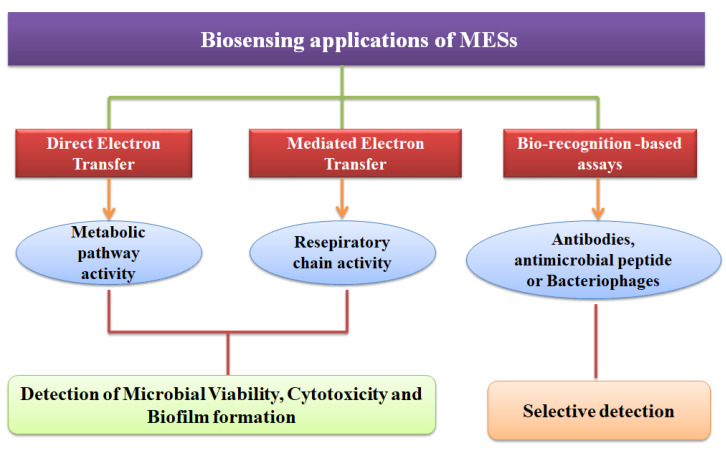
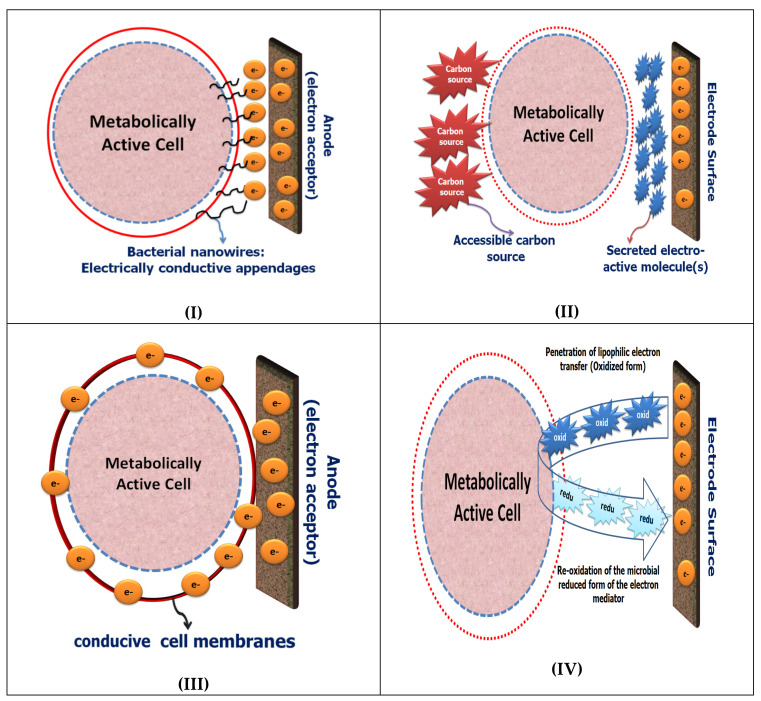
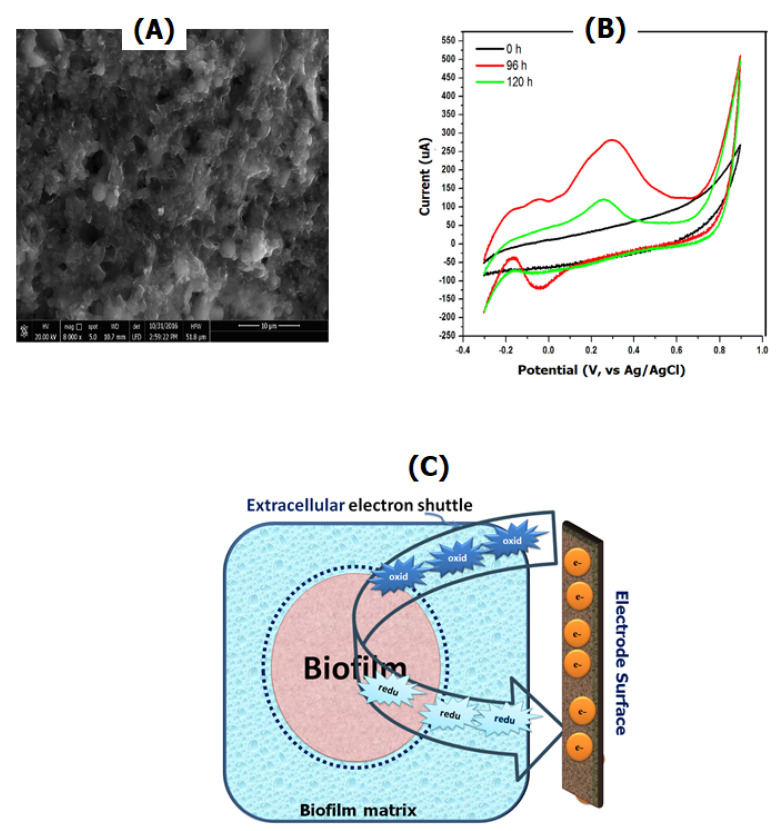
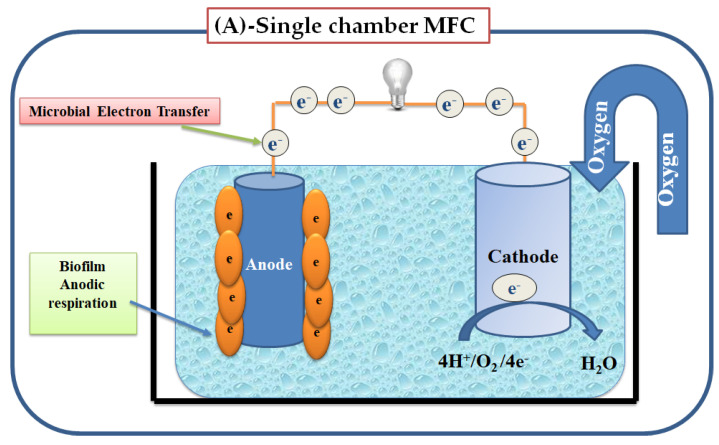
Microbial electrochemical systems are a fast emerging technology that use microorganisms to harvest the chemical energy from bioorganic materials to produce electrical power. Due to their flexibility and the wide variety of materials that can be used as a source, these devices show promise for applications in many fields including energy, environment and sensing. Microbial electrochemical systems rely on the integration of microbial cells, bioelectrochemistry, material science and electrochemical technologies to achieve effective conversion of the chemical energy stored in organic materials into electrical power. Therefore, the interaction between microorganisms and electrodes and their operation at physiological important potentials are critical for their development. This article provides an overview of the principles and applications of microbial electrochemical systems, their development status and potential for implementation in the biosensing field. It also provides a discussion of the recent developments in the selection of electrode materials to improve electron transfer using nanomaterials along with challenges for achieving practical implementation, and examples of applications in the biosensing field.

摘要

微生物电化学系统是一种快速发展的技术,它利用微生物从生物有机材料中获取化学能,以产生电能。由于其灵活性和可以用作源的多种材料,这些设备在能源、环境和传感等许多领域的应用中显示出了前景。微生物电化学系统依赖于微生物细胞、生物电化学、材料科学和电化学技术的集成,以实现对有机材料中储存的化学能向电能的有效转化。因此,微生物与电极之间的相互作用及其在生理重要电位下的运行对于其发展至关重要。本文概述了微生物电化学系统的原理和应用、其发展现状以及在生物传感领域的应用潜力。本文还讨论了为了利用纳米材料提高电子转移而选择电极材料的最新进展,以及实现实际应用所面临的挑战,以及在生物传感领域的应用实例。
https://cdn.ncbi.nlm.nih.gov/pmc/blobs/3ff9/7916843/6a60dfa0b8b3/sensors-21-01279-g005.jpg
https://cdn.ncbi.nlm.nih.gov/pmc/blobs/3ff9/7916843/f10c6c2170e9/sensors-21-01279-g001.jpg
https://cdn.ncbi.nlm.nih.gov/pmc/blobs/3ff9/7916843/d9cc0f015774/sensors-21-01279-g002.jpg
https://cdn.ncbi.nlm.nih.gov/pmc/blobs/3ff9/7916843/67753a7253ca/sensors-21-01279-g003.jpg
https://cdn.ncbi.nlm.nih.gov/pmc/blobs/3ff9/7916843/22e9fb868d16/sensors-21-01279-g004a.jpg
https://cdn.ncbi.nlm.nih.gov/pmc/blobs/3ff9/7916843/6a60dfa0b8b3/sensors-21-01279-g005.jpg
https://cdn.ncbi.nlm.nih.gov/pmc/blobs/3ff9/7916843/f10c6c2170e9/sensors-21-01279-g001.jpg
https://cdn.ncbi.nlm.nih.gov/pmc/blobs/3ff9/7916843/d9cc0f015774/sensors-21-01279-g002.jpg
https://cdn.ncbi.nlm.nih.gov/pmc/blobs/3ff9/7916843/67753a7253ca/sensors-21-01279-g003.jpg
https://cdn.ncbi.nlm.nih.gov/pmc/blobs/3ff9/7916843/22e9fb868d16/sensors-21-01279-g004a.jpg
https://cdn.ncbi.nlm.nih.gov/pmc/blobs/3ff9/7916843/6a60dfa0b8b3/sensors-21-01279-g005.jpg

相似文献

1
Microbial Electrochemical Systems: Principles, Construction and Biosensing Applications.微生物电化学系统:原理、构建与生物传感应用。
Sensors (Basel). 2021 Feb 11;21(4):1279. doi: 10.3390/s21041279.
2
On-going applications of Shewanella species in microbial electrochemical system for bioenergy, bioremediation and biosensing.希瓦氏菌属在微生物电化学系统中用于生物能源、生物修复和生物传感的应用进展。
World J Microbiol Biotechnol. 2018 Dec 19;35(1):9. doi: 10.1007/s11274-018-2576-7.
3
Nanomaterials Facilitating Microbial Extracellular Electron Transfer at Interfaces.纳米材料促进界面微生物胞外电子传递。
Adv Mater. 2021 Feb;33(6):e2004051. doi: 10.1002/adma.202004051. Epub 2020 Dec 16.
4
Recent advances in the development and utilization of modern anode materials for high performance microbial fuel cells.现代高性能微生物燃料电池阳极材料的开发利用研究进展。
Biosens Bioelectron. 2017 Apr 15;90:558-576. doi: 10.1016/j.bios.2016.10.014. Epub 2016 Oct 5.
5
Living electrochemical biosensing: Engineered electroactive bacteria for biosensor development and the emerging trends.活体电化学生物传感:用于生物传感器开发的工程电活性细菌和新兴趋势。
Biosens Bioelectron. 2023 Oct 1;237:115480. doi: 10.1016/j.bios.2023.115480. Epub 2023 Jun 15.
6
Progress and Insights in the Application of MXenes as New 2D Nano-Materials Suitable for Biosensors and Biofuel Cell Design.二维 MXenes 纳米材料在生物传感器和生物燃料电池设计中的应用进展与展望。
Int J Mol Sci. 2020 Dec 3;21(23):9224. doi: 10.3390/ijms21239224.
7
Functional Nanomaterial-Modified Anodes in Microbial Fuel Cells: Advances and Perspectives.功能纳米材料修饰的微生物燃料电池阳极:进展与展望。
Chemistry. 2023 Jan 2;29(1):e202202002. doi: 10.1002/chem.202202002. Epub 2022 Oct 28.
8
Microbial fuel cells: novel microbial physiologies and engineering approaches.微生物燃料电池:新型微生物生理学与工程方法
Curr Opin Biotechnol. 2006 Jun;17(3):327-32. doi: 10.1016/j.copbio.2006.04.006. Epub 2006 May 5.
9
Recent Progress of Nanostructure Modified Anodes in Microbial Fuel Cells.微生物燃料电池中纳米结构修饰阳极的研究进展
J Nanosci Nanotechnol. 2015 Sep;15(9):6891-9. doi: 10.1166/jnn.2015.10723.
10
Microbial electrochemical technologies: Electronic circuitry and characterization tools.微生物电化学技术:电子线路和特性化工具。
Biosens Bioelectron. 2020 Feb 15;150:111884. doi: 10.1016/j.bios.2019.111884. Epub 2019 Nov 16.

引用本文的文献

1
Accelerating the Understanding of Biosensors Through the Lens of Cells: State of the Field, Emerging Directions, Advances, and Challenges.从细胞视角加速对生物传感器的理解:该领域现状、新兴方向、进展与挑战
Appl Biochem Biotechnol. 2025 Apr 5. doi: 10.1007/s12010-025-05209-0.
2
Harnessing the power of microbial fuel cells as pioneering green technology: advancing sustainable energy and wastewater treatment through innovative nanotechnology.利用微生物燃料电池的力量作为开创性的绿色技术:通过创新纳米技术推进可持续能源和废水处理。
Bioprocess Biosyst Eng. 2025 Mar;48(3):343-366. doi: 10.1007/s00449-024-03115-z. Epub 2025 Jan 4.
3

本文引用的文献

1
Introduction into nanotechnology and microbiology.纳米技术与微生物学导论。
Methods Microbiol. 2019;46:1-18. doi: 10.1016/bs.mim.2019.04.003. Epub 2019 May 10.
2
Formation of electroactive biofilms derived by nanostructured anodes surfaces.基于纳米结构阳极表面形成的电活性生物膜。
Bioprocess Biosyst Eng. 2021 Apr;44(4):759-768. doi: 10.1007/s00449-020-02485-4. Epub 2021 Jan 9.
3
Biological Insights of Fluoroaryl-2,2'-Bichalcophene Compounds on Multi-Drug Resistant .氟芳基-2,2'-联二萘酚化合物对多药耐药性的生物学见解。
Bioelectrochemical biosensors for water quality assessment and wastewater monitoring.
用于水质评估和废水监测的生物电化学生物传感器。
Open Life Sci. 2024 Aug 23;19(1):20220933. doi: 10.1515/biol-2022-0933. eCollection 2024.
4
Anoxygenic photosynthesis with emphasis on green sulfur bacteria and a perspective for hydrogen sulfide detoxification of anoxic environments.以绿色硫细菌为重点的无氧光合作用以及缺氧环境中硫化氢解毒的前景。
Front Microbiol. 2024 Jul 11;15:1417714. doi: 10.3389/fmicb.2024.1417714. eCollection 2024.
5
Surface grafting of polymeric catheters and stents to prevent biofilm formation of pathogenic bacteria.聚合物导管和支架的表面接枝以防止病原菌生物膜形成。
J Genet Eng Biotechnol. 2023 Sep 14;21(1):92. doi: 10.1186/s43141-023-00545-2.
6
Molecular Biomarkers and Recent Liquid Biopsy Testing Progress: A Review of the Application of Biosensors for the Diagnosis of Gliomas.分子生物标志物与近期液体活检检测进展:生物传感器在脑胶质瘤诊断中应用的综述
Molecules. 2023 Jul 26;28(15):5660. doi: 10.3390/molecules28155660.
7
Bacteriophage-based nano-biosensors for the fast impedimetric determination of pathogens in food samples.基于噬菌体的纳米生物传感器用于快速阻抗法定量检测食品样品中的病原体。
Sci Rep. 2023 Mar 1;13(1):3498. doi: 10.1038/s41598-023-30520-3.
8
Recent Implementations of Hydrogel-Based Microbial Electrochemical Technologies (METs) in Sensing Applications.基于水凝胶的微生物电化学技术(METs)在传感应用中的最新进展。
Sensors (Basel). 2023 Jan 6;23(2):641. doi: 10.3390/s23020641.
9
Biosensors: Electrochemical Devices-General Concepts and Performance.生物传感器:电化学器件——一般概念与性能。
Biosensors (Basel). 2022 Dec 28;13(1):44. doi: 10.3390/bios13010044.
10
Treatment of High-Polyphenol-Content Waters Using Biotechnological Approaches: The Latest Update.采用生物技术处理高多酚含量水:最新进展。
Molecules. 2022 Dec 30;28(1):314. doi: 10.3390/molecules28010314.
Molecules. 2020 Dec 30;26(1):139. doi: 10.3390/molecules26010139.
4
A nickel oxide-decorated grown 3-D graphitic forest engrained carbon foam electrode for microbial fuel cells.一种负载氧化镍的生长三维石墨化森林状碳纤维泡沫电极用于微生物燃料电池。
Chem Commun (Camb). 2021 Jan 28;57(7):879-882. doi: 10.1039/d0cc07303b.
5
Microbial extracellular electron transfer and strategies for engineering electroactive microorganisms.微生物细胞外电子传递与工程电活性微生物策略。
Biotechnol Adv. 2021 Dec;53:107682. doi: 10.1016/j.biotechadv.2020.107682. Epub 2020 Dec 14.
6
Microfluidic Microbial Bioelectrochemical Systems: An Integrated Investigation Platform for a More Fundamental Understanding of Electroactive Bacterial Biofilms.微流控微生物生物电化学系统:一个用于更深入理解电活性细菌生物膜的综合研究平台。
Microorganisms. 2020 Nov 23;8(11):1841. doi: 10.3390/microorganisms8111841.
7
An electroactive biofilm-based biosensor for water safety: Pollutants detection and early-warning.一种基于电活性生物膜的水安全生物传感器:污染物检测与早期预警
Biosens Bioelectron. 2021 Feb 1;173:112822. doi: 10.1016/j.bios.2020.112822. Epub 2020 Nov 17.
8
Advances in nanomaterial-based electrochemical biosensors for the detection of microbial toxins, pathogenic bacteria in food matrices.用于检测食品基质中微生物毒素和致病细菌的基于纳米材料的电化学生物传感器的进展。
J Hazard Mater. 2021 Jan 5;401:123379. doi: 10.1016/j.jhazmat.2020.123379. Epub 2020 Jul 7.
9
Effects of biofilm transfer and electron mediators transfer on sp. 203 electricity generation performance in MFCs.生物膜转移和电子介体转移对微生物燃料电池中sp. 203发电性能的影响。
Biotechnol Biofuels. 2020 Sep 21;13:162. doi: 10.1186/s13068-020-01800-1. eCollection 2020.
10
Electroactive biofilms on surface functionalized anodes: The anode respiring behavior of a novel electroactive bacterium, Desulfuromonas acetexigens.表面功能化阳极上的电活性生物膜:一种新型电活性细菌脱硫醋酸单胞菌的阳极呼吸行为。
Water Res. 2020 Oct 15;185:116284. doi: 10.1016/j.watres.2020.116284. Epub 2020 Aug 7.