Zangrossi Manuela, Chakravarty Probir, Romani Patrizia, Dupont Sirio, Hooper Steven, Sahai Erik, Montagner Marco
Department of Molecular Medicine, University of Padua, Viale G. Colombo, 3, 35126 Padua, Italy.
Bioinformatics Platform, Francis Crick Institute, 1 Midland Road, London NW1 1AT, UK.
Cancers (Basel). 2021 Feb 28;13(5):1007. doi: 10.3390/cancers13051007.
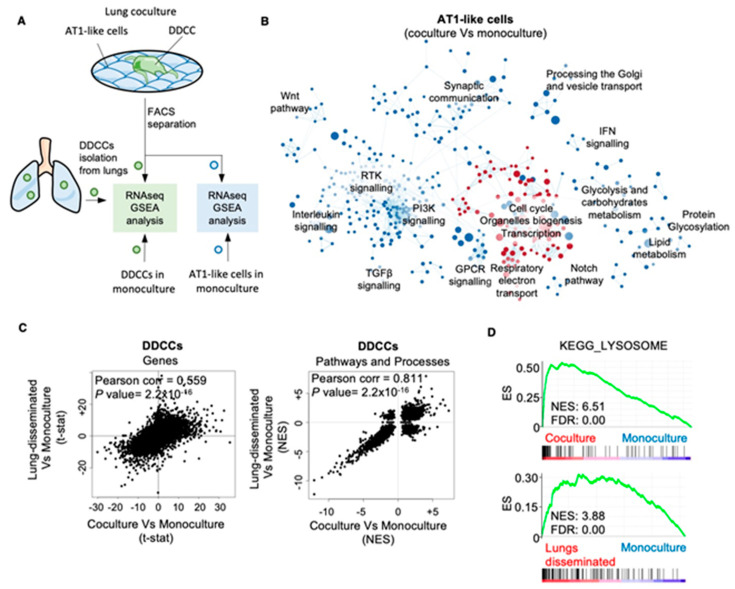
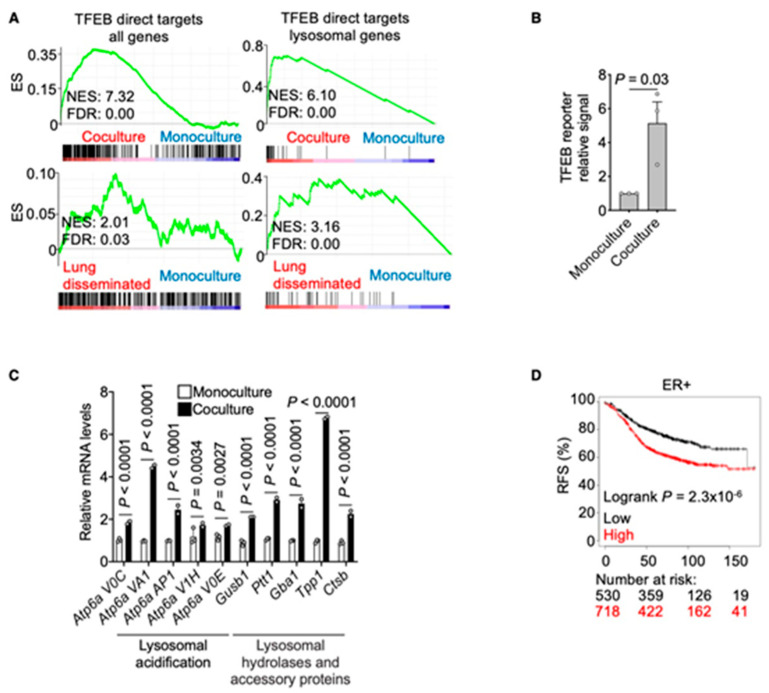
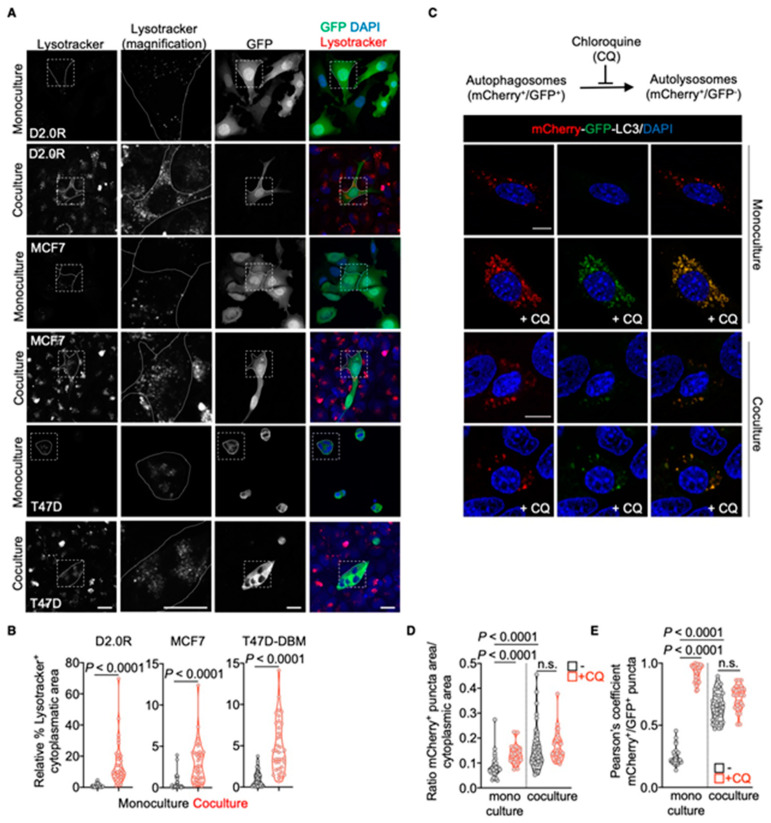
(1) Background: metastatic relapse following a prolonged period of disease-free survival is a common cause of mortality for many cancer patients. Disseminated dormant cancer cells (DDCCs) lie below the radar before waking up years, or even decades, after the removal of the primary tumor. This implies that they are able to survive in a latent state in a foreign environment for an extended period of time supported by intrinsic and extrinsic factors still to be elucidated. (2) Methods: we employed a coculture of DDCCs with lung epithelial cells together with RNA sequencing analysis to understand the overlap in gene transcription between in vivo and cocultured DDCCs. (3) Results: we found a significant overlap between the processes activated in DDCCs from lungs and in the coculture, as well as in alveolar type I cells in vivo and in coculture. We identified the transcription factor EB (TFEB)-lysosomal axis as a relevant process activated in DDCCs upon dissemination to the lung and confirmed the results in our lung coculture. Interestingly, breast cancer patients with a higher expression of TFEB targets show increased likelihood of developing relapses. (4) Conclusions: we propose that lysosomal accumulation following TFEB activation is an important feature of breast cancer DDCCs that might be exploited for future therapeutic interventions.
(1)背景:在经历较长时间的无病生存期后发生转移复发是许多癌症患者死亡的常见原因。播散性休眠癌细胞(DDCCs)在原发性肿瘤切除数年甚至数十年后才“苏醒”,在此之前一直未被发现。这意味着它们能够在外源环境中以潜伏状态长期存活,其内在和外在支持因素仍有待阐明。(2)方法:我们采用DDCCs与肺上皮细胞共培养,并结合RNA测序分析,以了解体内和共培养的DDCCs之间基因转录的重叠情况。(3)结果:我们发现肺部DDCCs中激活的过程与共培养中的过程之间,以及体内和共培养中的I型肺泡细胞之间存在显著重叠。我们确定转录因子EB(TFEB)-溶酶体轴是DDCCs播散至肺部时激活的一个相关过程,并在我们的肺共培养中证实了这一结果。有趣的是,TFEB靶点表达较高的乳腺癌患者复发的可能性增加。(4)结论:我们提出TFEB激活后溶酶体积累是乳腺癌DDCCs的一个重要特征,可能为未来的治疗干预提供靶点。