Sherlock Laura G, Balasubramaniyan Durganili, Zheng Lijun, Zarate Miguel, Sizemore Thomas, Delaney Cassidy, Tipple Trent E, Wright Clyde J, Nozik-Grayck Eva
Perinatal Research Center, Department of Pediatrics, University of Colorado Anschutz Medical Campus, Aurora, CO 80045, USA.
Cardiovascular Pulmonary Research Laboratories, Departments of Pediatrics and Medicine, University of Colorado Anschutz Medical Campus, Aurora, CO 80045, USA.
Antioxidants (Basel). 2021 Feb 14;10(2):288. doi: 10.3390/antiox10020288.
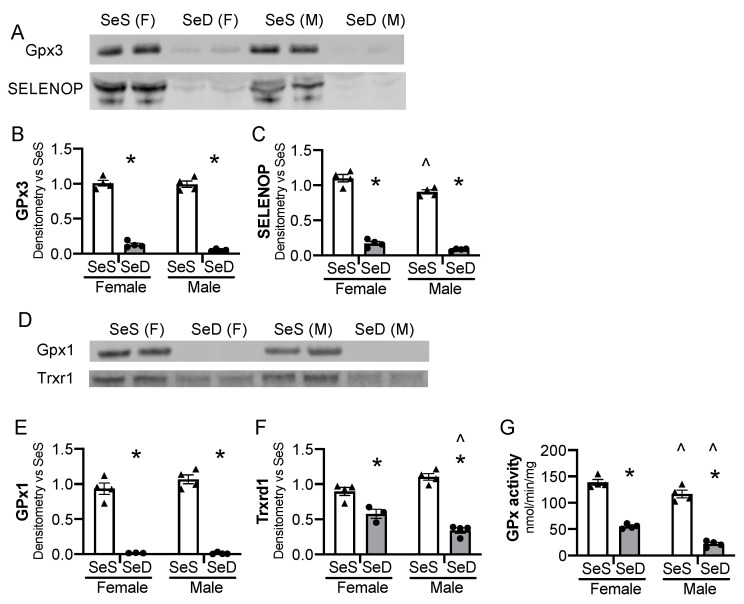
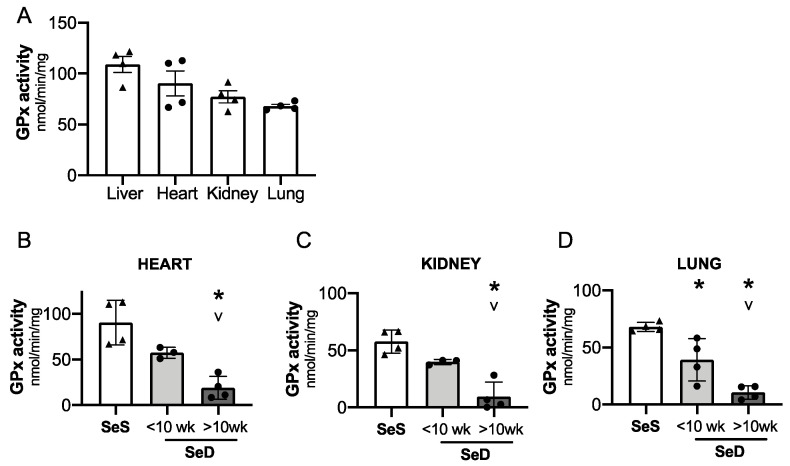
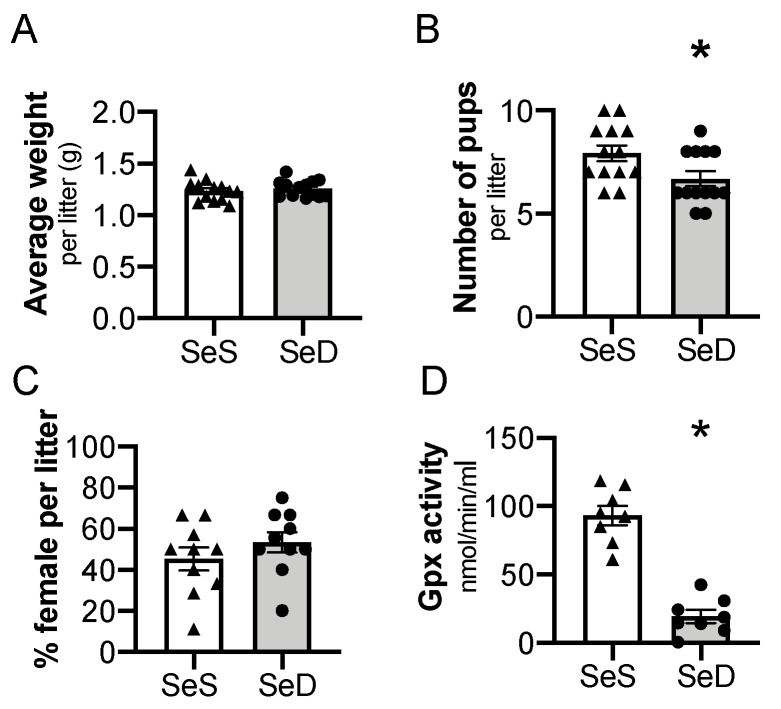
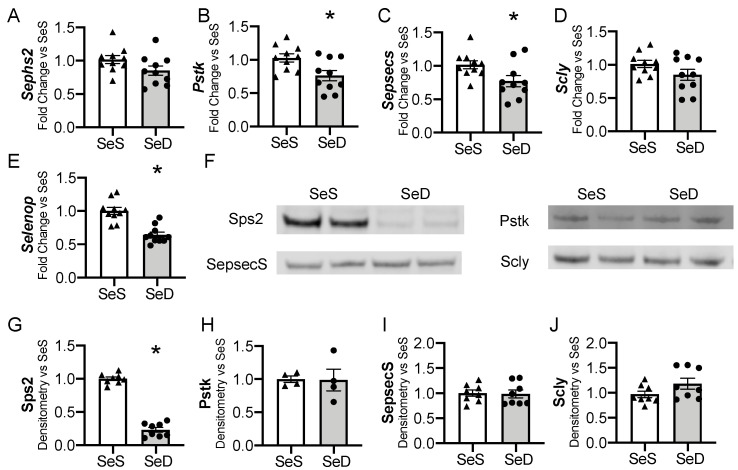
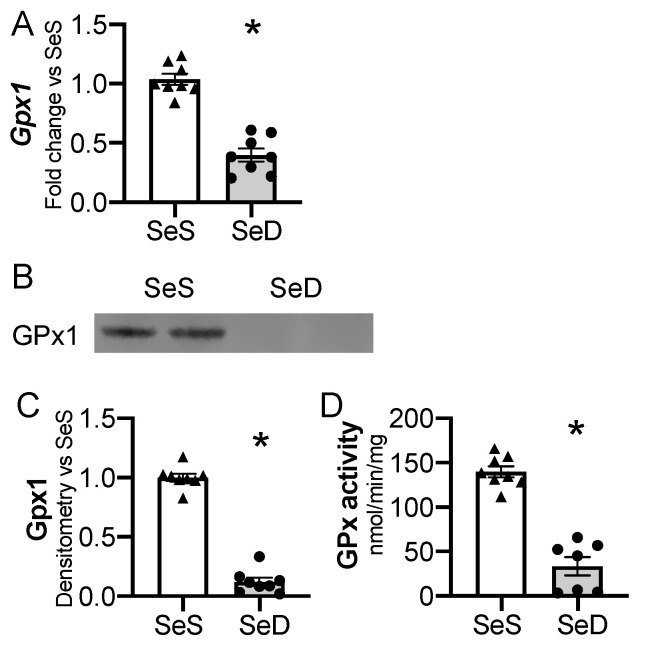
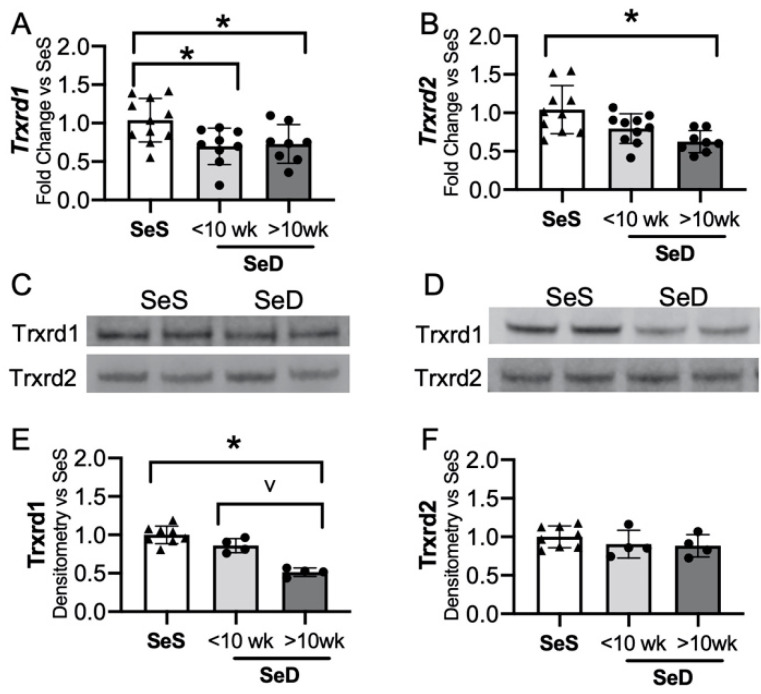
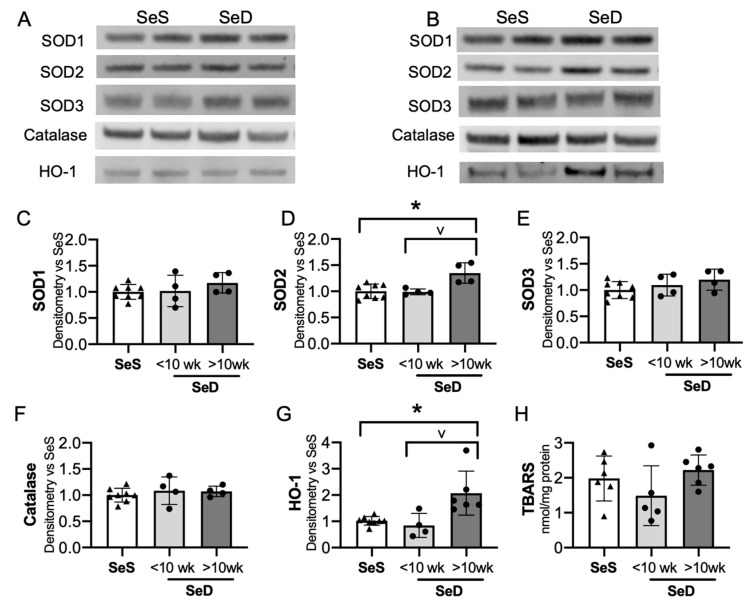
Maternal selenium (Se) deficiency is associated with decreased neonatal Se levels, which increases the risk for neonatal morbidities. There is a hierarchy to selenoprotein expression after Se deficiency in adult rodents, depending on the particular protein and organ evaluated. However, it is unknown how limited Se supply during pregnancy impacts neonatal selenoprotein expression. We used an Se-deficient diet to induce perinatal Se deficiency (SeD), initiated 2-4 weeks before onset of breeding and continuing through gestation. Neonatal plasma, liver, heart, kidney, and lung were collected on the day of birth and assessed for selenoproteins, factors required for Se processing, and non-Se containing antioxidant enzymes (AOE). Maternal SeD reduced neonatal circulating and hepatic glutathione peroxidase (GPx) activity, as well as hepatic expression of Gpx1 and selenophosphate synthetase 2 (Sps2). In contrast, the impact of maternal SeD on hepatic thioredoxin reductase 1, hepatic non-Se containing AOEs, as well as cardiac, renal, and pulmonary GPx activity, varied based on duration of maternal exposure to SeD diet. We conclude that the neonatal liver and circulation demonstrate earlier depletion in selenoenzyme activity after maternal SeD. Our data indicate that prolonged maternal SeD may escalate risk to the neonate by progressively diminishing Se-containing AOE across multiple organs.
母体硒(Se)缺乏与新生儿硒水平降低有关,这会增加新生儿发病的风险。成年啮齿动物缺硒后,硒蛋白的表达存在层级差异,这取决于所评估的特定蛋白质和器官。然而,孕期硒供应受限如何影响新生儿硒蛋白的表达尚不清楚。我们采用缺硒饮食诱导围产期硒缺乏(SeD),在繁殖开始前2 - 4周开始并持续至妊娠期。在出生当天收集新生儿的血浆、肝脏、心脏、肾脏和肺,并评估其中的硒蛋白、硒加工所需的因子以及不含硒的抗氧化酶(AOE)。母体SeD降低了新生儿循环和肝脏中的谷胱甘肽过氧化物酶(GPx)活性,以及肝脏中Gpx1和硒磷酸合成酶2(Sps2)的表达。相比之下,母体SeD对肝脏硫氧还蛋白还原酶1、肝脏中不含硒的AOE以及心脏、肾脏和肺中的GPx活性的影响,因母体接触缺硒饮食的持续时间而异。我们得出结论,母体SeD后,新生儿肝脏和循环中的硒酶活性更早出现耗竭。我们的数据表明,母体长期SeD可能会通过逐渐减少多个器官中含硒AOE的含量,增加新生儿的风险。