Gajda Ewa, Grzanka Małgorzata, Godlewska Marlena, Gawel Damian
Department of Biochemistry and Molecular Biology, Centre of Postgraduate Medical Education, Marymoncka 99/103, 01-813 Warsaw, Poland.
Department of Immunohematology, Centre of Postgraduate Medical Education, Marymoncka 99/103, 01-813 Warsaw, Poland.
Pharmaceuticals (Basel). 2021 Feb 12;14(2):149. doi: 10.3390/ph14020149.
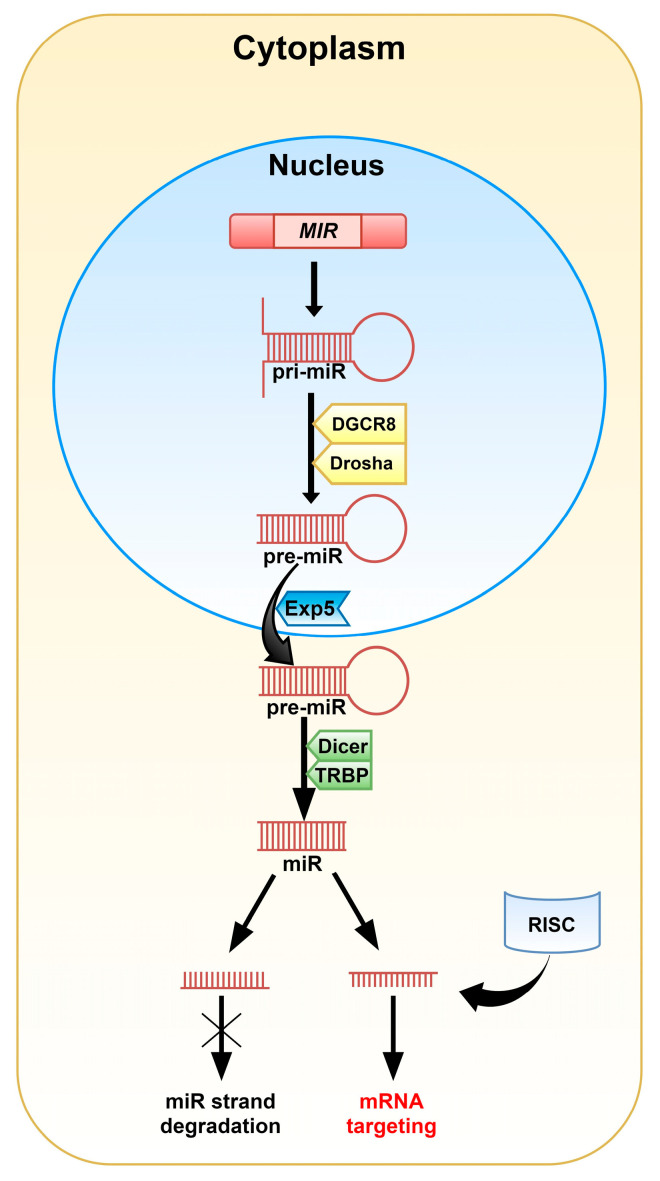
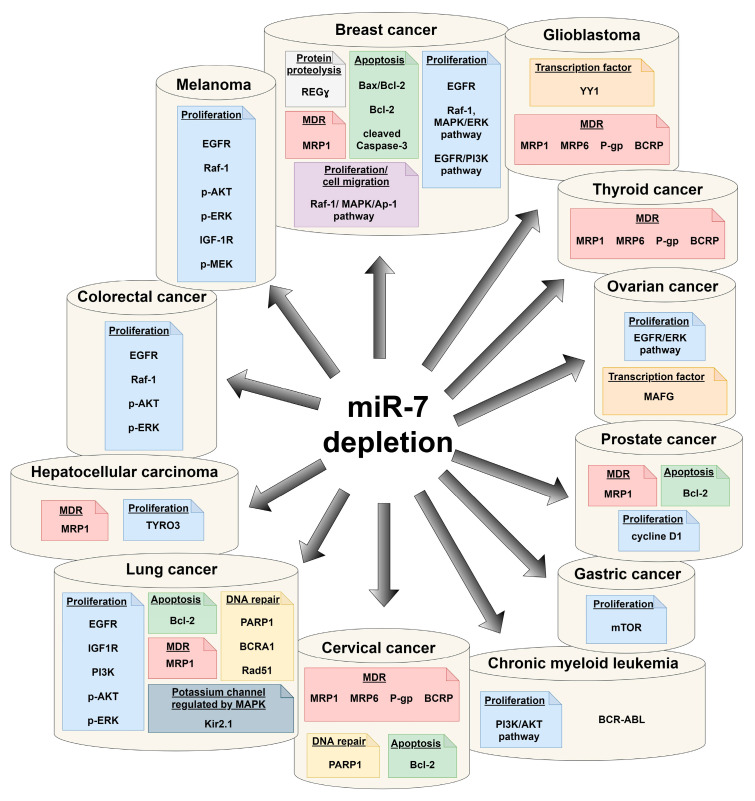
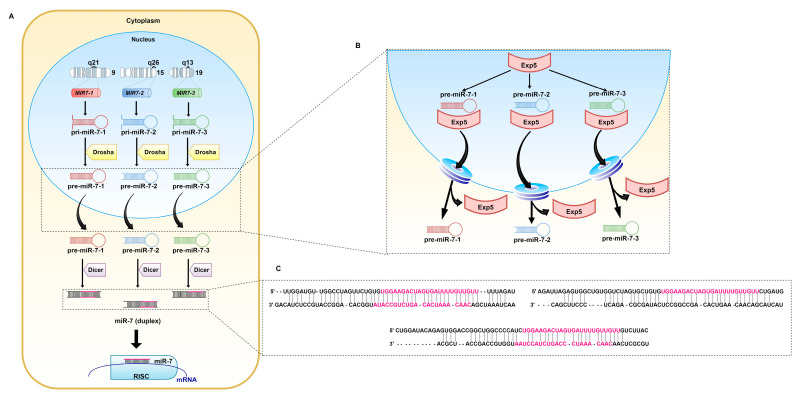
MicroRNAs (miRNAs, miRs) are small non-coding RNA (ncRNA) molecules capable of regulating post-transcriptional gene expression. Imbalances in the miRNA network have been associated with the development of many pathological conditions and diseases, including cancer. Recently, miRNAs have also been linked to the phenomenon of multidrug resistance (MDR). MiR-7 is one of the extensively studied miRNAs and its role in cancer progression and MDR modulation has been highlighted. MiR-7 is engaged in multiple cellular pathways and acts as a tumor suppressor in the majority of human neoplasia. Its depletion limits the effectiveness of anti-cancer therapies, while its restoration sensitizes cells to the administered drugs. Therefore, miR-7 might be considered as a potential adjuvant agent, which can increase the efficiency of standard chemotherapeutics.
微小RNA(miRNA,miR)是一类小型非编码RNA(ncRNA)分子,能够调控转录后基因表达。miRNA网络失衡与包括癌症在内的多种病理状况和疾病的发生发展相关。最近,miRNA还与多药耐药(MDR)现象有关。miR-7是研究广泛的miRNA之一,其在癌症进展和MDR调节中的作用已受到关注。miR-7参与多种细胞通路,在大多数人类肿瘤中起肿瘤抑制作用。其缺失会限制抗癌治疗的效果,而其恢复则使细胞对所给药敏化。因此,miR-7可被视为一种潜在的辅助剂,能够提高标准化疗药物的疗效。