Martinez-Perez Alejandra G, Perez-Trujillo Jose J, Garza-Morales Rodolfo, Ramirez-Avila Norma E, Loera-Arias Maria J, Gomez-Gutierrez Jorge G, Saucedo-Cardenas Odila, Garcia-Garcia Aracely, Rodriguez-Rocha Humberto, Montes-de-Oca-Luna Roberto
Department of Histology, School of Medicine, Autonomous University of Nuevo León, Monterrey, NL 64460, Mexico.
Department of Surgery, School of Medicine, University of Louisville, Louisville, KY 40202, USA.
Vaccines (Basel). 2021 Feb 12;9(2):149. doi: 10.3390/vaccines9020149.
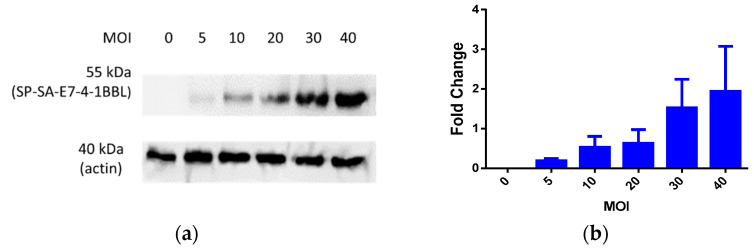
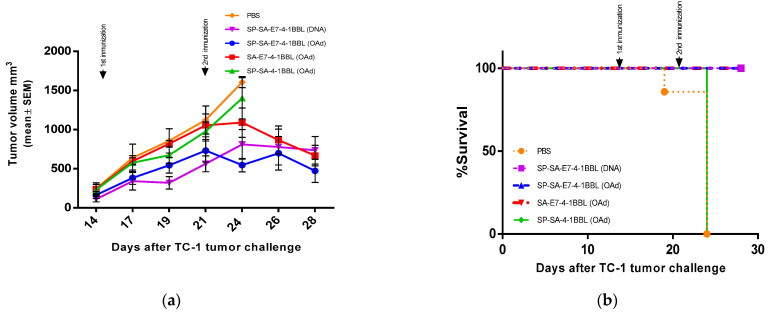
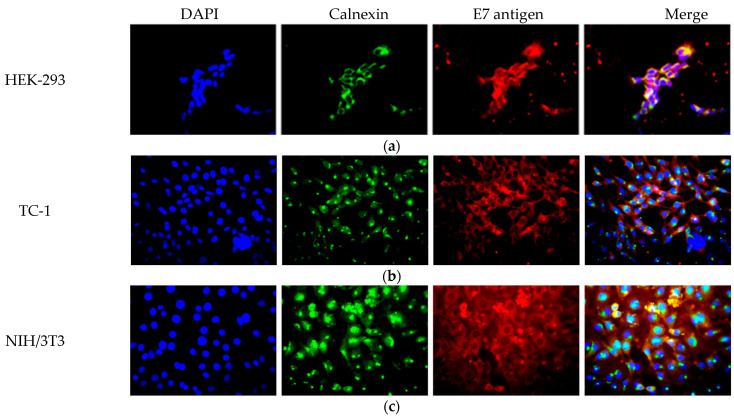
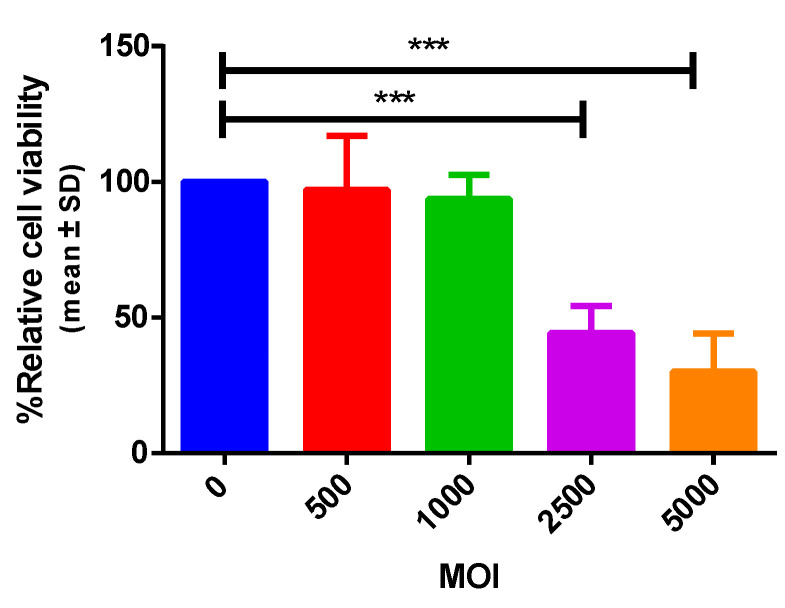
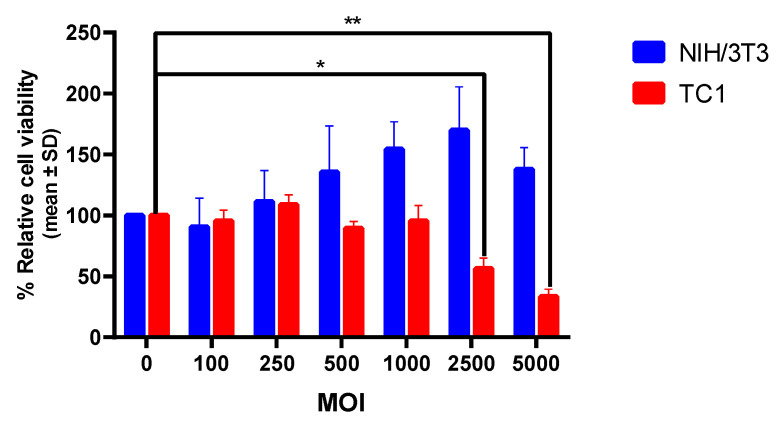
Human papillomaviruses (HPVs) are responsible for about 25% of cancer cases worldwide. HPV-16 E7 antigen is a tumor-associated antigen (TAA) commonly expressed in HPV-induced tumors; however, it has low immunogenicity. The interaction of 4-1BBL with its receptor induces pleiotropic effects on innate, adaptive, and regulatory immunity and, if fused to TAAs in DNA vaccines, can improve the antitumor response; however, there is low transfection and antitumor efficiency. Oncolytic virotherapy is promising for antitumor gene therapy as it can be selectively replicated in tumor cells, inducing cell lysis, and furthermore, tumor cell debris can be taken in by immune cells to potentiate antitumor responses. In this study, we expressed the immunomodulatory molecule SA-4-1BBL fused to E7 on an oncolytic adenovirus (OAd) system. In vitro infection of TC-1 tumor cells and NIH-3T3 non-tumor cells with SA/E7/4-1BBL OAd demonstrated that only tumor cells are selectively destroyed. Moreover, protein expression is targeted to the endoplasmic reticulum in both cell lines when a signal peptide (SP) is added. Finally, in an HPV-induced cancer murine model, the therapeutic oncolytic activity of OAd can be detected, and this can be improved when fused to E7 and SP.
人乳头瘤病毒(HPV)导致全球约25%的癌症病例。HPV-16 E7抗原是一种肿瘤相关抗原(TAA),通常在HPV诱导的肿瘤中表达;然而,它的免疫原性较低。4-1BBL与其受体的相互作用对固有免疫、适应性免疫和调节性免疫产生多效性作用,并且如果在DNA疫苗中与TAA融合,可以改善抗肿瘤反应;然而,其转染效率和抗肿瘤效率较低。溶瘤病毒疗法在抗肿瘤基因治疗方面很有前景,因为它可以在肿瘤细胞中选择性复制,诱导细胞裂解,此外,肿瘤细胞碎片可以被免疫细胞摄取以增强抗肿瘤反应。在本研究中,我们在溶瘤腺病毒(OAd)系统上表达了与E7融合的免疫调节分子SA-4-1BBL。用SA/E7/4-1BBL OAd体外感染TC-1肿瘤细胞和NIH-3T3非肿瘤细胞表明,只有肿瘤细胞被选择性破坏。此外,当添加信号肽(SP)时,两种细胞系中的蛋白质表达均靶向内质网。最后,在HPV诱导的癌症小鼠模型中,可以检测到OAd的治疗性溶瘤活性,当与E7和SP融合时,这种活性可以得到改善。