Department of Gastroenterology, Graduate School of Medicine, Chiba University, 1-8-1 Inohana, Chuo-ku, Chiba, 260-8670, Japan.
Department of Molecular Virology, Graduate School of Medicine, Chiba University, 1-8-1 Inohana, Chuo-ku, Chiba, 260-8670, Japan.
Sci Rep. 2021 Mar 5;11(1):5303. doi: 10.1038/s41598-021-84117-9.
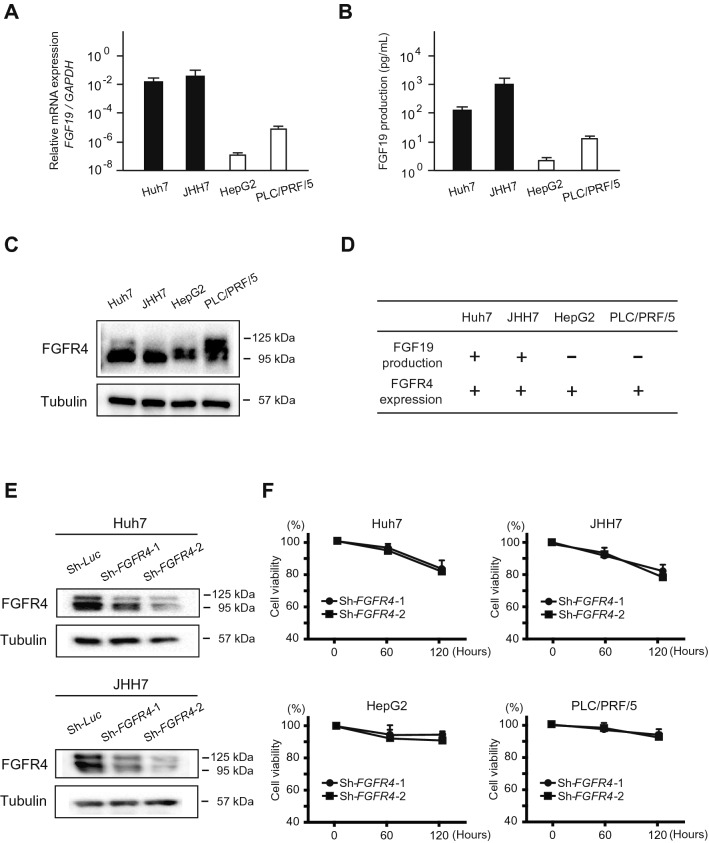
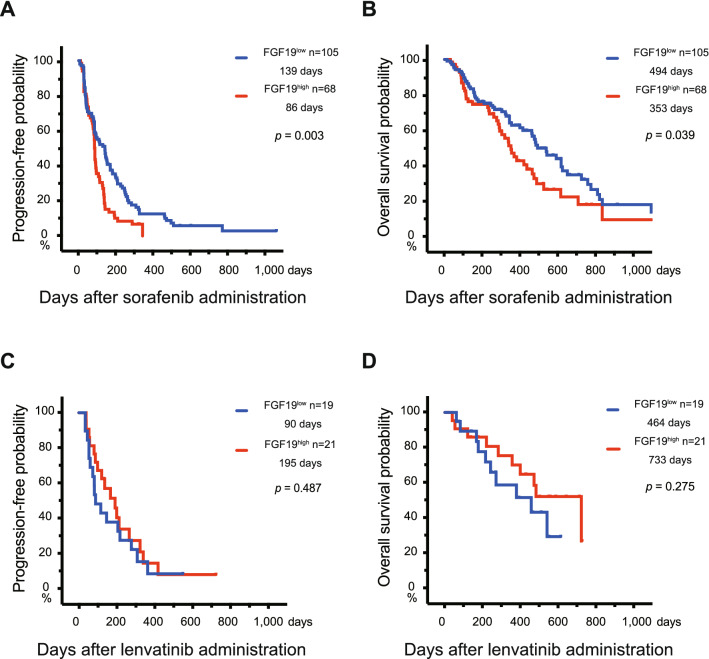
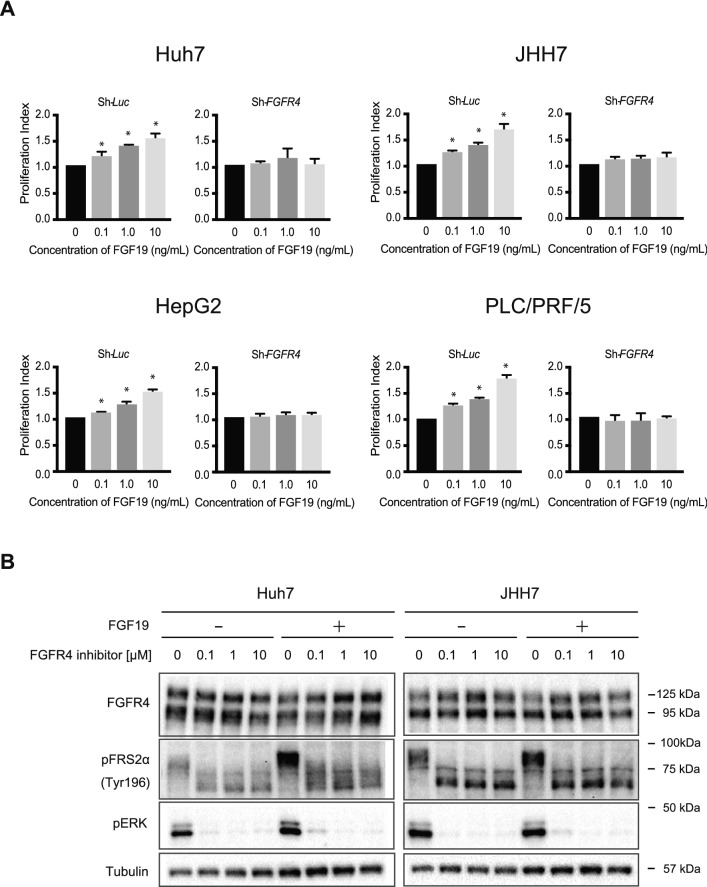
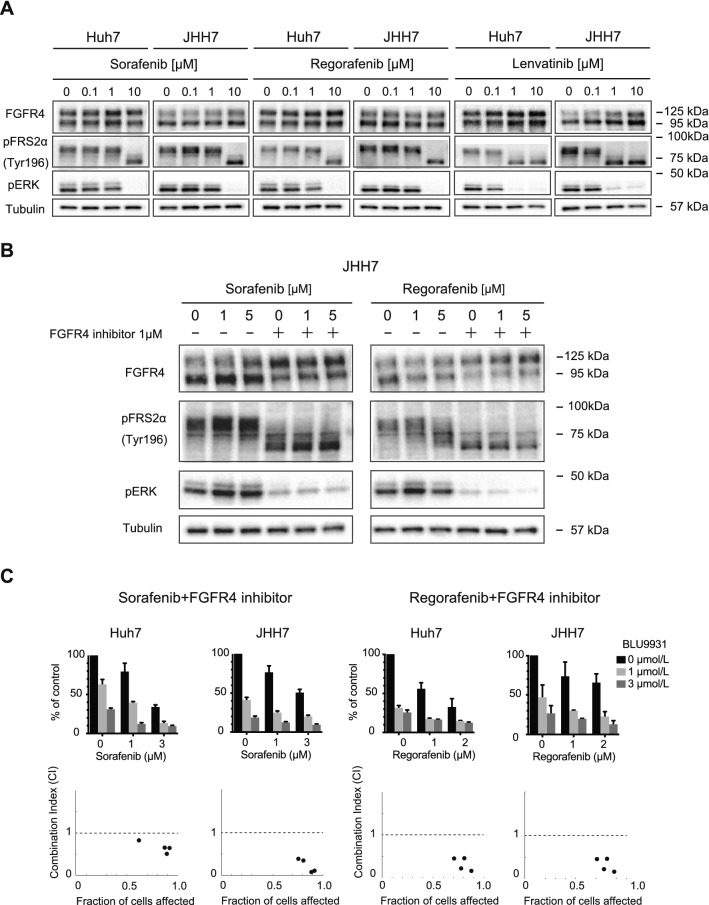
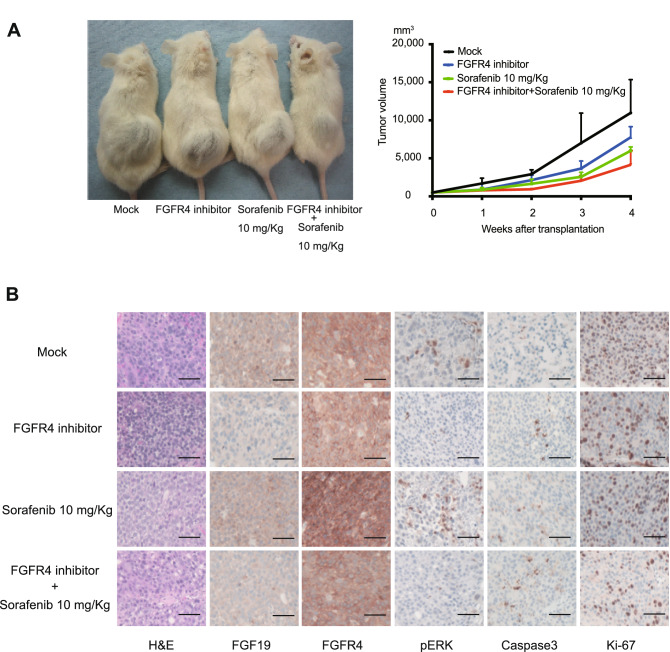
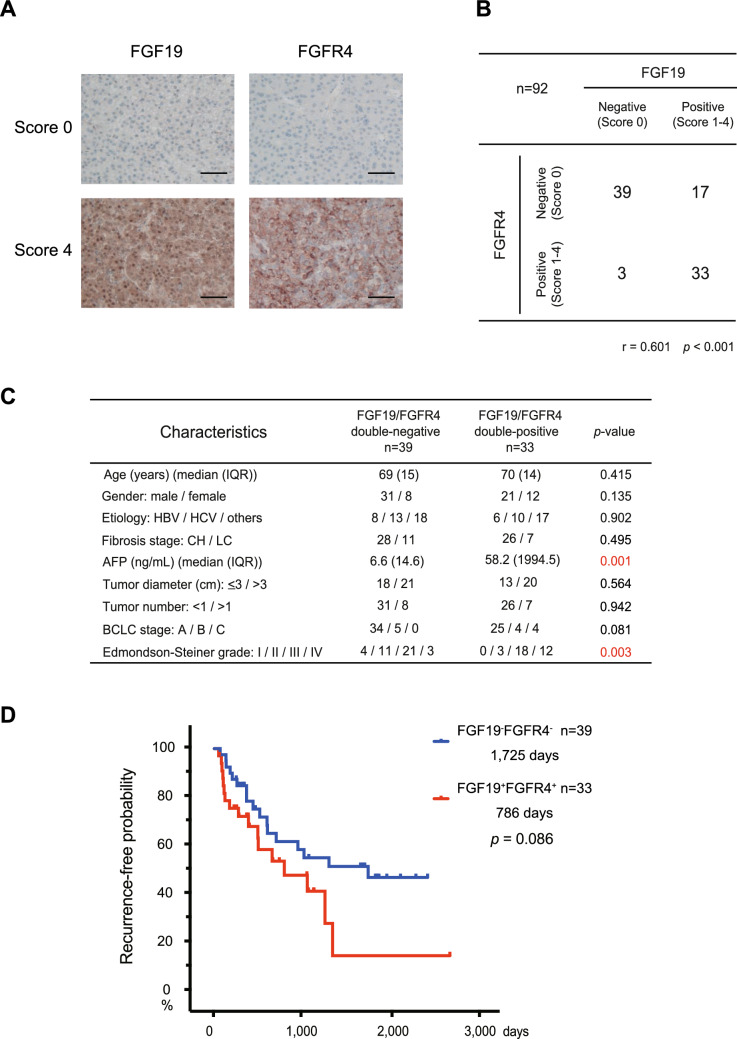
FGF19/FGFR4 autocrine signaling is one of the main targets for multi-kinase inhibitors (MKIs). However, the molecular mechanisms underlying FGF19/FGFR4 signaling in the antitumor effects to MKIs in hepatocellular carcinoma (HCC) remain unclear. In this study, the impact of FGFR4/ERK signaling inhibition on HCC following MKI treatment was analyzed in vitro and in vivo assays. Serum FGF19 in HCC patients treated using MKIs, such as sorafenib (n = 173) and lenvatinib (n = 40), was measured by enzyme-linked immunosorbent assay. Lenvatinib strongly inhibited the phosphorylation of FRS2 and ERK, the downstream signaling molecules of FGFR4, compared with sorafenib and regorafenib. Additional use of a selective FGFR4 inhibitor with sorafenib further suppressed FGFR4/ERK signaling and synergistically inhibited HCC cell growth in culture and xenograft subcutaneous tumors. Although serum FGF19 (n = 68) patients treated using sorafenib exhibited a significantly shorter progression-free survival and overall survival than FGF19 (n = 105) patients, there were no significant differences between FGF19 (n = 21) and FGF19 (n = 19) patients treated using lenvatinib. In conclusion, robust inhibition of FGF19/FGFR4 is of importance for the exertion of antitumor effects of MKIs. Serum FGF19 levels may function as a predictive marker for drug response and survival in HCC patients treated using sorafenib.
成纤维细胞生长因子 19(FGF19)/成纤维细胞生长因子受体 4(FGFR4)自分泌信号是多激酶抑制剂(MKIs)的主要靶点之一。然而,MKI 治疗肝细胞癌(HCC)中 FGF19/FGFR4 信号的抗肿瘤作用的分子机制尚不清楚。在这项研究中,在体外和体内试验中分析了 FGFR4/ERK 信号抑制对 MKI 治疗后 HCC 的影响。通过酶联免疫吸附试验测量接受 MKI(如索拉非尼(n = 173)和仑伐替尼(n = 40))治疗的 HCC 患者的血清 FGF19。与索拉非尼和regorafenib 相比,仑伐替尼强烈抑制 FGFR4 的下游信号分子 FRS2 和 ERK 的磷酸化。与索拉非尼联合使用选择性 FGFR4 抑制剂进一步抑制 FGFR4/ERK 信号,并在培养和异种移植皮下肿瘤中协同抑制 HCC 细胞生长。尽管接受索拉非尼治疗的血清 FGF19(n = 68)患者的无进展生存期和总生存期明显短于 FGF19(n = 105)患者,但接受 lenvatinib 治疗的 FGF19(n = 21)和 FGF19(n = 19)患者之间没有显著差异。总之,强烈抑制 FGF19/FGFR4 对于发挥 MKI 的抗肿瘤作用很重要。血清 FGF19 水平可能作为接受索拉非尼治疗的 HCC 患者药物反应和生存的预测标志物。