Translational Oncology, Division of Cancer & Stem Cells, School of Medicine, University of Nottingham, Nottingham, UK.
Medical Center, King Fahad Security College (KFSC), Riyadh, Saudi Arabia.
Oncogene. 2021 Apr;40(14):2496-2508. doi: 10.1038/s41388-021-01710-y. Epub 2021 Mar 5.
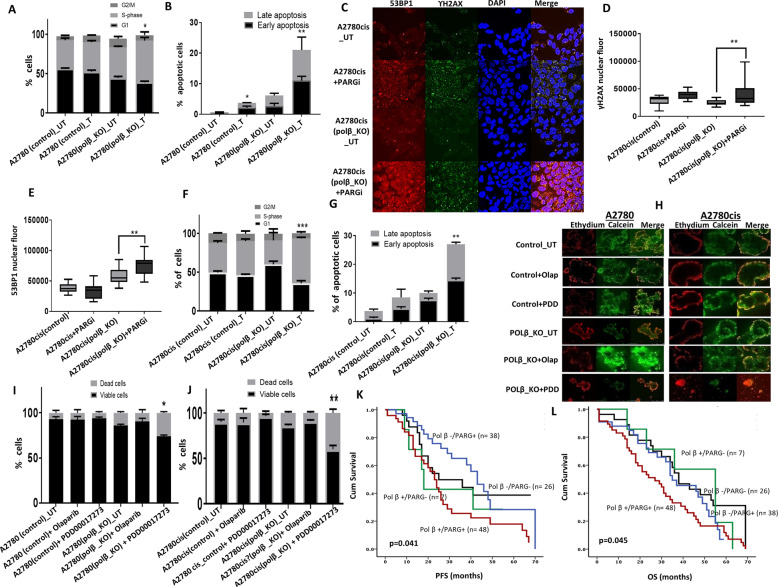
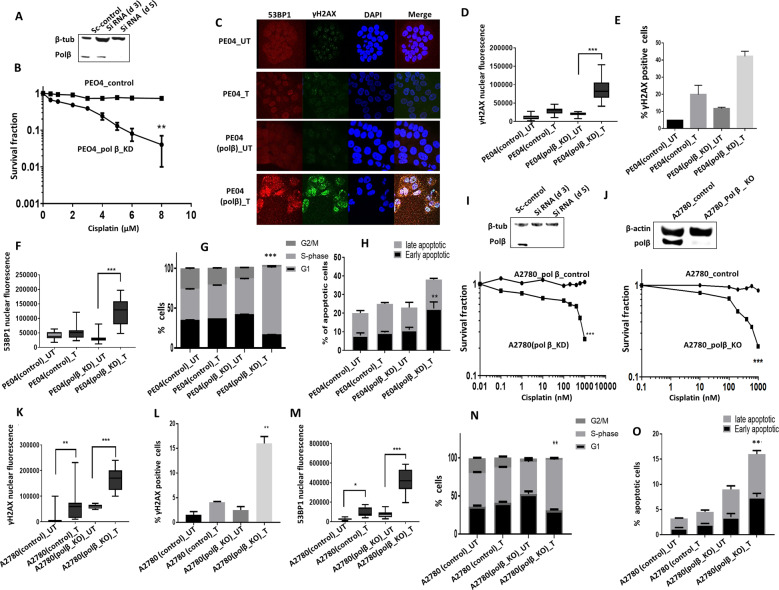
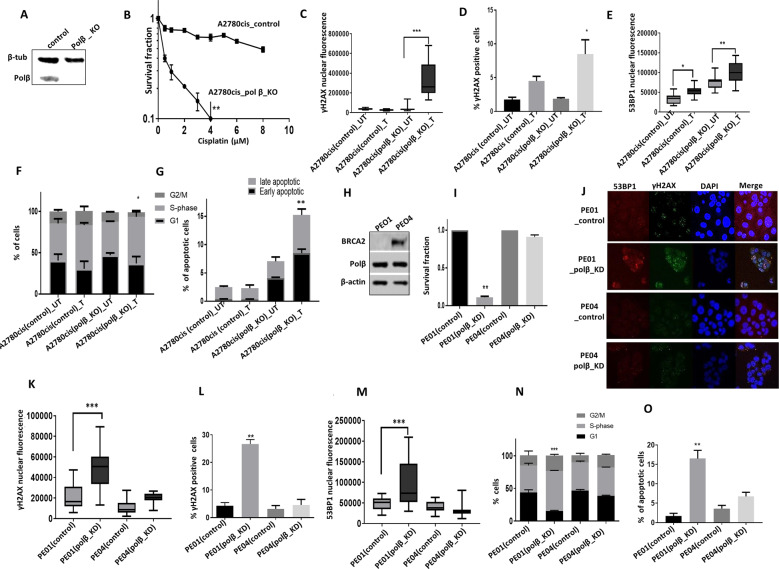
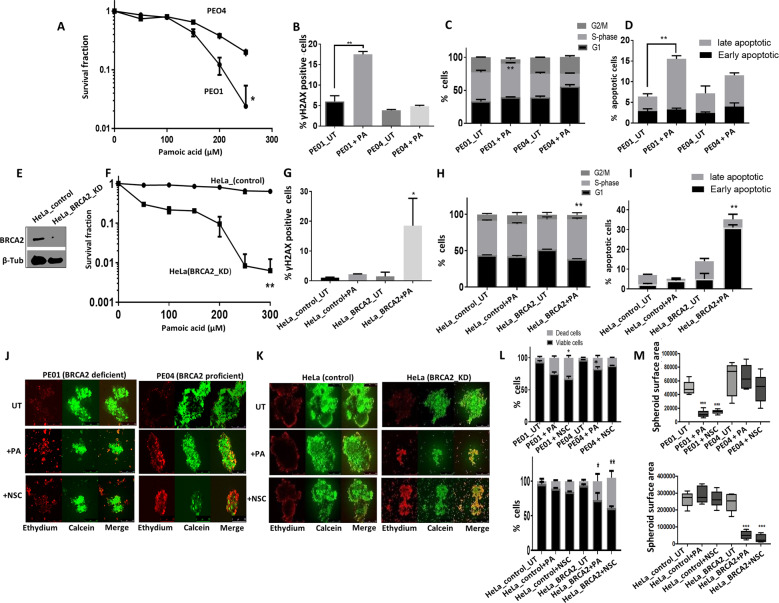
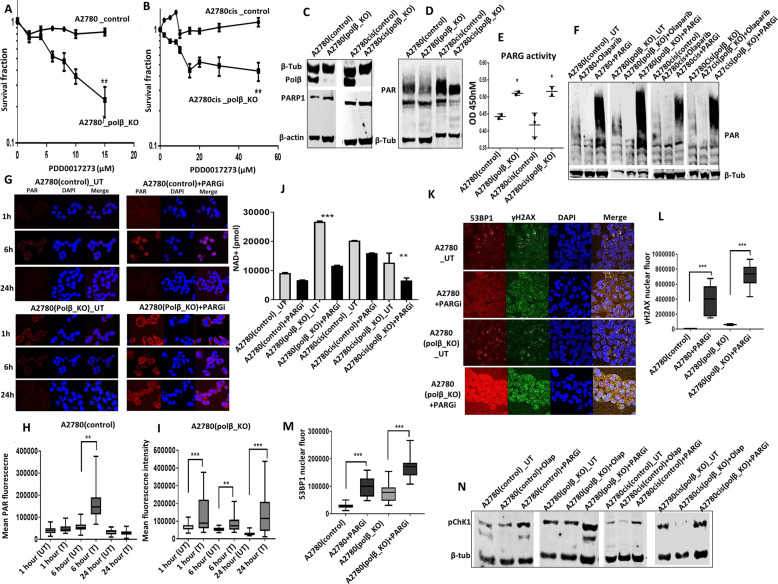
Targeting PARP1 [Poly(ADP-Ribose) Polymerase 1] for synthetic lethality is a new strategy for BRCA germ-line mutated or platinum sensitive ovarian cancers. However, not all patients respond due to intrinsic or acquired resistance to PARP1 inhibitor. Development of alternative synthetic lethality approaches is a high priority. DNA polymerase β (Polβ), a critical player in base excision repair (BER), interacts with PARP1 during DNA repair. Here we show that polβ deficiency is a predictor of platinum sensitivity in human ovarian tumours. Polβ depletion not only increased platinum sensitivity but also reduced invasion, migration and impaired EMT (epithelial to mesenchymal transition) of ovarian cancer cells. Polβ small molecular inhibitors (Pamoic acid and NSC666719) were selectively toxic to BRCA2 deficient cells and associated with double-strand breaks (DSB) accumulation, cell cycle arrest and increased apoptosis. Interestingly, PARG [Poly(ADP-Ribose) Glycohydrolase] inhibitor (PDD00017273) [but not PARP1 inhibitor (Olaparib)] was synthetically lethal in polβ deficient cells. Selective toxicity to PDD00017273 was associated with poly (ADP-ribose) accumulation, reduced nicotinamide adenine dinucleotide (NAD) level, DSB accumulation, cell cycle arrest and increased apoptosis. In human tumours, polβ-PARG co-expression adversely impacted survival in patients. Our data provide evidence that polβ targeting is a novel strategy and warrants further pharmaceutical development in epithelial ovarian cancers.
针对 PARP1 [聚(ADP-核糖)聚合酶 1] 的合成致死作用是 BRCA 种系突变或铂类敏感卵巢癌的新策略。然而,由于对 PARP1 抑制剂的内在或获得性耐药,并非所有患者都有反应。开发替代合成致死方法是当务之急。DNA 聚合酶β(Polβ)是碱基切除修复(BER)中的关键参与者,在 DNA 修复过程中与 PARP1 相互作用。在这里,我们表明 polβ 缺陷是人类卵巢肿瘤对铂类药物敏感性的预测因子。Polβ 耗竭不仅增加了铂类药物的敏感性,还降低了卵巢癌细胞的侵袭、迁移和 EMT(上皮间质转化)。Polβ 小分子抑制剂(Pamoic acid 和 NSC666719)对 BRCA2 缺陷细胞具有选择性毒性,并与双链断裂(DSB)积累、细胞周期停滞和凋亡增加相关。有趣的是,PARG [聚(ADP-核糖)糖基水解酶] 抑制剂(PDD00017273)[而不是 PARP1 抑制剂(奥拉帕利)] 在 polβ 缺陷细胞中具有合成致死作用。对 PDD00017273 的选择性毒性与多聚(ADP-核糖)积累、烟酰胺腺嘌呤二核苷酸(NAD)水平降低、DSB 积累、细胞周期停滞和凋亡增加有关。在人类肿瘤中,polβ-PARG 共表达对患者的生存产生不利影响。我们的数据提供了证据表明靶向 polβ 是一种新策略,值得在卵巢上皮性癌中进一步进行药物开发。