Department of Oncology, Mayo Clinic College of Medicine, Rochester, MN, USA.
Department of Biochemistry and Molecular Biology, Mayo Clinic College of Medicine, Rochester, MN, USA.
Oncogene. 2021 Apr;40(14):2509-2523. doi: 10.1038/s41388-021-01711-x. Epub 2021 Mar 5.
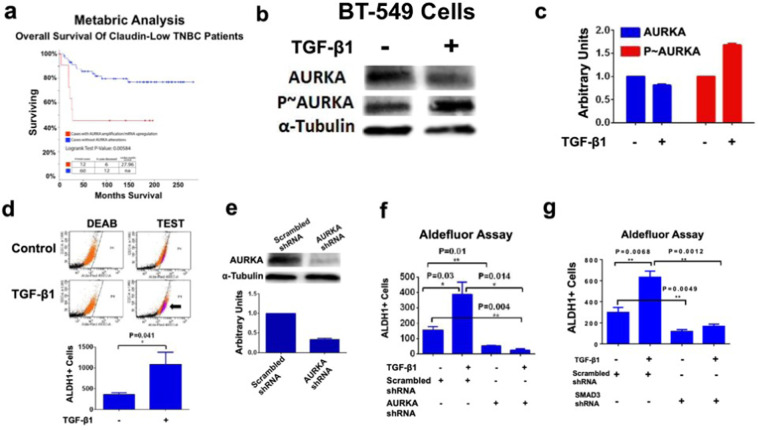
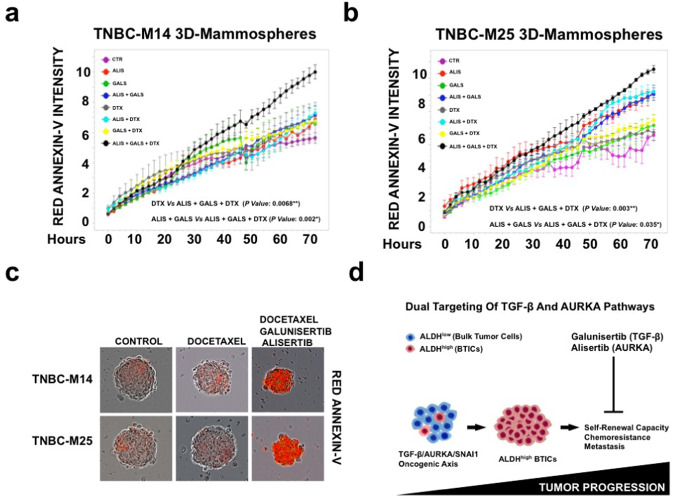
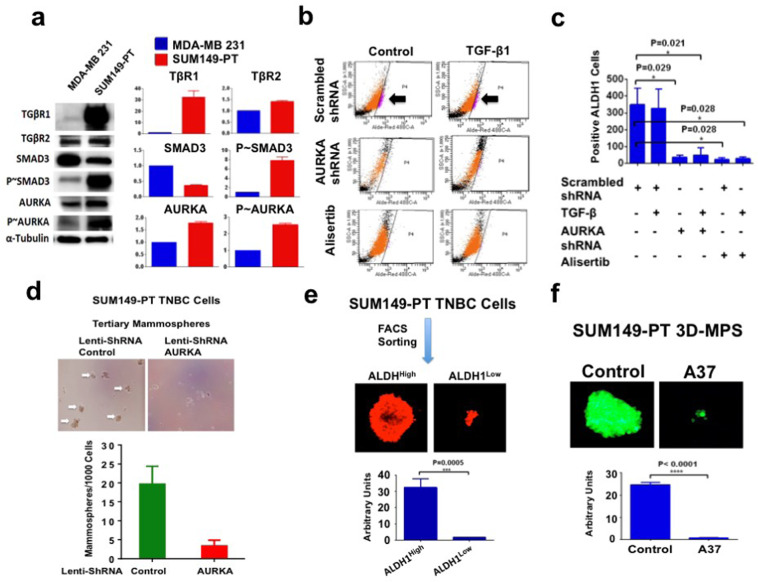
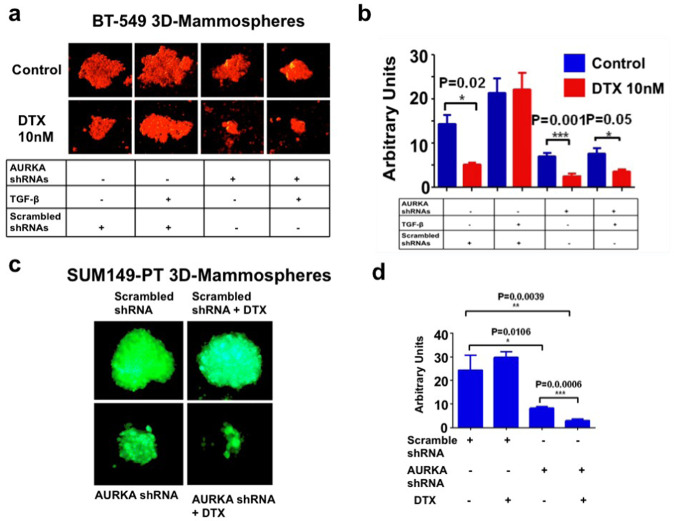
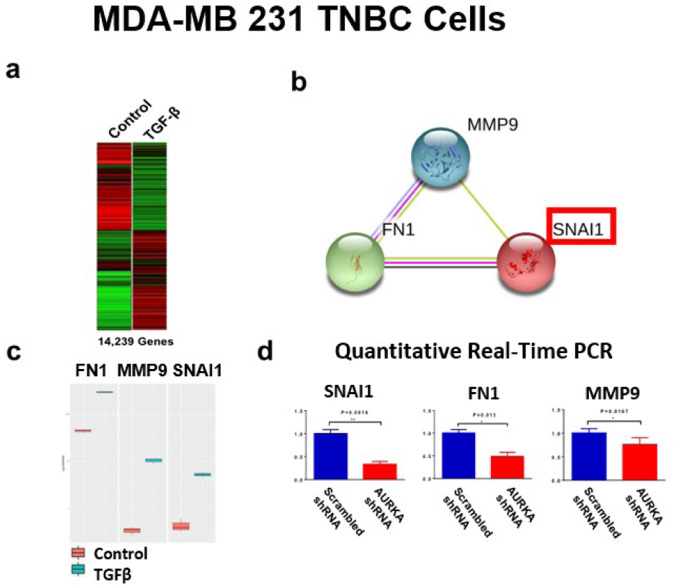
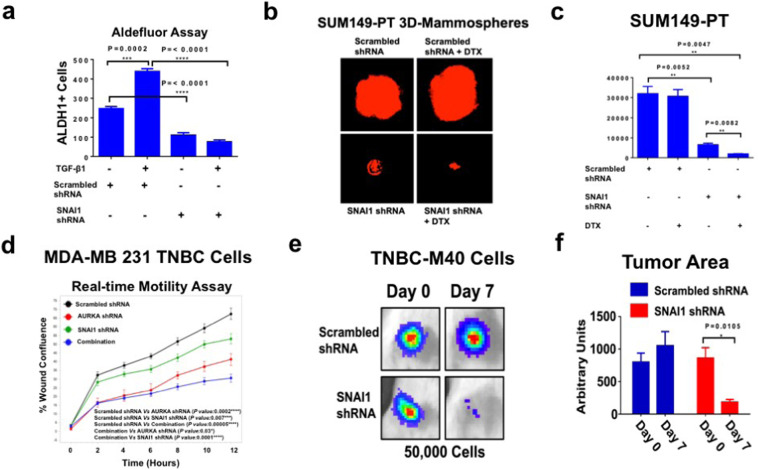
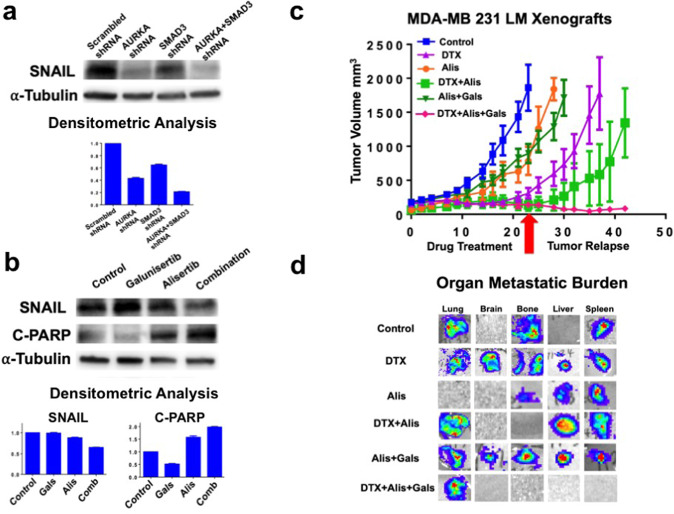
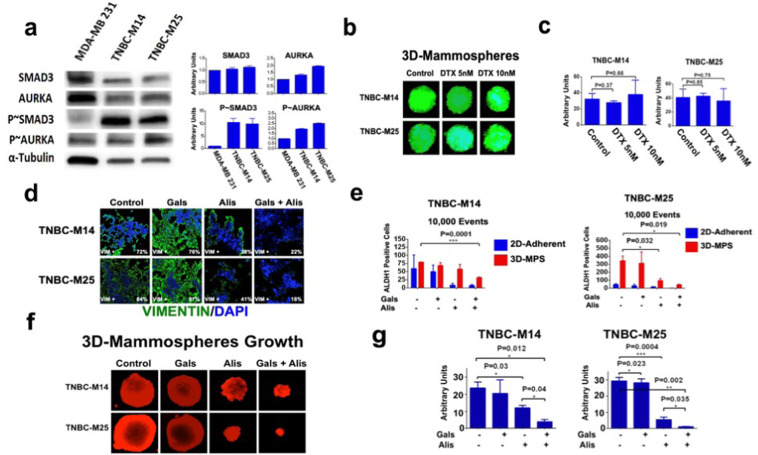
Triple-negative breast cancer (TNBCs) account for 15-20% of all breast cancers and represent the most aggressive subtype of this malignancy. Early tumor relapse and progression are linked to the enrichment of a sub-fraction of cancer cells, termed breast tumor-initiating cells (BTICs), that undergo epithelial to mesenchymal transition (EMT) and typically exhibit a basal-like CD44/CD24 and/or ALDH1 phenotype with critical cancer stem-like features such as high self-renewal capacity and intrinsic (de novo) resistance to standard of care chemotherapy. One of the major mechanisms responsible for the intrinsic drug resistance of BTICs is their high ALDH1 activity leading to inhibition of chemotherapy-induced apoptosis. In this study, we demonstrated that aurora-A kinase (AURKA) is required to mediate TGF-β-induced expression of the SNAI1 gene, enrichment of ALDH1 BTICs, self-renewal capacity, and chemoresistance in TNBC experimental models. Significantly, the combination of docetaxel (DTX) with dual TGF-β and AURKA pharmacologic targeting impaired tumor relapse and the emergence of distant metastasis. We also showed in unique chemoresistant TNBC cells isolated from patient-derived TNBC brain metastasis that dual TGF-β and AURKA pharmacologic targeting reversed cancer plasticity and enhanced the sensitivity of TNBC cells to DTX-based-chemotherapy. Taken together, these findings reveal for the first time the critical role of AURKA oncogenic signaling in mediating TGF-β-induced TNBC plasticity, chemoresistance, and tumor progression.
三阴性乳腺癌(TNBCs)占所有乳腺癌的 15-20%,代表这种恶性肿瘤中最具侵袭性的亚型。早期肿瘤复发和进展与癌症细胞亚群的富集有关,这些细胞被称为乳腺癌起始细胞(BTICs),它们经历上皮间质转化(EMT),通常表现出基底样 CD44/CD24 和/或 ALDH1 表型,并具有关键的癌症干细胞样特征,如高自我更新能力和内在(从头)对标准护理化疗的耐药性。BTICs 内在耐药性的主要机制之一是其高 ALDH1 活性,导致化疗诱导的细胞凋亡抑制。在这项研究中,我们证明了 Aurora-A 激酶(AURKA)是介导 TGF-β诱导 SNAI1 基因表达、富集 ALDH1 BTICs、自我更新能力和 TNBC 实验模型中化疗耐药所必需的。重要的是,多西紫杉醇(DTX)与双重 TGF-β和 AURKA 药物靶向联合使用可损害 TNBC 的肿瘤复发和远处转移的发生。我们还在从患者来源的 TNBC 脑转移中分离的独特化疗耐药性 TNBC 细胞中表明,双重 TGF-β和 AURKA 药物靶向逆转了癌症可塑性,并增强了 TNBC 细胞对基于 DTX 的化疗的敏感性。总之,这些发现首次揭示了 AURKA 致癌信号在介导 TGF-β诱导的 TNBC 可塑性、化疗耐药性和肿瘤进展中的关键作用。