Gotsmy Mathias, Escalona Yerko, Oostenbrink Chris, Petrov Drazen
Department of Material Sciences and Process Engineering, Institute of Molecular Modeling and Simulation, University of Natural Resources and Life Sciences Vienna, Vienna, Austria.
Proteins. 2021 Mar 5;89(8):925-36. doi: 10.1002/prot.26070.
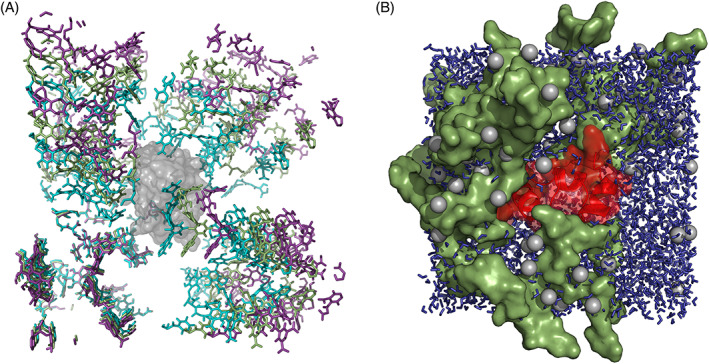
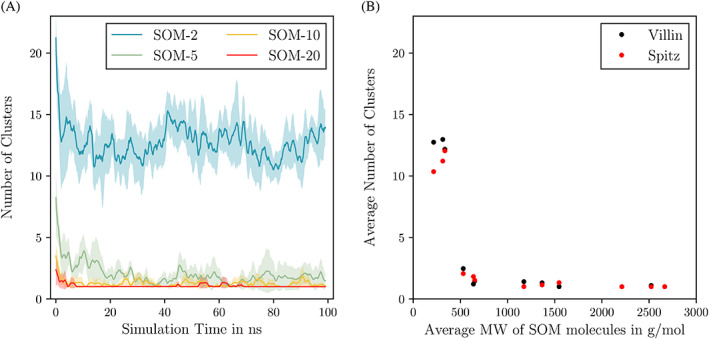
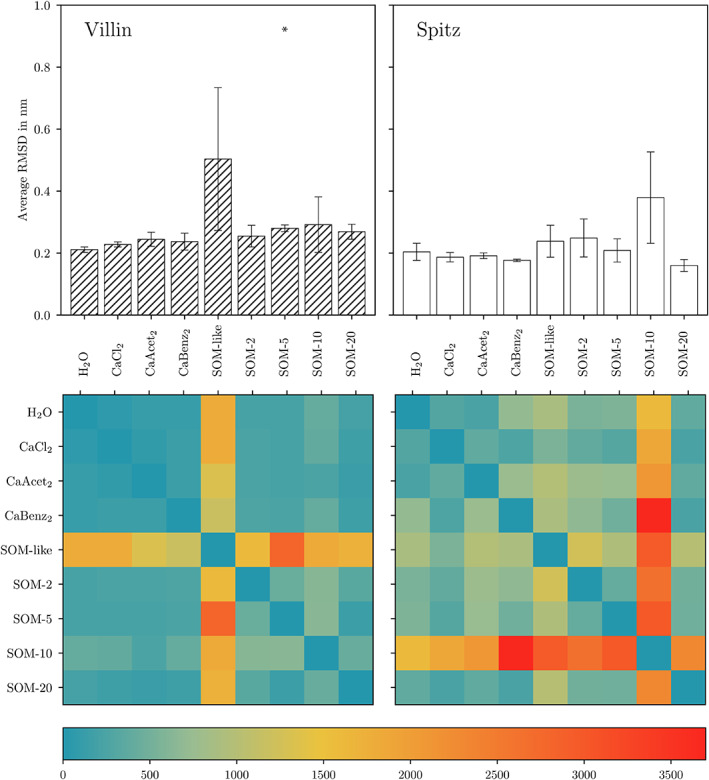
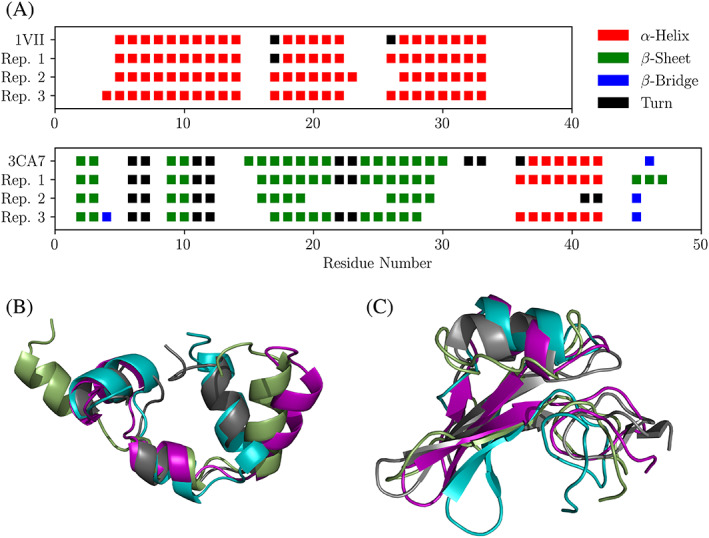
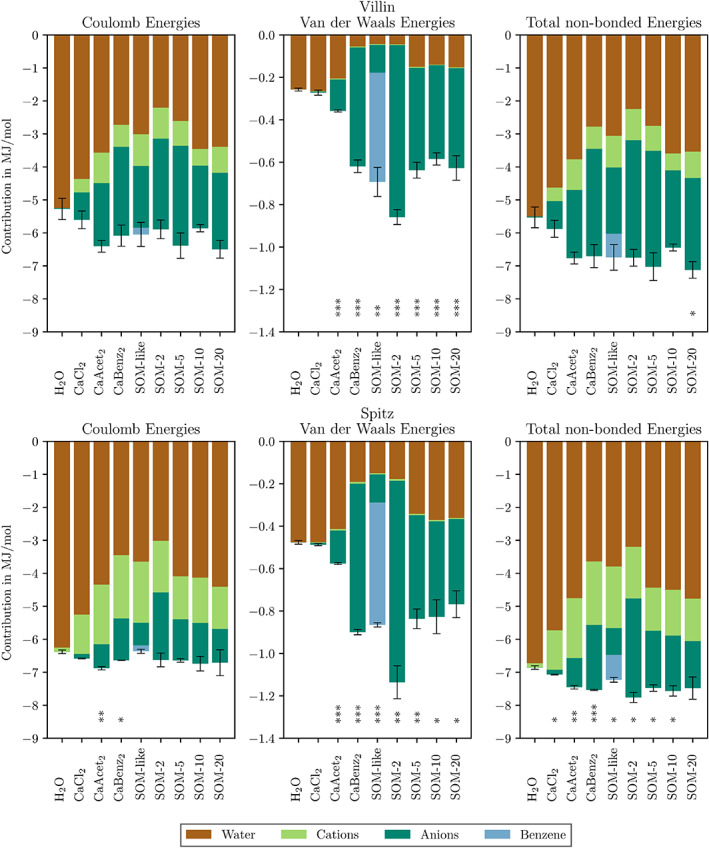
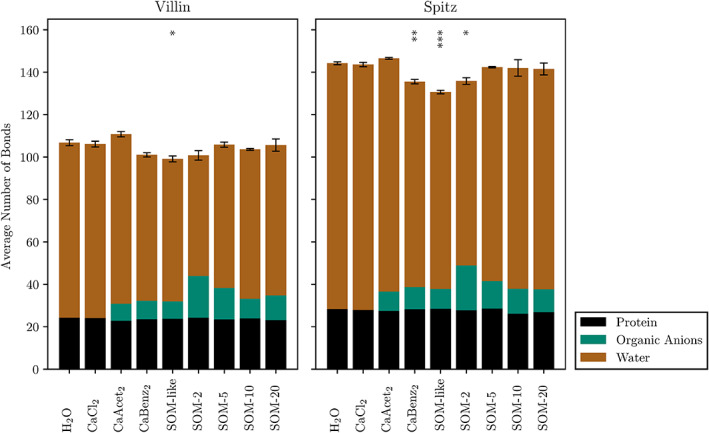
Alongside inorganic materials, water, and air, soil organic matter (SOM) is one of the major components of soil and has tremendous influence on the environment given its vital role in the carbon cycle. Many soil dwelling organisms like plants, fungi and bacteria excrete proteins, whose interaction with SOM is poorly understood on an atomistic level. In this study, molecular dynamics simulations were used to investigate selected proteins in soil models of different complexity from simple co-solvent molecules to Leonardite humic acids (LHA). We analyzed the proteins in terms of their structural stability, the nature and strength of the interactions with their surroundings, as well as their aggregation behavior. Upon insertion of proteins in complex SOM models, their structural stability decreased, although no unfolding or disruption of secondary structure was observed. The interactions of proteins and SOM were primarily governed by electrostatic forces, often in form of hydrogen bonds. However, also weaker van der Waals forces made a significant contribution to the total interaction energies. Moreover, we showed that even though the molecular structure and size of SOM molecules varied, the functional groups of SOM ordered around the protein in a similar pattern. Finally, the number of aggregates formed by proteins and SOM molecules was shown to be primarily proportional to the size of the latter. Strikingly, for varying protein net charges no changes in the formation of aggregates with the strongly negatively charged LHA were observed.
除了无机材料、水和空气之外,土壤有机质(SOM)是土壤的主要成分之一,鉴于其在碳循环中的关键作用,它对环境有着巨大影响。许多生活在土壤中的生物,如植物、真菌和细菌会分泌蛋白质,而在原子层面上,这些蛋白质与土壤有机质的相互作用还鲜为人知。在本研究中,我们利用分子动力学模拟,在从简单的共溶剂分子到风化煤腐殖酸(LHA)等不同复杂程度的土壤模型中研究选定的蛋白质。我们从蛋白质的结构稳定性、与周围环境相互作用的性质和强度以及它们的聚集行为等方面对其进行了分析。将蛋白质插入复杂的土壤有机质模型后,其结构稳定性下降,尽管未观察到二级结构的展开或破坏。蛋白质与土壤有机质的相互作用主要由静电力主导,通常以氢键的形式存在。然而,较弱的范德华力对总相互作用能也有显著贡献。此外,我们表明,尽管土壤有机质分子的分子结构和大小各不相同,但其功能基团围绕蛋白质以相似的模式排列。最后,结果表明蛋白质和土壤有机质分子形成的聚集体数量主要与后者的大小成正比。令人惊讶的是,对于不同的蛋白质净电荷,未观察到与强带负电的风化煤腐殖酸形成聚集体的情况有任何变化。