Biometric Research Program, Division of Cancer Treatment and Diagnosis, National Cancer Institute, 9609 Medical Center Dr., Rockville, MD, 20850, USA.
General Dynamics Information Technology (GDIT), 3150 Fairview Park Drive, Falls Church, VA, 22042, USA.
Clin Epigenetics. 2021 Mar 6;13(1):49. doi: 10.1186/s13148-021-01026-4.
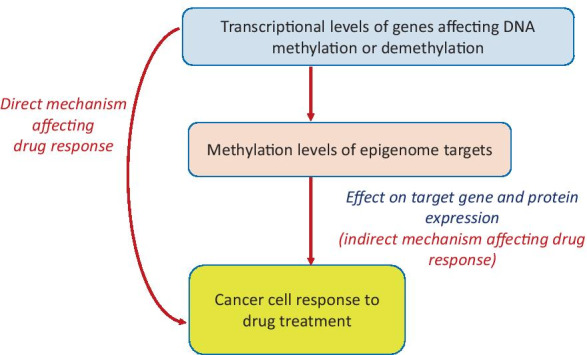
Altered DNA methylation patterns play important roles in cancer development and progression. We examined whether expression levels of genes directly or indirectly involved in DNA methylation and demethylation may be associated with response of cancer cell lines to chemotherapy treatment with a variety of antitumor agents.
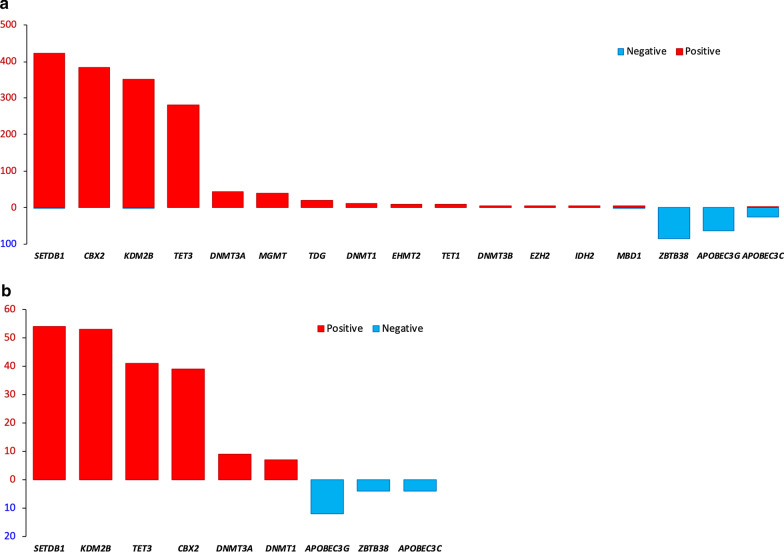
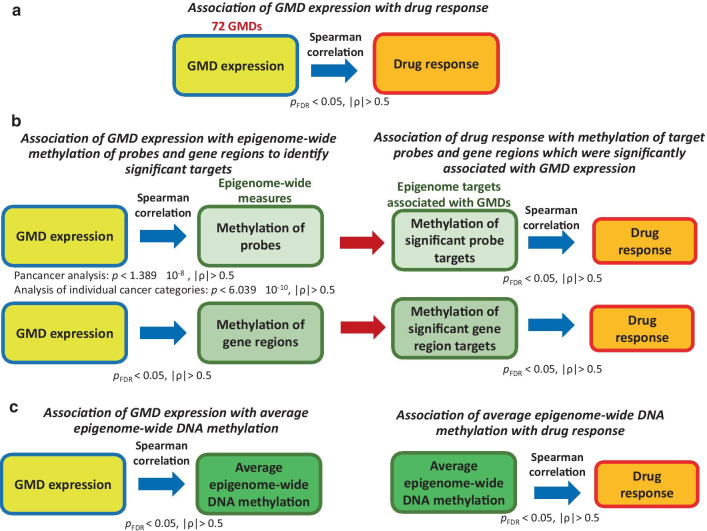
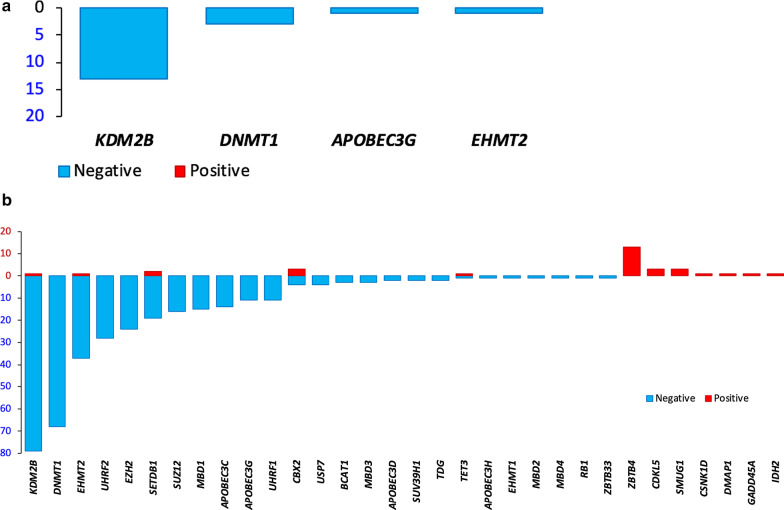
We analyzed 72 genes encoding epigenetic factors directly or indirectly involved in DNA methylation and demethylation processes. We examined association of their pretreatment expression levels with methylation beta-values of individual DNA methylation probes, DNA methylation averaged within gene regions, and average epigenome-wide methylation levels. We analyzed data from 645 cancer cell lines and 23 cancer types from the Cancer Cell Line Encyclopedia and Genomics of Drug Sensitivity in Cancer datasets. We observed numerous correlations between expression of genes encoding epigenetic factors and response to chemotherapeutic agents. Expression of genes encoding a variety of epigenetic factors, including KDM2B, DNMT1, EHMT2, SETDB1, EZH2, APOBEC3G, and other genes, was correlated with response to multiple agents. DNA methylation of numerous target probes and gene regions was associated with expression of multiple genes encoding epigenetic factors, underscoring complex regulation of epigenome methylation by multiple intersecting molecular pathways. The genes whose expression was associated with methylation of multiple epigenome targets encode DNA methyltransferases, TET DNA methylcytosine dioxygenases, the methylated DNA-binding protein ZBTB38, KDM2B, SETDB1, and other molecular factors which are involved in diverse epigenetic processes affecting DNA methylation. While baseline DNA methylation of numerous epigenome targets was correlated with cell line response to antitumor agents, the complex relationships between the overlapping effects of each epigenetic factor on methylation of specific targets and the importance of such influences in tumor response to individual agents require further investigation.
Expression of multiple genes encoding epigenetic factors is associated with drug response and with DNA methylation of numerous epigenome targets that may affect response to therapeutic agents. Our findings suggest complex and interconnected pathways regulating DNA methylation in the epigenome, which may both directly and indirectly affect response to chemotherapy.
改变的 DNA 甲基化模式在癌症的发生和发展中起着重要作用。我们研究了直接或间接参与 DNA 甲基化和去甲基化过程的基因的表达水平是否与各种抗肿瘤药物对癌细胞系化疗治疗的反应有关。
我们分析了 72 个编码表观遗传因子的基因,这些基因直接或间接地参与 DNA 甲基化和去甲基化过程。我们研究了它们在预处理时的表达水平与单个 DNA 甲基化探针的甲基化β值、基因区域内的 DNA 甲基化平均值以及全基因组甲基化水平平均值之间的关联。我们分析了来自癌症细胞系百科全书和癌症药物敏感性基因组学数据集的 645 个癌细胞系和 23 种癌症的数据。我们观察到许多编码表观遗传因子的基因表达与对化疗药物的反应之间存在相关性。多种表观遗传因子编码基因的表达,包括 KDM2B、DNMT1、EHMT2、SETDB1、EZH2、APOBEC3G 和其他基因,与对多种药物的反应相关。许多靶探针和基因区域的 DNA 甲基化与多种编码表观遗传因子的基因表达相关,这突显了多个交叉分子途径对表观基因组甲基化的复杂调控。与多个表观基因组靶标甲基化相关的基因表达的基因编码 DNA 甲基转移酶、TET DNA 甲基胞嘧啶双加氧酶、甲基化 DNA 结合蛋白 ZBTB38、KDM2B、SETDB1 和其他涉及影响 DNA 甲基化的多种表观遗传过程的分子因子。虽然许多表观基因组靶标的基线 DNA 甲基化与细胞系对抗肿瘤药物的反应相关,但每个表观遗传因子对特定靶标甲基化的重叠影响及其在肿瘤对个体药物反应中的重要性之间的复杂关系需要进一步研究。
多个编码表观遗传因子的基因的表达与药物反应以及许多表观基因组靶标的 DNA 甲基化相关,这可能会影响对治疗药物的反应。我们的研究结果表明,在表观基因组中调节 DNA 甲基化的复杂和相互关联的途径可能直接或间接地影响对化疗的反应。