Division of Functional Genomics, Cancer Research Institute, Kanazawa University, Kanazawa Ishikawa, Japan.
Division of Education for Global Standard, Institute of Liberal Arts and Science, Kanazawa University, Kanazawa, Ishikawa, Japan.
J Biol Chem. 2021 Jan-Jun;296:100213. doi: 10.1074/jbc.RA120.015502. Epub 2020 Dec 24.
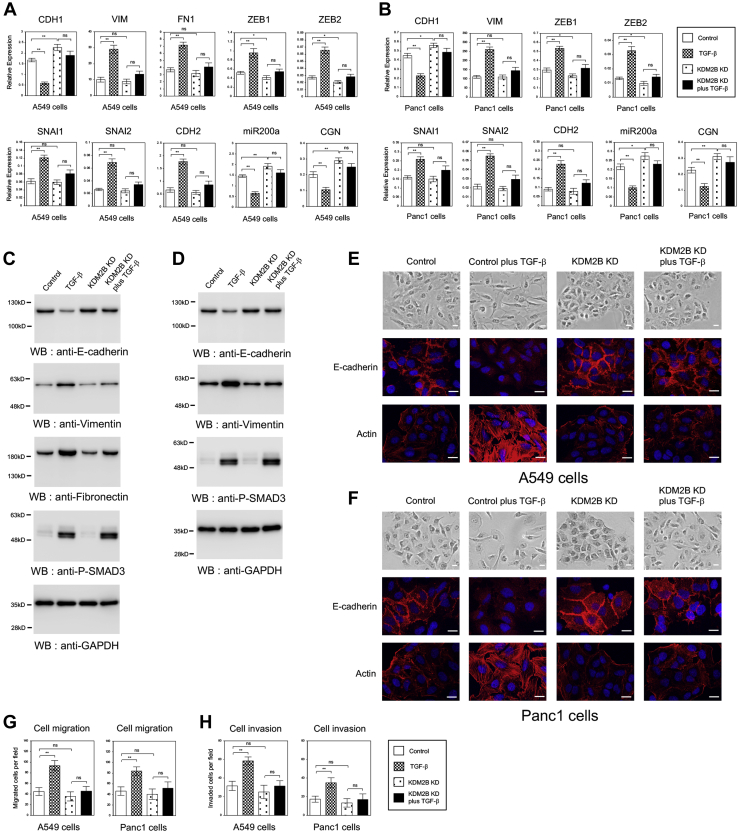
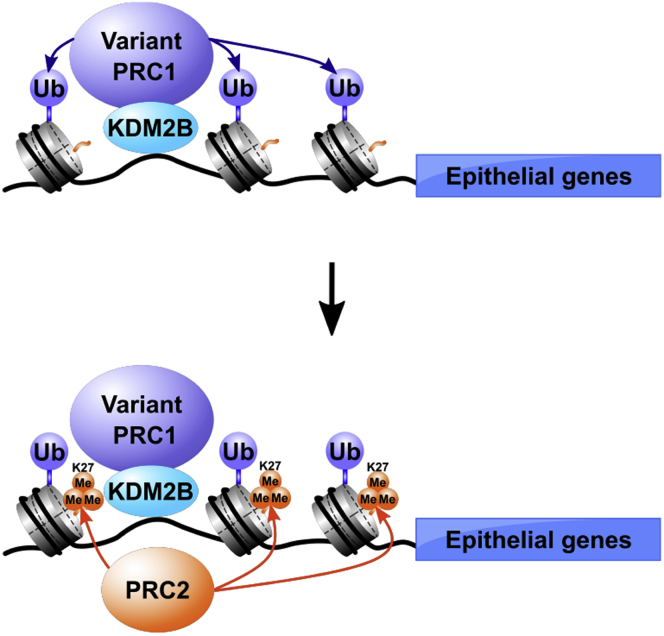
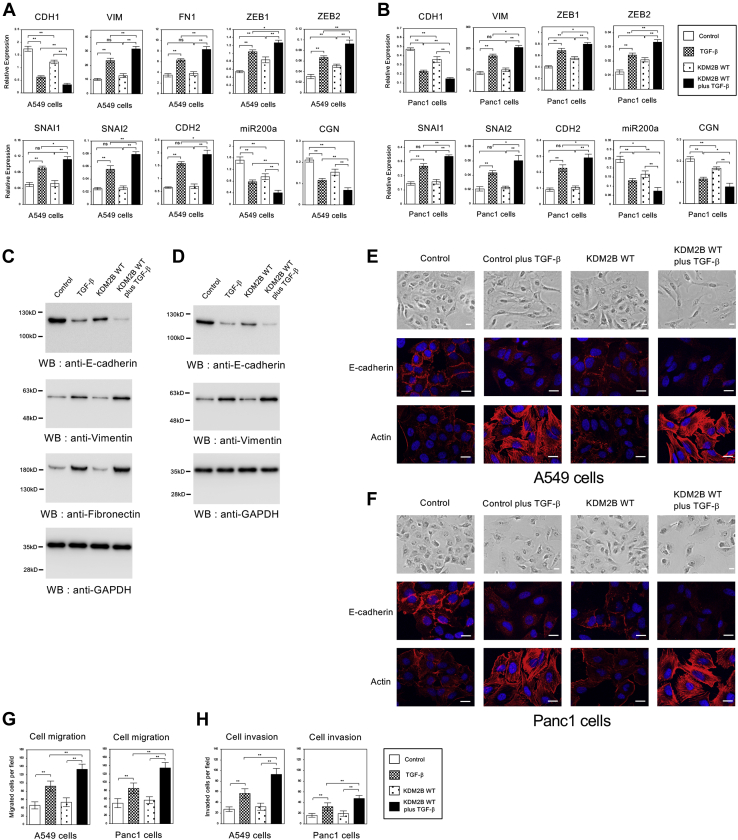
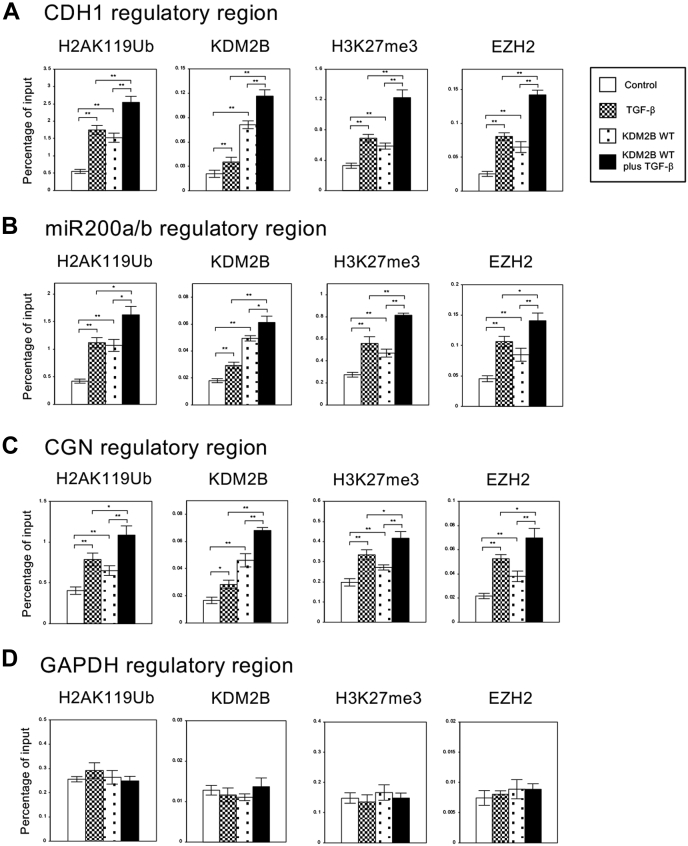
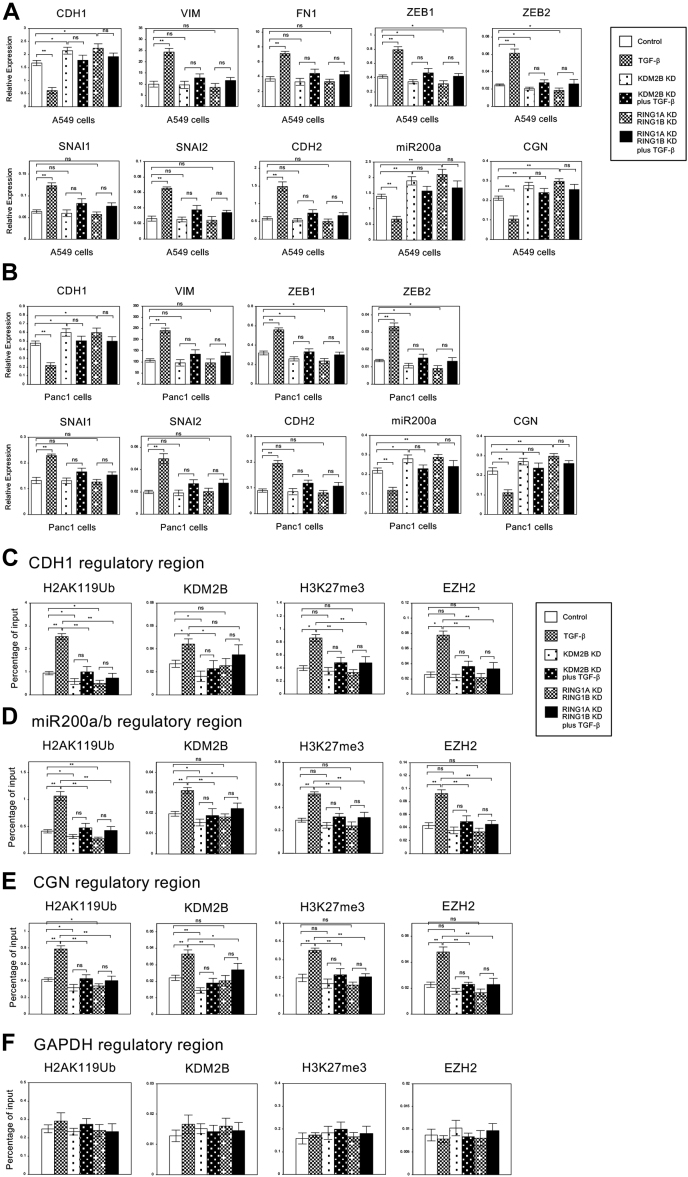
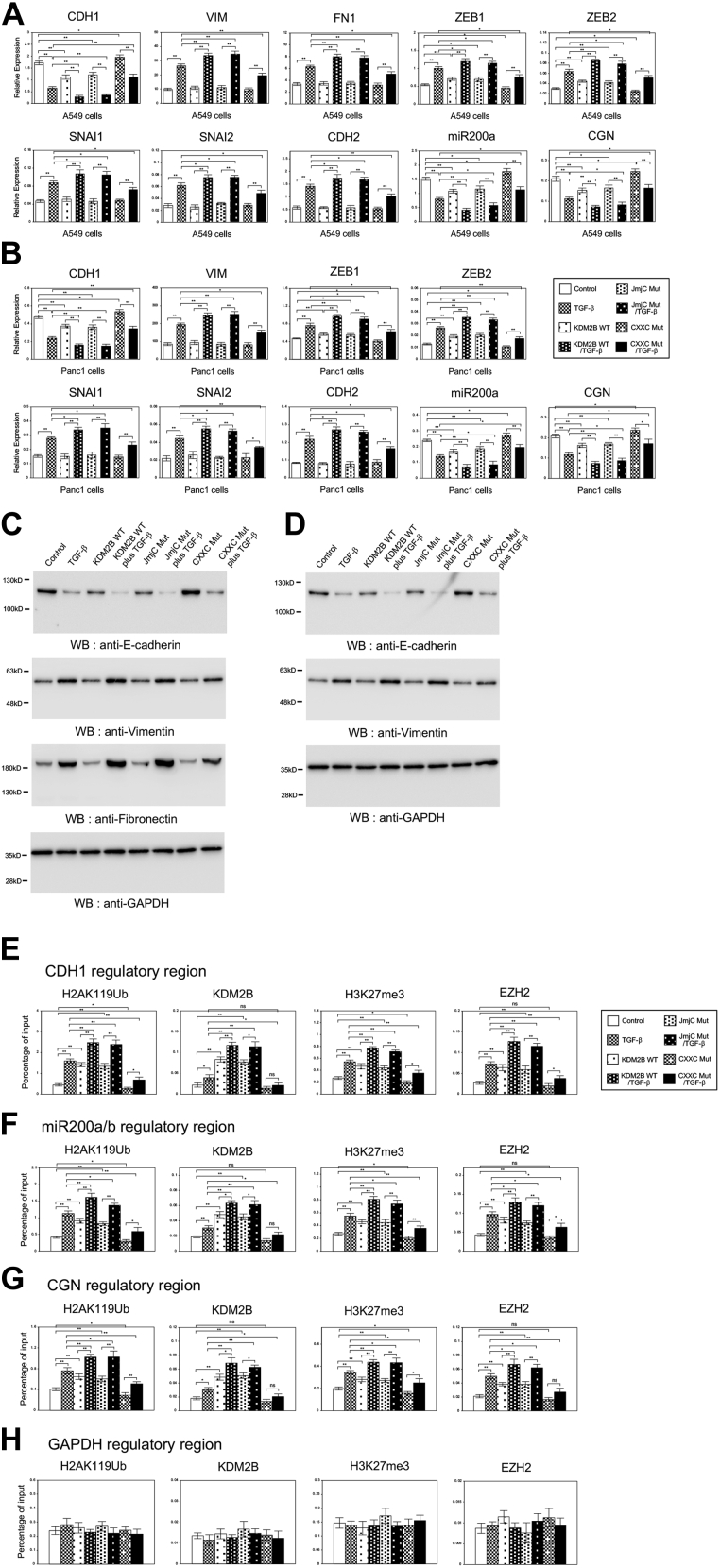
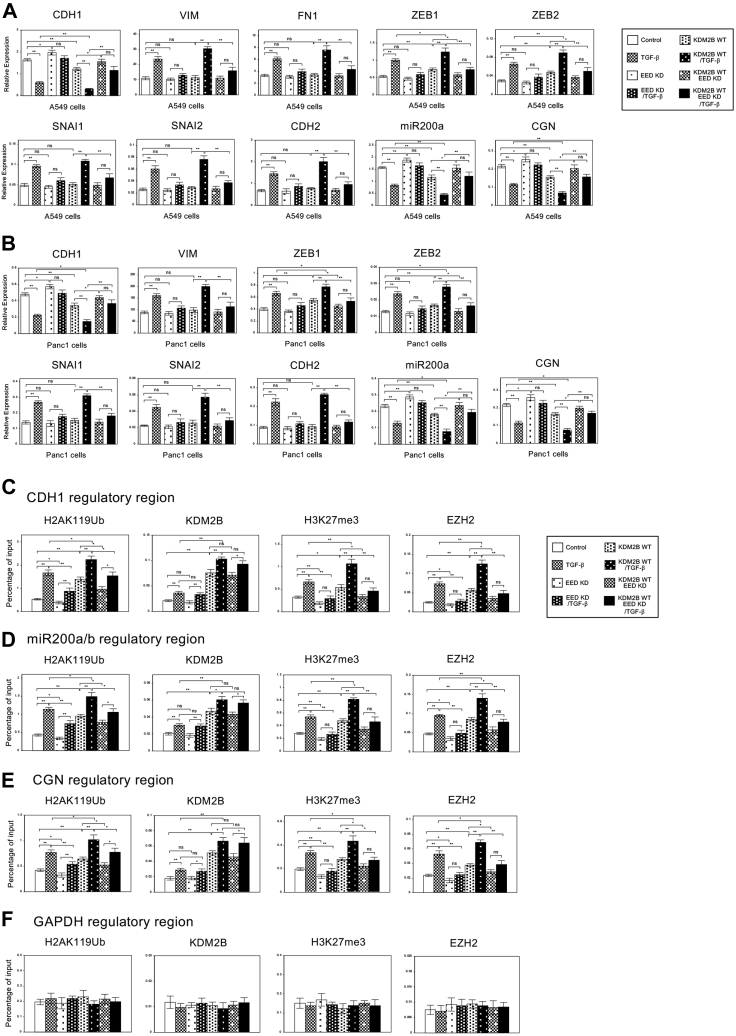
Polycomb repressive complex-1 (PRC1) induces transcriptional repression by regulating monoubiquitination of lysine 119 of histone H2A (H2AK119) and as such is involved in a number of biological and pathological processes including cancer development. Previously we demonstrated that PRC2, which catalyzes the methylation of histone H3K27, has an essential function in TGF-β-induced epithelial-mesenchymal transition (EMT) of lung and pancreatic cancer cell lines. Since the cooperative activities of PRC1 and PRC2 are thought to be important for transcriptional repression in EMT program, we investigated the role of KDM2B, a member of PRC1 complex, on TGF-β-induced EMT in this study. Knockdown of KDM2B inhibited TGF-β-induced morphological conversion of the cells and enhanced cell migration and invasion potentials as well as the expression changes of EMT-related marker genes. Overexpression of KDM2B influenced the expression of several epithelial marker genes such as CDH1, miR200a, and CGN and enhanced the effects of TGF-β. Mechanistic investigations revealed that KDM2B specifically recognized the regulatory regions of CDH1, miR200a, and CGN genes and induced histone H2AK119 monoubiquitination as a component of PRC1 complex, thereby mediating the subsequent EZH2 recruitment and histone H3K27 methylation process required for gene repression. Studies using KDM2B mutants confirmed that its DNA recognition property but not its histone H3 demethylase activity was indispensable for its function during EMT. This study demonstrated the significance of the regulation of histone H2A ubiquitination in EMT process and provided the possibility to develop novel therapeutic strategies for the treatment of cancer metastasis.
多梳抑制复合物 1(PRC1)通过调节组蛋白 H2A 赖氨酸 119 的单泛素化(H2AK119)诱导转录抑制,因此参与了许多生物学和病理学过程,包括癌症的发展。先前我们证明,催化组蛋白 H3K27 甲基化的 PRC2 在 TGF-β诱导的肺和胰腺癌细胞系上皮间质转化(EMT)中具有重要功能。由于 PRC1 和 PRC2 的协同活性被认为对于 EMT 程序中的转录抑制很重要,因此我们在本研究中研究了 PRC1 复合物成员 KDM2B 在 TGF-β诱导的 EMT 中的作用。KDM2B 的敲低抑制了细胞的 TGF-β诱导的形态转化,并增强了细胞迁移和侵袭潜力以及 EMT 相关标记基因的表达变化。KDM2B 的过表达影响了几个上皮标记基因的表达,如 CDH1、miR200a 和 CGN,并增强了 TGF-β的作用。机制研究表明,KDM2B 特异性识别 CDH1、miR200a 和 CGN 基因的调控区域,并作为 PRC1 复合物的一部分诱导组蛋白 H2AK119 单泛素化,从而介导随后的 EZH2 募集和组蛋白 H3K27 甲基化过程,这对于基因抑制是必需的。使用 KDM2B 突变体的研究证实,其 DNA 识别特性而不是其组蛋白 H3 去甲基化酶活性对于其在 EMT 过程中的功能是必不可少的。这项研究证明了组蛋白 H2A 泛素化在 EMT 过程中的重要性,并为开发治疗癌症转移的新治疗策略提供了可能性。