Chai Ching Sing, Lin Pei-Yi, King Ronnel B, Jong Morris Siu-Yung
Department of Curriculum and Instruction, Centre for Learning Sciences & Technologies, The Chinese University of Hong Kong, Shatin, Hong Kong.
Department of Education, National Kaohsiung Normal University, Kaohsiung, Taiwan.
Front Psychol. 2021 Feb 19;12:581193. doi: 10.3389/fpsyg.2021.581193. eCollection 2021.
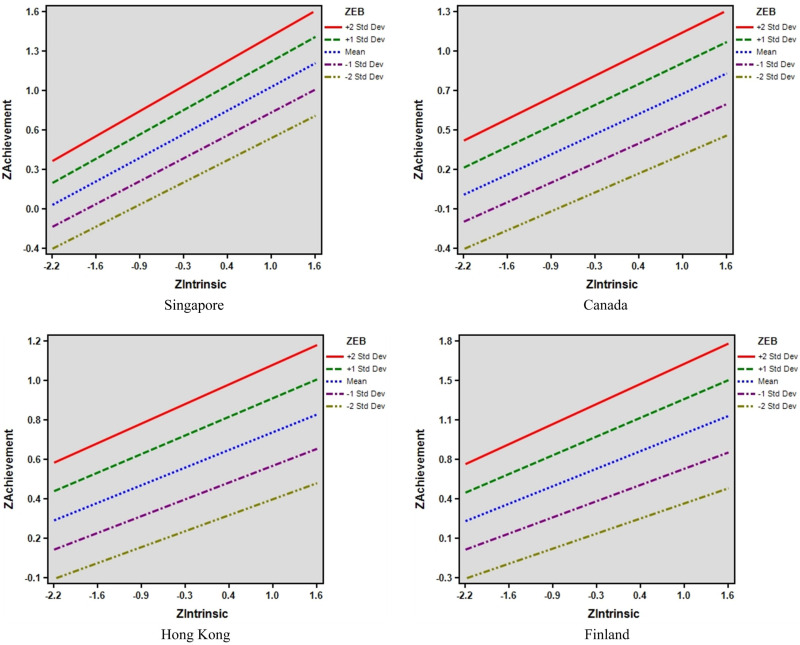
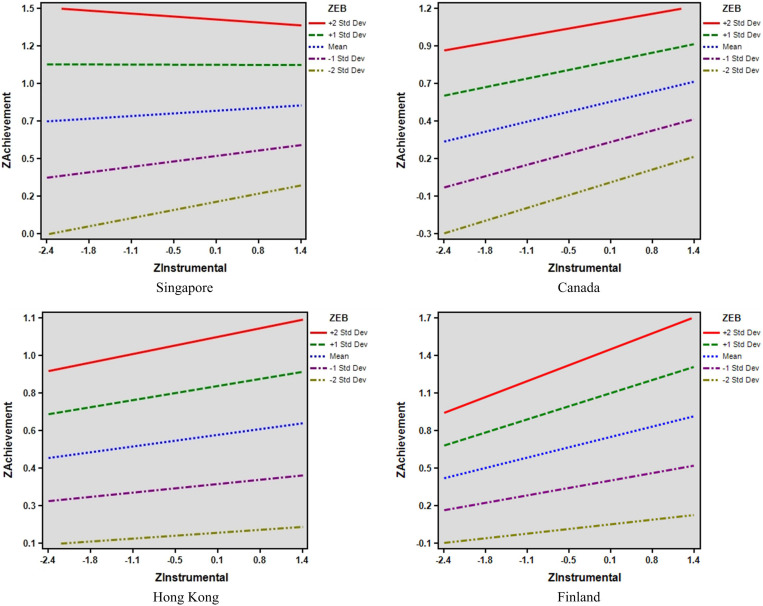
Research on self-determination theory emphasizes the importance of the internalization of motivation as a crucial factor for determining the quality of motivation. Hence, intrinsic motivation is deemed as an important predictor of learning. Research on epistemic beliefs, on the other hand, focuses on the nature of knowledge, and learning with more sophisticated epistemic beliefs associated with more adaptive outcomes. While learning and achievement are multiply determined, a more comprehensive theoretical model that takes into account both motivational quality and epistemic beliefs is needed. Hence, this study aims to examine the role of intrinsic and instrumental motivation alongside epistemic beliefs in predicting students' achievement in science. Data were drawn from the PISA 2015 survey. We focused on four of the top-performing societies. Two were Eastern societies - Singapore and Hong Kong, and the other two were Western societies: Canada and Finland. We found both common and specific patterns among the four societies. Regarding the common patterns, we found that intrinsic motivation and epistemic beliefs had direct positive effects on science achievement. As for the regionally-specific findings, instrumental motivation positively predicted achievement only in Western societies (i.e., Finland and Canada), but not in Eastern societies (i.e., Singapore and Hong Kong). The interaction effect between motivation and epistemic beliefs also demonstrated different patterns across the four societies. Implications for the role of motivation and epistemic beliefs in optimizing student learning and achievement are discussed.
自我决定理论的研究强调动机内化作为决定动机质量的关键因素的重要性。因此,内在动机被视为学习的重要预测指标。另一方面,认知信念的研究关注知识的本质,以及与更适应性结果相关的更复杂认知信念的学习。虽然学习和成绩是由多种因素决定的,但需要一个更全面的理论模型来同时考虑动机质量和认知信念。因此,本研究旨在考察内在动机和工具性动机以及认知信念在预测学生科学成绩方面的作用。数据来自2015年的国际学生评估项目(PISA)调查。我们关注四个表现最佳的社会群体。两个是东方社会——新加坡和中国香港,另外两个是西方社会:加拿大和芬兰。我们在这四个社会群体中发现了共同和特定的模式。关于共同模式,我们发现内在动机和认知信念对科学成绩有直接的积极影响。至于区域特定的发现,工具性动机仅在西方社会(即芬兰和加拿大)对成绩有正向预测作用,而在东方社会(即新加坡和中国香港)则不然。动机和认知信念之间的交互作用在这四个社会群体中也呈现出不同的模式。本文还讨论了动机和认知信念在优化学生学习和成绩方面的作用。