Bödder Johanna, Zahan Tasmin, van Slooten Rianne, Schreibelt Gerty, de Vries I Jolanda M, Flórez-Grau Georgina
Department of Tumor Immunology, Radboud Institute for Molecular Life Sciences, Radboud University Medical Center, Nijmegen, Netherlands.
Front Immunol. 2021 Feb 19;11:631713. doi: 10.3389/fimmu.2020.631713. eCollection 2020.
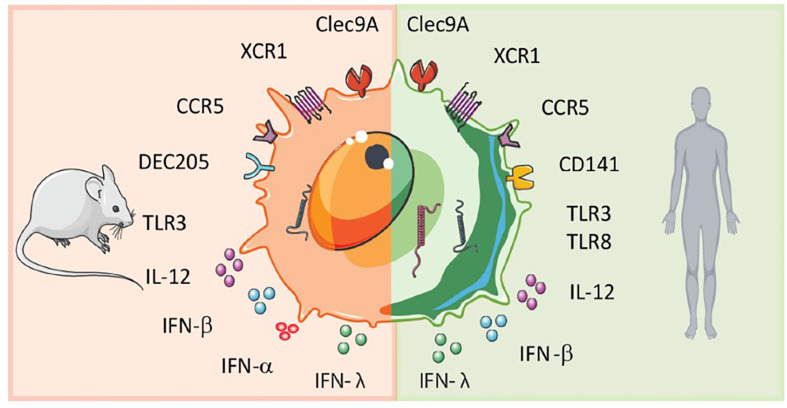
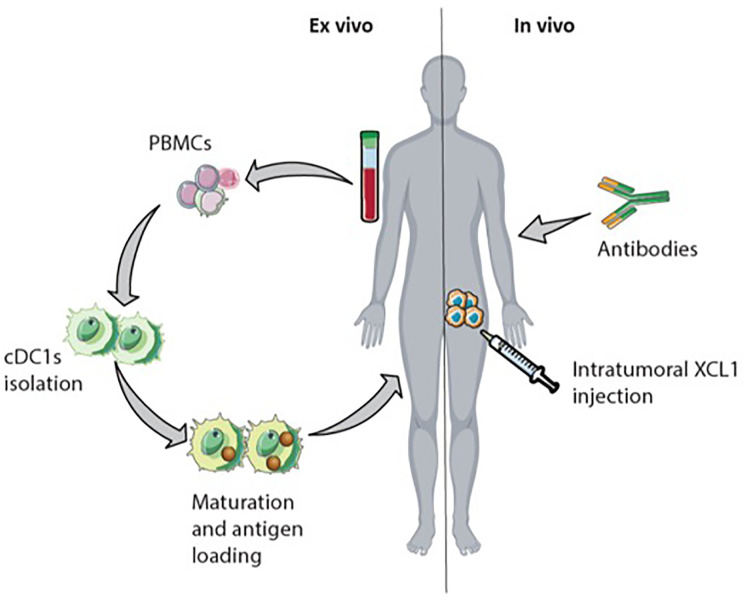
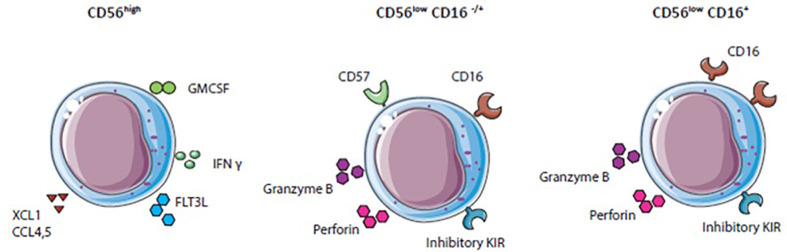
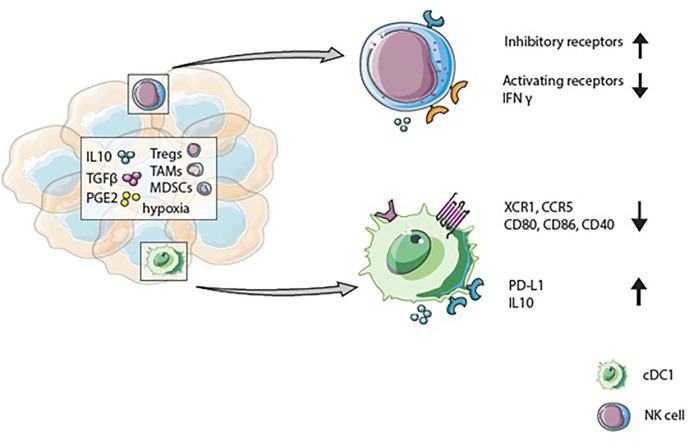
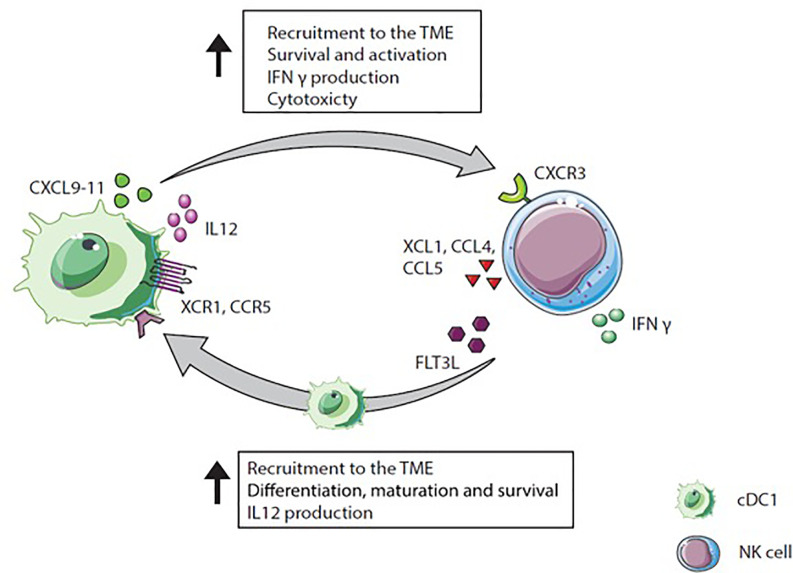
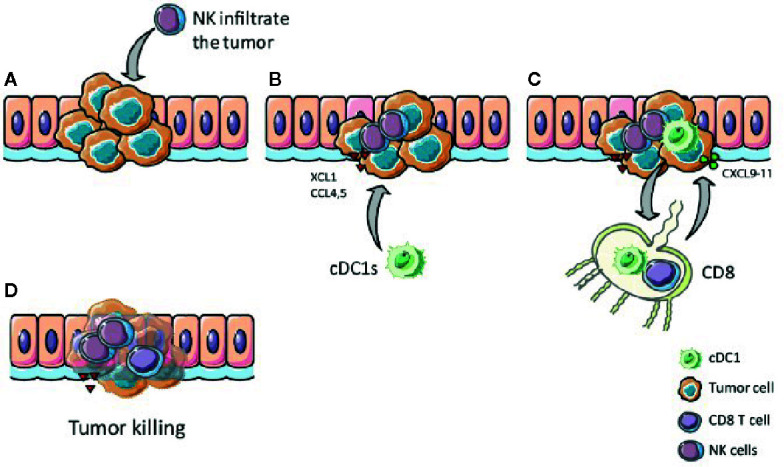
Immunotherapeutic approaches have revolutionized the treatment of several diseases such as cancer. The main goal of immunotherapy for cancer is to modulate the anti-tumor immune responses by favoring the recognition and destruction of tumor cells. Recently, a better understanding of the suppressive effect of the tumor microenvironment (TME) on immune cells, indicates that restoring the suppressive effect of the TME is crucial for an efficient immunotherapy. Natural killer (NK) cells and dendritic cells (DCs) are cell types that are currently administered to cancer patients. NK cells are used because of their ability to kill tumor cells directly cytotoxic granzymes. DCs are employed to enhance anti-tumor T cell responses based on their ability to present antigens and induce tumor-antigen specific CD8 T cell responses. In preclinical models, a particular DC subset, conventional type 1 DCs (cDC1s) is shown to be specialized in cross-presenting extracellular antigens to CD8 T cells. This feature makes them a promising DC subset for cancer treatment. Within the TME, cDC1s show a bidirectional cross-talk with NK cells, resulting in a higher cDC1 recruitment, differentiation, and maturation as well as activation and stimulation of NK cells. Consequently, the presence of cDC1s and NK cells within the TME might be of utmost importance for the success of immunotherapy. In this review, we discuss the function of cDC1s and NK cells, their bidirectional cross-talk and potential strategies that could improve cancer immunotherapy.
免疫治疗方法已经彻底改变了包括癌症在内的多种疾病的治疗方式。癌症免疫治疗的主要目标是通过促进对肿瘤细胞的识别和破坏来调节抗肿瘤免疫反应。最近,对肿瘤微环境(TME)对免疫细胞抑制作用的深入了解表明,恢复TME的抑制作用对于有效的免疫治疗至关重要。自然杀伤(NK)细胞和树突状细胞(DCs)是目前应用于癌症患者的细胞类型。使用NK细胞是因为它们能够直接通过细胞毒性颗粒酶杀死肿瘤细胞。DCs因其呈递抗原并诱导肿瘤抗原特异性CD8 T细胞反应的能力而被用于增强抗肿瘤T细胞反应。在临床前模型中,一种特殊的DC亚群,即传统1型DCs(cDC1s),被证明专门负责将细胞外抗原交叉呈递给CD8 T细胞。这一特性使它们成为癌症治疗中一个有前景的DC亚群。在TME中,cDC1s与NK细胞表现出双向串扰,导致更高的cDC1募集、分化和成熟,以及NK细胞的激活和刺激。因此,TME中cDC1s和NK细胞的存在对于免疫治疗的成功可能至关重要。在这篇综述中,我们讨论了cDC1s和NK细胞的功能、它们的双向串扰以及可能改善癌症免疫治疗的潜在策略。