Strasser Richard, Seifert Georg, Doblin Monika S, Johnson Kim L, Ruprecht Colin, Pfrengle Fabian, Bacic Antony, Estevez José M
Department of Applied Genetics and Cell Biology, University of Natural Resources and Life Sciences, Vienna, Austria.
La Trobe Institute for Agriculture & Food, Department of Animal, Plant & Soil Sciences, La Trobe University, Bundoora, VIC, Australia.
Front Plant Sci. 2021 Feb 19;12:640919. doi: 10.3389/fpls.2021.640919. eCollection 2021.
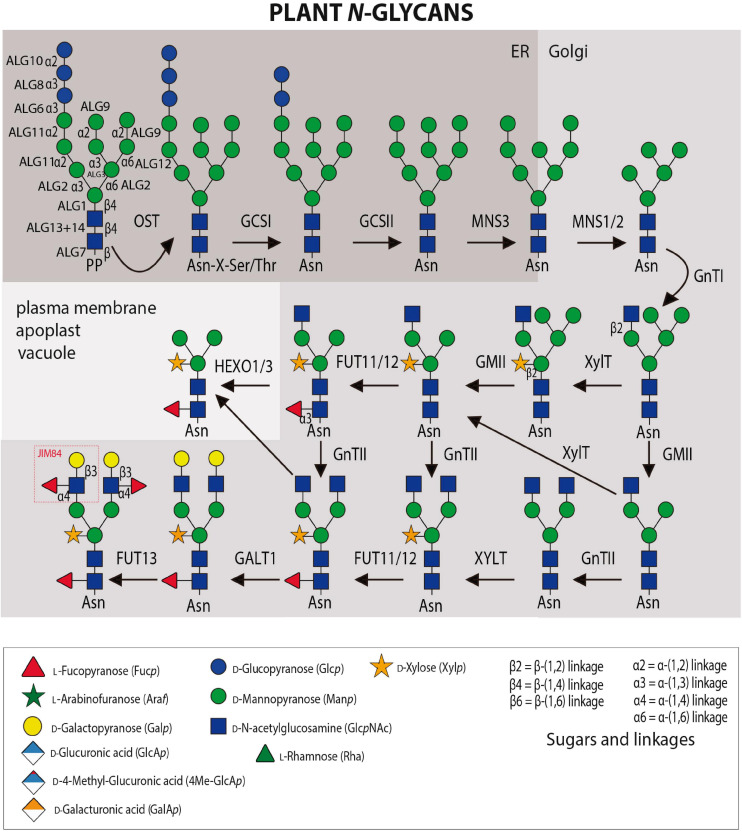
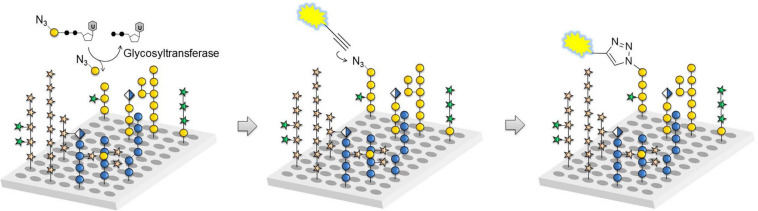
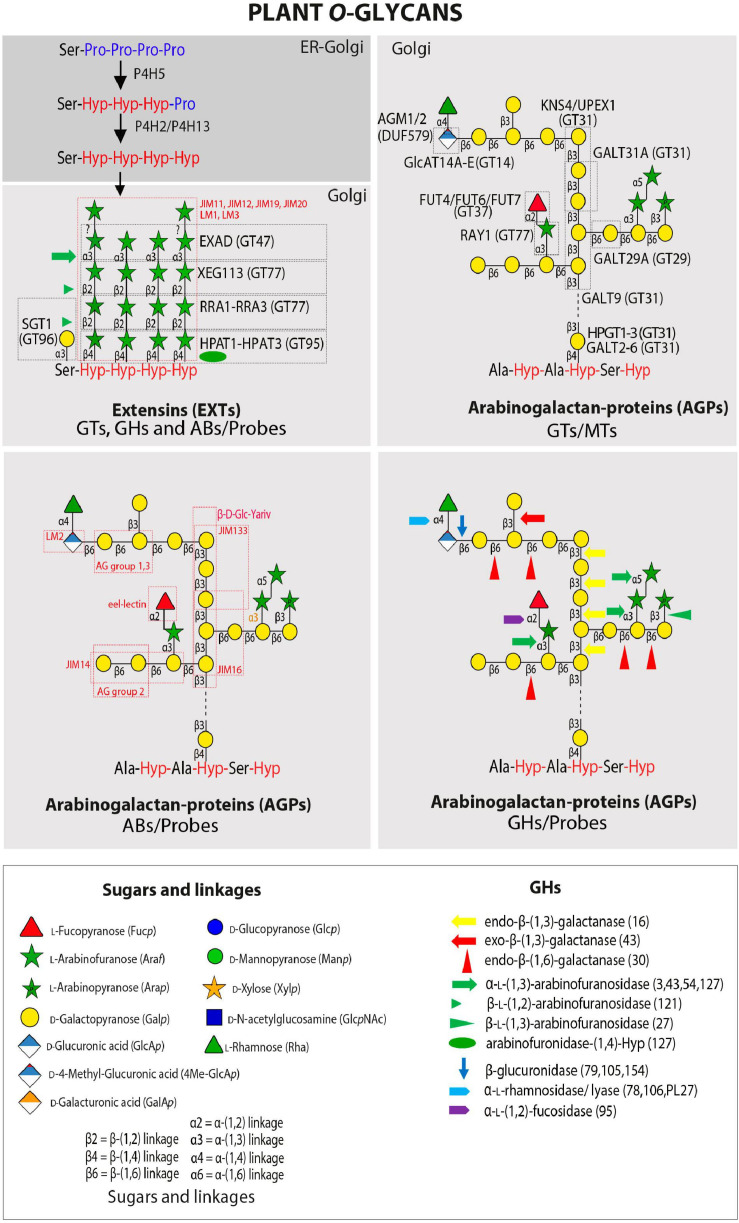
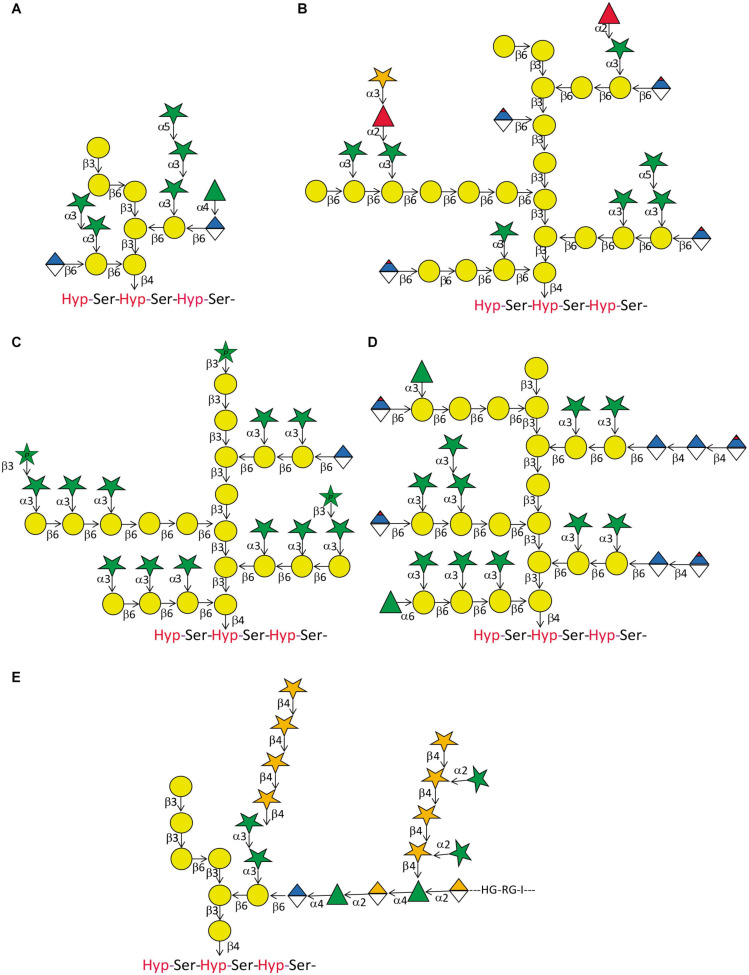
Glycosylation is a fundamental co-translational and/or post-translational modification process where an attachment of sugars onto either proteins or lipids can alter their biological function, subcellular location and modulate the development and physiology of an organism. Glycosylation is not a template driven process and as such produces a vastly larger array of glycan structures through combinatorial use of enzymes and of repeated common scaffolds and as a consequence it provides a huge expansion of both the proteome and lipidome. While the essential role of - and -glycan modifications on mammalian glycoproteins is already well documented, we are just starting to decode their biological functions in plants. Although significant advances have been made in plant glycobiology in the last decades, there are still key challenges impeding progress in the field and, as such, holistic modern high throughput approaches may help to address these conceptual gaps. In this snapshot, we present an update of the most common - and -glycan structures present on plant glycoproteins as well as (1) the plant glycosyltransferases (GTs) and glycosyl hydrolases (GHs) responsible for their biosynthesis; (2) a summary of microorganism-derived GHs characterized to cleave specific glycosidic linkages; (3) a summary of the available tools ranging from monoclonal antibodies (mAbs), lectins to chemical probes for the detection of specific sugar moieties within these complex macromolecules; (4) selected examples of - and -glycoproteins as well as in their related GTs to illustrate the complexity on their mode of action in plant cell growth and stress responses processes, and finally (5) we present the carbohydrate microarray approach that could revolutionize the way in which unknown plant GTs and GHs are identified and their specificities characterized.
糖基化是一种基本的共翻译和/或翻译后修饰过程,在此过程中,糖类附着于蛋白质或脂质上可改变它们的生物学功能、亚细胞定位,并调节生物体的发育和生理机能。糖基化不是由模板驱动的过程,因此通过酶的组合使用以及重复的常见支架可产生种类繁多的聚糖结构,结果是它极大地扩展了蛋白质组和脂质组。虽然N-糖基化和O-糖基化修饰对哺乳动物糖蛋白的重要作用已有充分记录,但我们才刚刚开始解读它们在植物中的生物学功能。尽管在过去几十年里植物糖生物学取得了重大进展,但该领域仍存在阻碍进展的关键挑战,因此,全面的现代高通量方法可能有助于填补这些概念上的空白。在本综述中,我们介绍了植物糖蛋白上最常见的N-糖基化和O-糖基化结构的最新情况,以及(1)负责其生物合成的植物糖基转移酶(GTs)和糖基水解酶(GHs);(2)已鉴定出可切割特定糖苷键的微生物来源GHs的总结;(3)从单克隆抗体(mAbs)、凝集素到化学探针等用于检测这些复杂大分子中特定糖部分的可用工具的总结;(4)N-糖蛋白和O-糖蛋白及其相关GTs的选定示例,以说明它们在植物细胞生长和应激反应过程中作用模式的复杂性,最后(5)我们介绍了碳水化合物微阵列方法,该方法可能会彻底改变鉴定未知植物GTs和GHs及其特异性的方式。