Mirnezami Mahboobe, Ranjbar Reza, Niakan Mohammad, Ahmadi Mohammad Hossein
Department of Microbiology, Faculty of Medicine, Shahed University, Tehran, Iran.
Molecular Biology Research Center, Systems Biology and Poisonings Institure Baqiyatallah University of Medical Sciences, Tehran, Iran.
Iran J Pharm Res. 2020 Summer;19(3):282-287. doi: 10.22037/ijpr.2020.1101148.
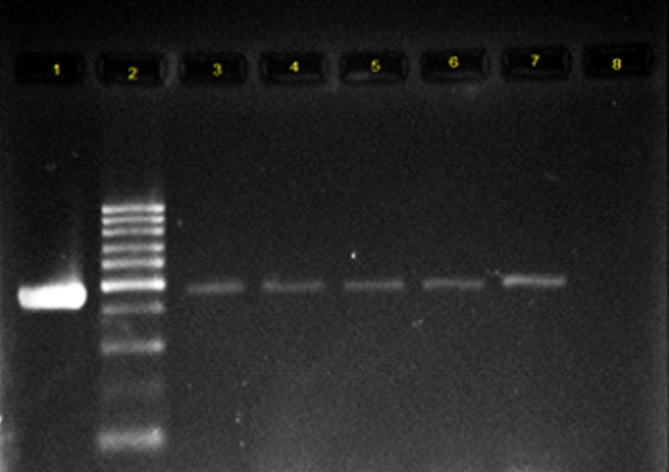
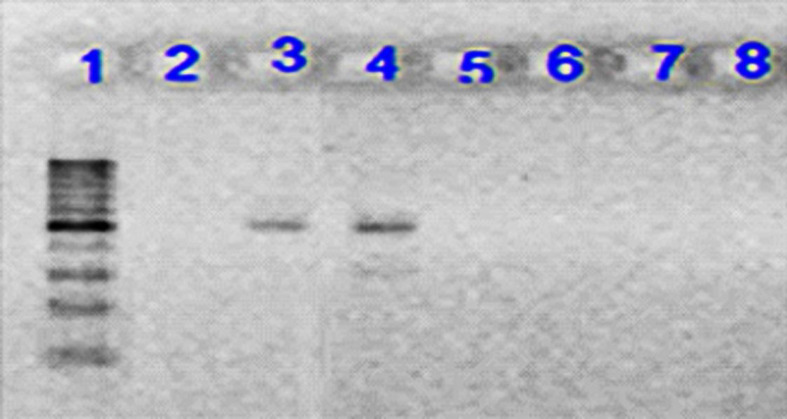
Resistance to antimicrobial compounds in strains is increasing. Integrons are mobile genetic elements that lead to the spread and transfer of antibiotic resistance genes in bacteria. The aim of the present study was to determine the frequency of class 1 and 2 integrons as well as the antimicrobial resistance in strains isolated from urinary tract infections (UTIs). A total of 100 clinical isolates of uropathogenic (UPEC) were collected from patients having UTIs. These strains were identified using biochemical tests. The antibiotic susceptibility patterns of the isolated bacteria were determined in accordance with the standard method recommended by the clinical and laboratory standards institute (CLSI). The presence of class 1 and 2 integrons was determined by PCR method. The most frequent antibiotic resistance was observed to ampicillin (72%), co-trimoxazole (66%), and nalidixic acid (62%). The highest sensitivity was seen to amikacine (11%) and gentamicin (20%). The multi-drug resistance (MDR) was observed in 80% of isolates. 70% and 3% of isolate possessed class 1 and 2 integrons, respectively. Our data suggest that the antimicrobial resistance to some antibiotics as well as the frequency of class 1 and 2 integrons is very high in strains. Moreover, class 1 integrons are correlated with resistance to ampicillin, gentamicin, ciprofloxacin, co-trimoxazole, and nalidixic acid. Therefore, it is very important to monitor integron-induced drug resistance, especially class 1 integron, in order to control the urinary tract infections causing by MDR strains.
菌株对抗菌化合物的耐药性正在增加。整合子是可移动的遗传元件,可导致细菌中抗生素耐药基因的传播和转移。本研究的目的是确定从尿路感染(UTIs)分离出的菌株中1类和2类整合子的频率以及抗菌耐药性。总共从患有UTIs的患者中收集了100株尿路致病性大肠杆菌(UPEC)临床分离株。使用生化试验对这些菌株进行鉴定。根据临床和实验室标准协会(CLSI)推荐的标准方法确定分离细菌的抗生素敏感性模式。通过PCR方法确定1类和2类整合子的存在。观察到最常见的抗生素耐药性为氨苄青霉素(72%)、复方新诺明(66%)和萘啶酸(62%)。对阿米卡星(11%)和庆大霉素(20%)的敏感性最高。在80%的大肠杆菌分离株中观察到多重耐药(MDR)。分别有70%和3%的大肠杆菌分离株拥有1类和2类整合子。我们的数据表明,大肠杆菌菌株对某些抗生素的耐药性以及1类和2类整合子的频率非常高。此外,1类整合子与对氨苄青霉素、庆大霉素、环丙沙星、复方新诺明和萘啶酸的耐药性相关。因此,监测整合子诱导的耐药性,尤其是1类整合子,对于控制由多重耐药大肠杆菌菌株引起的尿路感染非常重要。