Nahon Pierre, Allaire Manon, Nault Jean-Charles, Paradis Valérie
APHP, Service d'Hépatologie, Hôpital Jean Verdier, Hôpitaux Universitaires Paris-Seine-Saint-Denis, Bondy.
Inserm, UMR-1162, Génomique Fonctionnelle des Tumeurs Solides, Equipe Labellisée Ligue Contre le Cancer, Institut Universitaire d'Hématologie, Paris, France.
Hepat Oncol. 2020 Dec 29;7(4):HEP36. doi: 10.2217/hep-2020-0017.
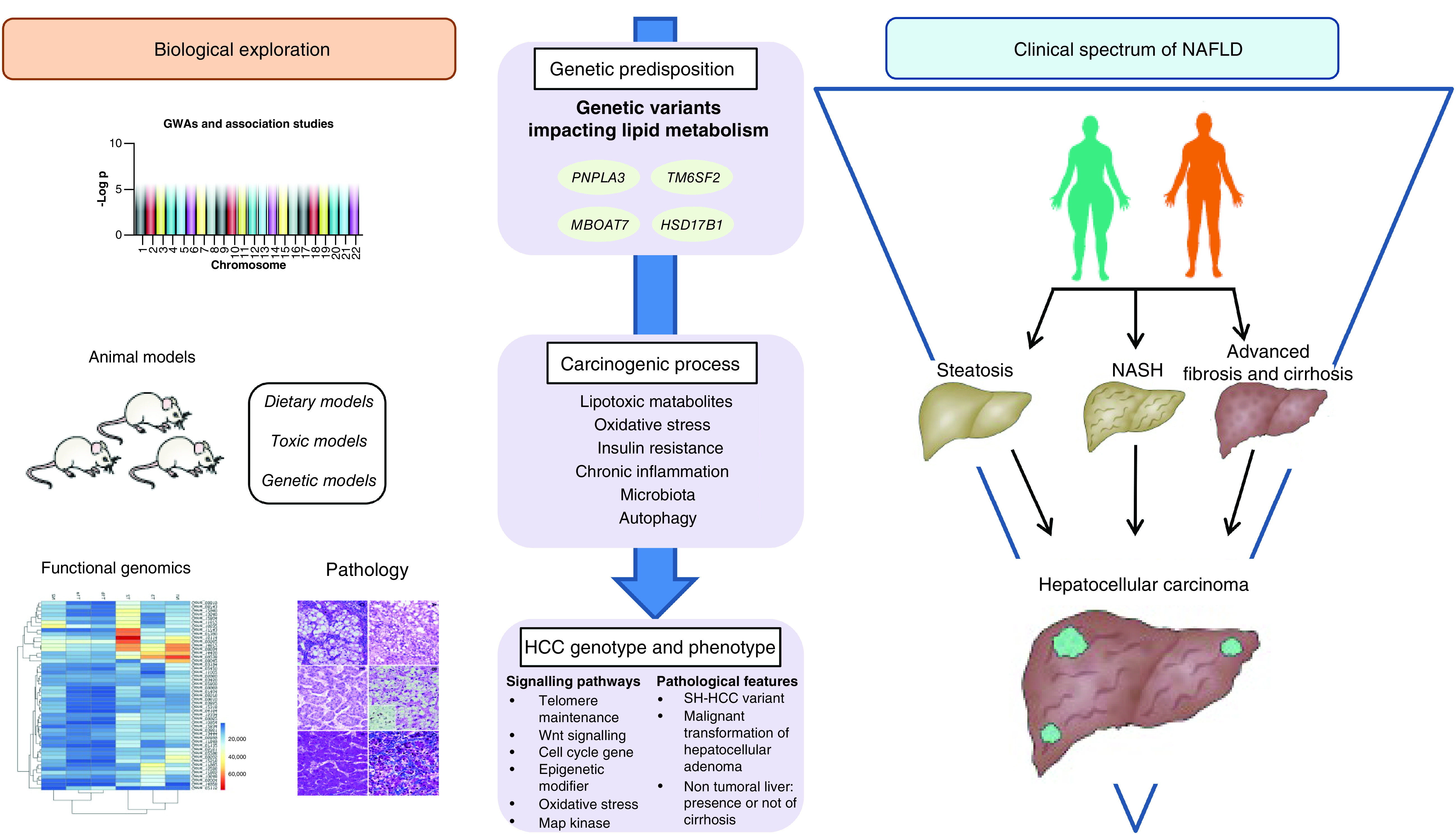
Hepatocellular carcinoma (HCC) developed in non-alcoholic fatty liver disease (NAFLD) individuals presents substantial clinical and biological characteristics, which remain to be elucidated. Its occurrence in noncirrhotic patients raises issues regarding surveillance strategies, which cannot be considered as cost-effective given the high prevalence of obesity and metabolic syndrome, and furthermore delineates specific oncogenic process that could be targeted in the setting of primary or secondary prevention. In this context, the identification of a genetic heterogeneity modulating HCC risk as well as specific biological pathways have been made possible through genome-wide association studies, development of animal models and in-depth analyses of human samples at the pathological and genomic levels. These advances must be confirmed and pursued to pave the way for personalized management of NAFLD-related HCC.
非酒精性脂肪性肝病(NAFLD)患者发生的肝细胞癌(HCC)具有大量有待阐明的临床和生物学特征。其在非肝硬化患者中的发生引发了关于监测策略的问题,鉴于肥胖和代谢综合征的高患病率,这些策略不被认为具有成本效益,此外还描绘了在一级或二级预防中可能成为靶点的特定致癌过程。在此背景下,通过全基因组关联研究、动物模型的开发以及在病理和基因组水平对人类样本的深入分析,已经能够识别调节HCC风险的遗传异质性以及特定的生物学途径。必须确认并推进这些进展,为NAFLD相关HCC的个性化管理铺平道路。