Colaris Maartje J L, Cohen Tervaert Jan Willem, Ponds Rudolf W H M, Wilmink Johan, van der Hulst Rene R W J
Department of Plastic Surgery, Hand and Burn Surgery, University Hospital RWTH Aachen, Aachen, Germany.
Division of Rheumatology, Department of Medicine, University of Alberta, Alberta, Canada.
Plast Reconstr Surg Glob Open. 2021 Feb 17;9(2):e3394. doi: 10.1097/GOX.0000000000003394. eCollection 2021 Feb.
Cognitive impairment is frequently reported by silicone breast implant (SBI) patients. The aim of our study is to investigate whether subjective cognitive failure indeed is more frequent in a cohort of SBI patients compared with healthy controls (HCs). Furthermore, the severity of this cognitive failure and a possible relation to other symptoms as well as the duration of SBI exposure was examined. In addition, we assessed the effect of ruptures and reinterventions on cognitive failure severity.
A cohort study was performed, including 376 women and consisting of 3 different groups of patients; 143 SBI patients (group 1), 94 age- and sex-matched HC patients (group 2), and 139 women with SBI and health issues who registered themselves at a Dutch foundation for women with illness due to SBI (group 3). All patients filled in the Cognitive Failure Questionnaire (CFQ). The American College of Rheumatology Fibromyalgia Diagnostic Criteria (2010) were used to score other symptoms.
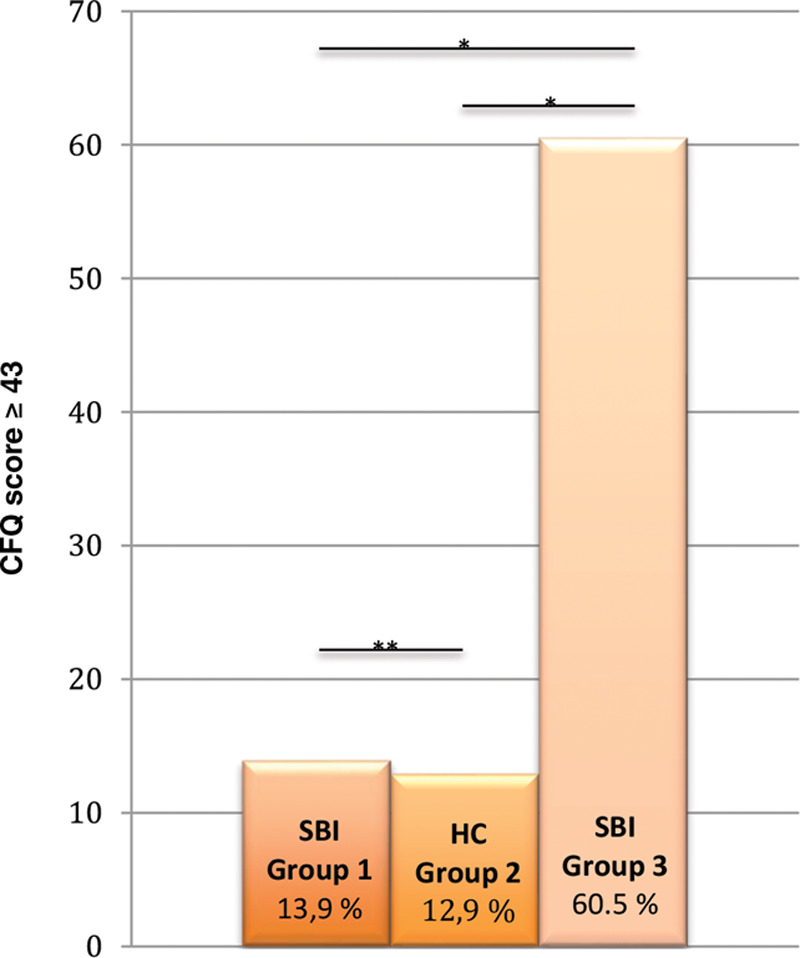
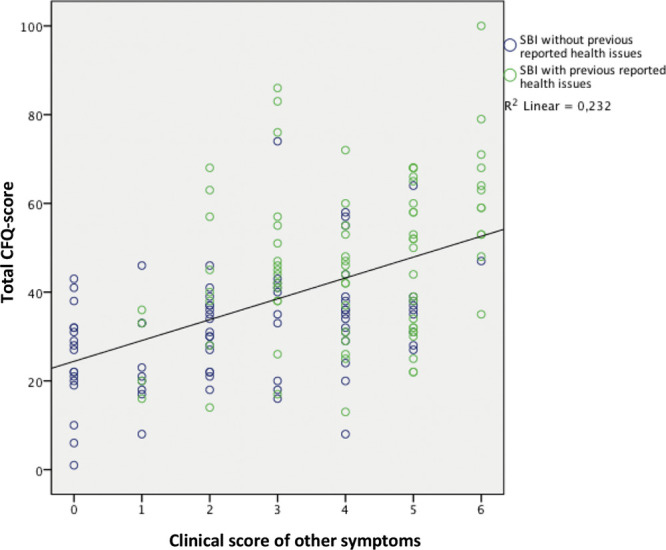
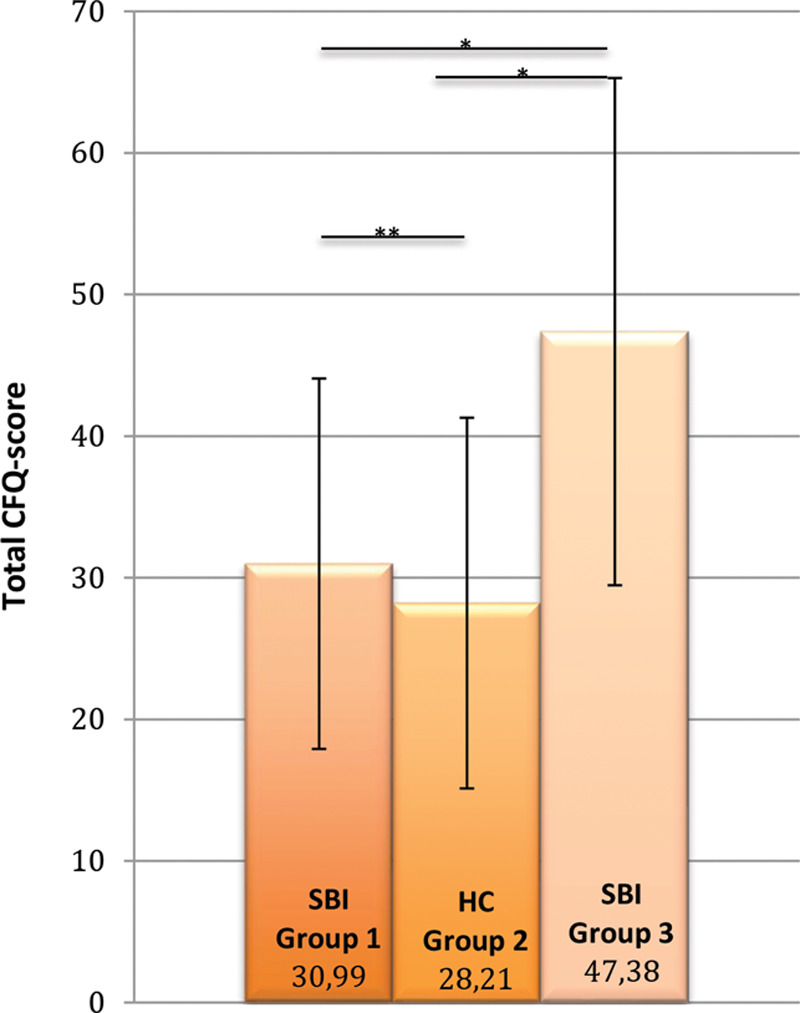
Completed CFQ data from 222 patients were available for analysis: n = 79 for group 1, n = 62 for group 2, and n = 81 for group 3. SBI patients from group 3 had a significantly higher prevalence of subjective cognitive dysfunction (CFQ score ≥ 43) compared with SBI patients from group 1 and HC (60.5% versus 13.9% and 12.9%; = 0.000). Linear regression showed a statistically significant relation between subjective cognitive functioning scores and other symptoms ( = 0.000). Implant duration as well as rupture rate and reinterventions were not found to significantly influence CFQ scores.
An increased risk of cognitive failure in consecutive SBI patients when compared with HCs could not be found.
硅胶乳房植入物(SBI)患者经常报告有认知障碍。我们研究的目的是调查与健康对照者(HCs)相比,SBI患者队列中主观认知失误是否确实更频繁。此外,还研究了这种认知失误的严重程度以及与其他症状的可能关系,以及SBI暴露的持续时间。此外,我们评估了破裂和再次干预对认知失误严重程度的影响。
进行了一项队列研究,包括376名女性,由3组不同的患者组成;143名SBI患者(第1组),94名年龄和性别匹配的HC患者(第2组),以及139名因SBI患病在荷兰一个女性疾病基金会登记自己情况的患有SBI和健康问题的女性(第3组)。所有患者填写了认知失误问卷(CFQ)。使用美国风湿病学会纤维肌痛诊断标准(2010年)对其他症状进行评分。
来自222名患者的完整CFQ数据可用于分析:第1组n = 79,第2组n = 62,第3组n = 81。与第1组SBI患者和HC相比(60.5%对13.9%和12.9%;P = 0.000),第3组SBI患者主观认知功能障碍(CFQ评分≥43)的患病率显著更高。线性回归显示主观认知功能评分与其他症状之间存在统计学显著关系(P = 0.000)。未发现植入持续时间以及破裂率和再次干预对CFQ评分有显著影响。
未发现与HCs相比,连续SBI患者认知失误风险增加。