Li Xin, Wu Ping, Tang Yaoyun, Fan Yuhua, Liu Yalan, Fang Xing, Wang Wei, Zhao Suping
Department of Otorhinolaryngology Head and Neck Surgery, Xiangya Hospital of Central South University, Changsha, China.
Province Key Laboratory of Otolaryngology Critical Diseases, Xiangya Hospital of Central South University, Changsha, China.
Front Oncol. 2020 Dec 21;10:544476. doi: 10.3389/fonc.2020.544476. eCollection 2020.
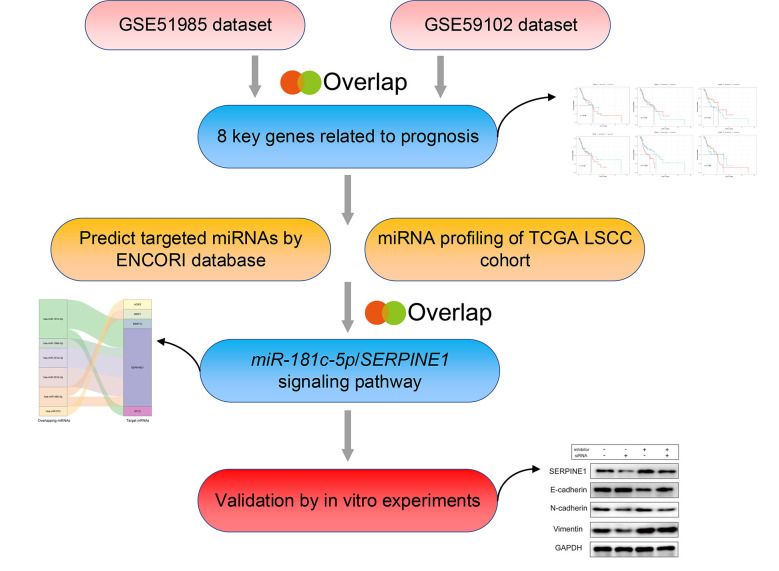
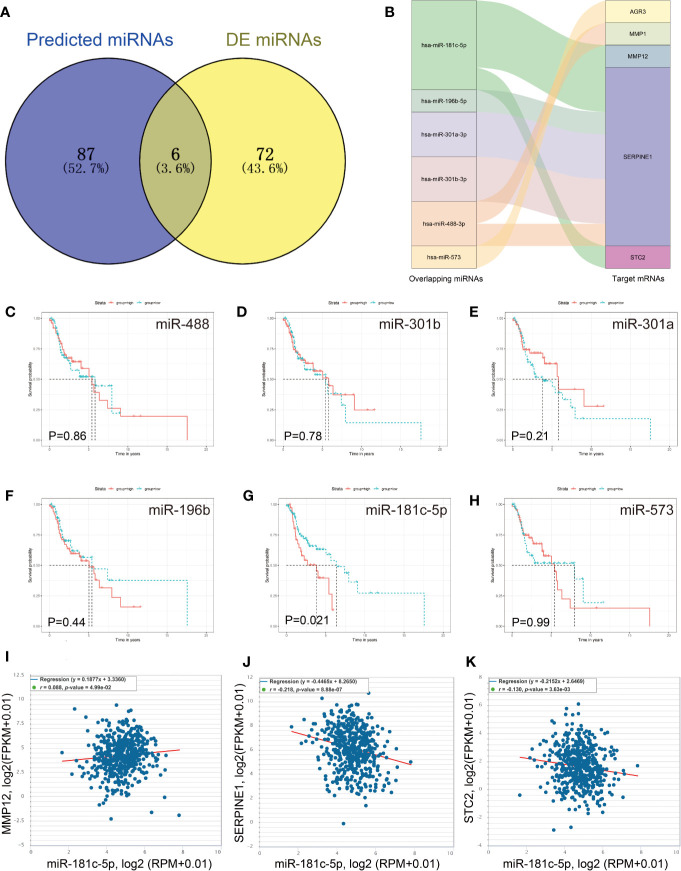
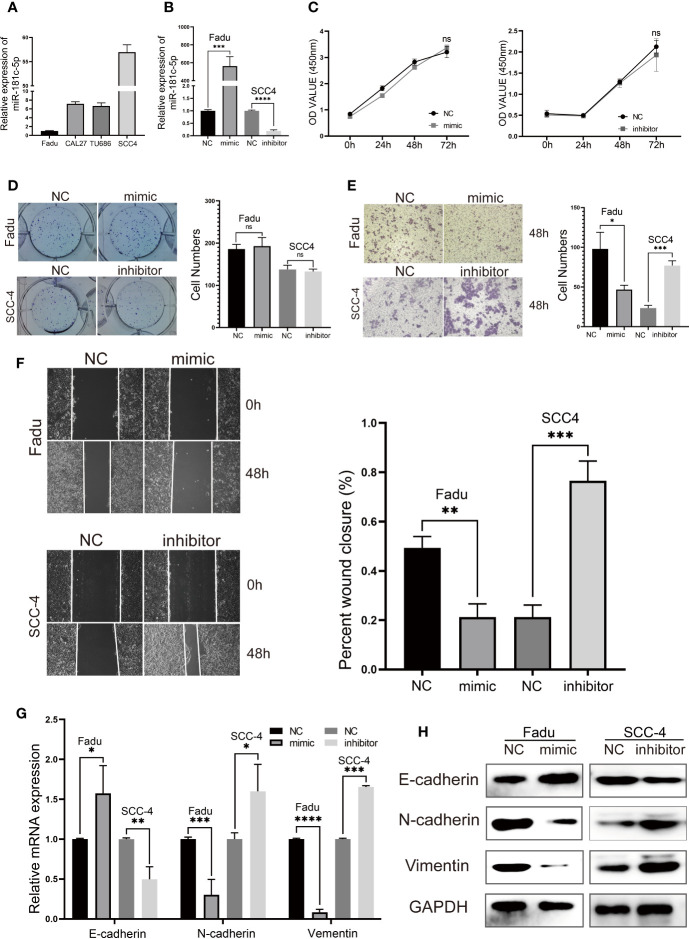
Laryngeal squamous cell carcinoma (LSCC) arises from the squamous epithelium of the larynx and is associated with a high incidence of cervical lymph node metastasis. MicroRNAs (miRNAs) play a crucial role in the epigenetic regulation of cellular biological processes, including cancer metastasis. However, the molecular mechanisms of specific miRNAs responsible for LSCC metastasis and their clinical significance have yet to be fully elucidated. In this study, LSCC cohort datasets from the Gene Expression Omnibus (GEO) and The Cancer Genome Atlas (TCGA) were downloaded and examined by comprehensive bioinformatics analysis, which revealed that upregulation of mRNA and downregulation of were associated with unfavorable overall survival. Our analysis showed that expression negatively correlated with the expression level of in our LSCC patient samples. Silencing of expression promoted cell migration and invasion in cell lines, whereas the overexpression of suppressed cell migration and epithelial-to-mesenchymal transition (EMT) through the downregulation of . Further analysis showed that the enhancement effect on EMT and metastasis induced by silencing could be rescued through knockdown of expression . Collectively, our findings indicated that acted as an EMT suppressor miRNA by downregulation of in LSCC and offers novel strategies for the prevention of metastasis in LSCC.
喉鳞状细胞癌(LSCC)起源于喉部的鳞状上皮,且与颈部淋巴结转移的高发生率相关。微小RNA(miRNA)在包括癌症转移在内的细胞生物学过程的表观遗传调控中发挥着关键作用。然而,负责LSCC转移的特定miRNA的分子机制及其临床意义尚未完全阐明。在本研究中,从基因表达综合数据库(GEO)和癌症基因组图谱(TCGA)下载了LSCC队列数据集,并通过综合生物信息学分析进行检查,结果显示mRNA的上调和 的下调与总体生存不良相关。我们的分析表明,在我们的LSCC患者样本中, 表达与 的表达水平呈负相关。 在细胞系中表达的沉默促进了细胞迁移和侵袭,而 的过表达通过下调 抑制了细胞迁移和上皮-间质转化(EMT)。进一步分析表明,通过敲低 的表达,可以挽救沉默 对EMT和转移的增强作用。总体而言,我们的研究结果表明, 在LSCC中通过下调 发挥EMT抑制性miRNA的作用,并为预防LSCC转移提供了新的策略。