Gao Jian, Shi Ning, Guo Hongju, Gao Junfeng, Tang Xu, Yuan Siyuan, Qian Jiahui, Wen Binyu
Beijing University of Chinese Medicine, Beijing 100029, P. R. China.
Dongfang Hospital, Beijing University of Chinese Medicine, Beijing 100078, P. R. China.
ACS Omega. 2021 Feb 19;6(8):5348-5358. doi: 10.1021/acsomega.0c05488. eCollection 2021 Mar 2.
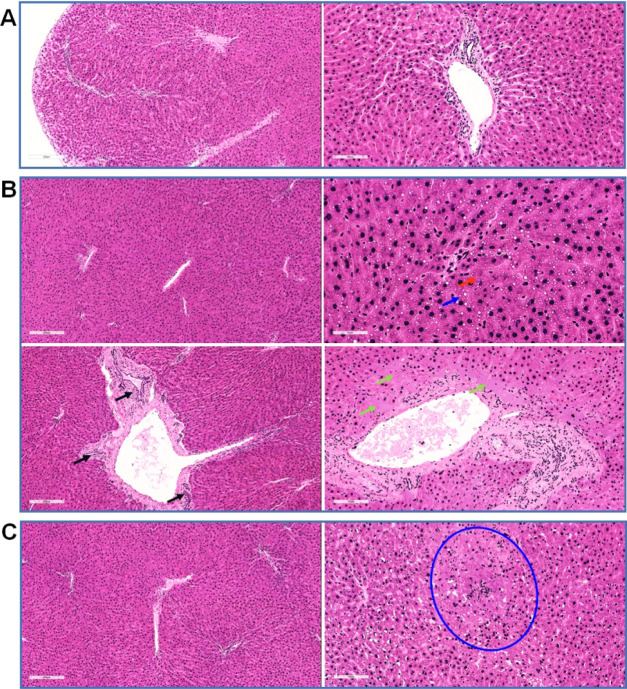
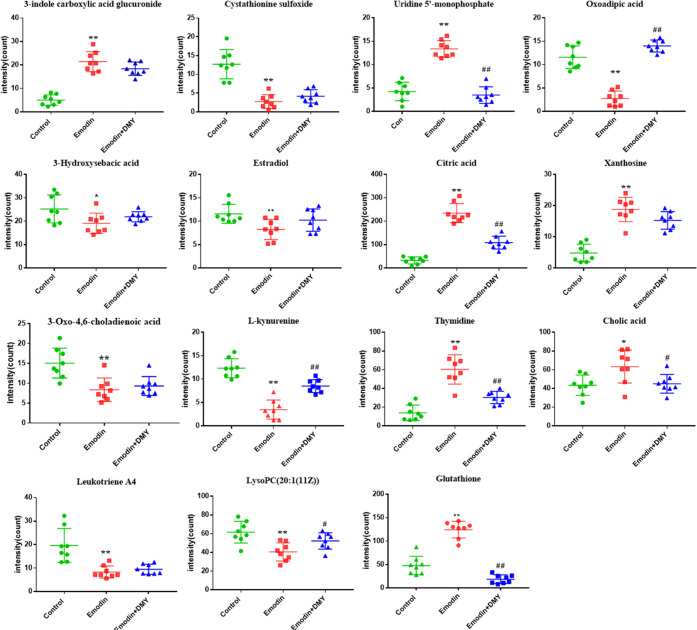
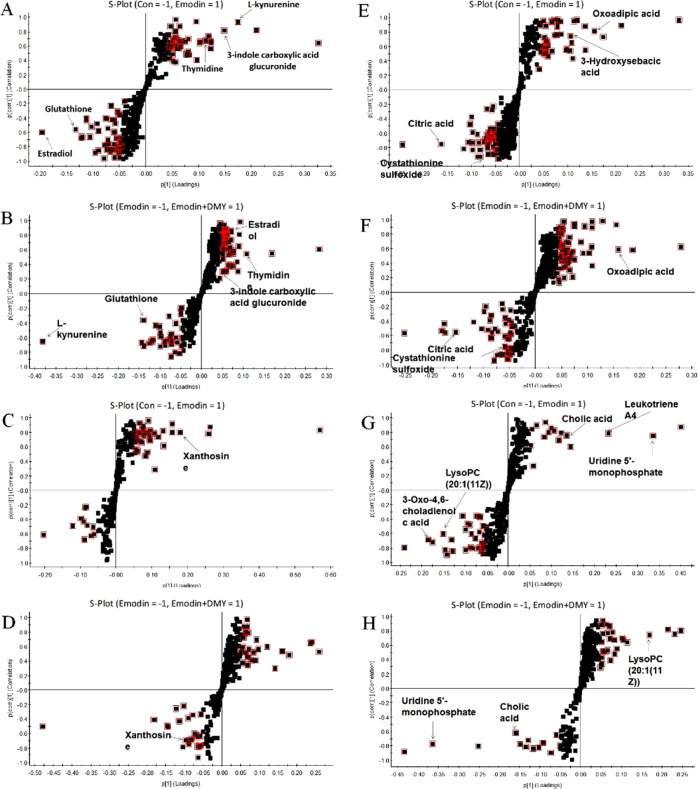
Dihydromyricetin (DMY), an important flavanone found in , plays a protective role in liver injury. Our previous research found that DMY protected L02 cells against hepatotoxicity caused by emodin. In this study, serum, urine, and liver samples from rats were systematically used for biochemical analysis, pathological observation, and nontargeted metabolomics to evaluate the toxicity of emodin and DMY intervention. After oral administration of DMY, DMY may alleviate liver injury by improving liver metabolism. Approximately, 8 of 15 metabolites in rat urine and serum were significantly regulated by DMY. Metabolic pathway analysis showed that glutathione metabolism, pyrimidine metabolism, and tryptophan metabolism were the most affected pathways, and 18 proteins were predicted to be potential targets of DMY during the alleviation of liver injury induced by emodin. This research is of great significance in confirming the liver-protective effect of DMY, especially during acute liver injury caused by traditional Chinese medicine.
二氢杨梅素(DMY)是一种存在于[具体来源未给出]中的重要黄烷酮,对肝损伤具有保护作用。我们之前的研究发现,DMY可保护L02细胞免受大黄素引起的肝毒性。在本研究中,系统地使用大鼠的血清、尿液和肝脏样本进行生化分析、病理观察和非靶向代谢组学,以评估大黄素的毒性和DMY干预效果。口服DMY后,DMY可能通过改善肝脏代谢来减轻肝损伤。大鼠尿液和血清中约15种代谢物中的8种受到DMY的显著调节。代谢途径分析表明,谷胱甘肽代谢、嘧啶代谢和色氨酸代谢是受影响最大的途径,并且预测有18种蛋白质是DMY在减轻大黄素诱导的肝损伤过程中的潜在靶点。这项研究对于证实DMY的肝脏保护作用具有重要意义,特别是在中药引起的急性肝损伤期间。