Department of Medicine, Division of Pulmonary and Critical Care Medicine.
Sandler Asthma Basic Research Center.
JCI Insight. 2021 Mar 8;6(5):139019. doi: 10.1172/jci.insight.139019.
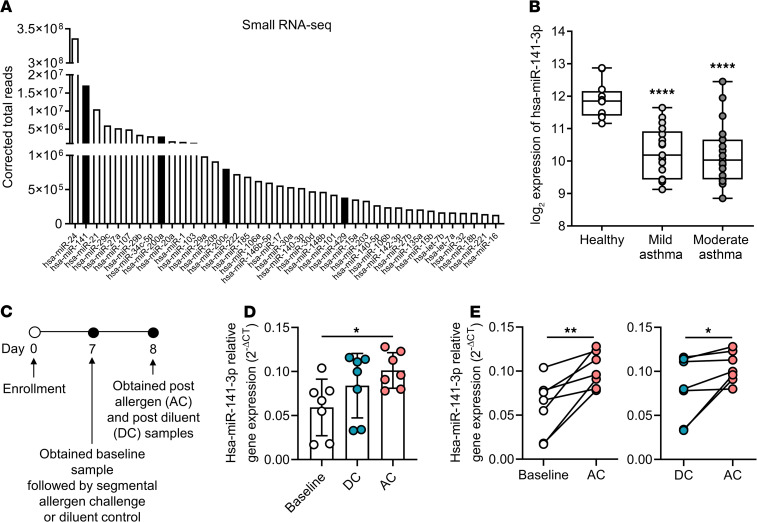
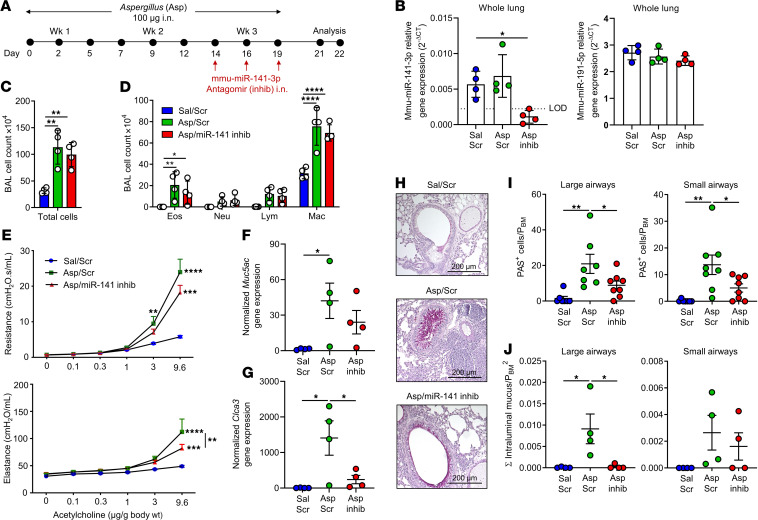
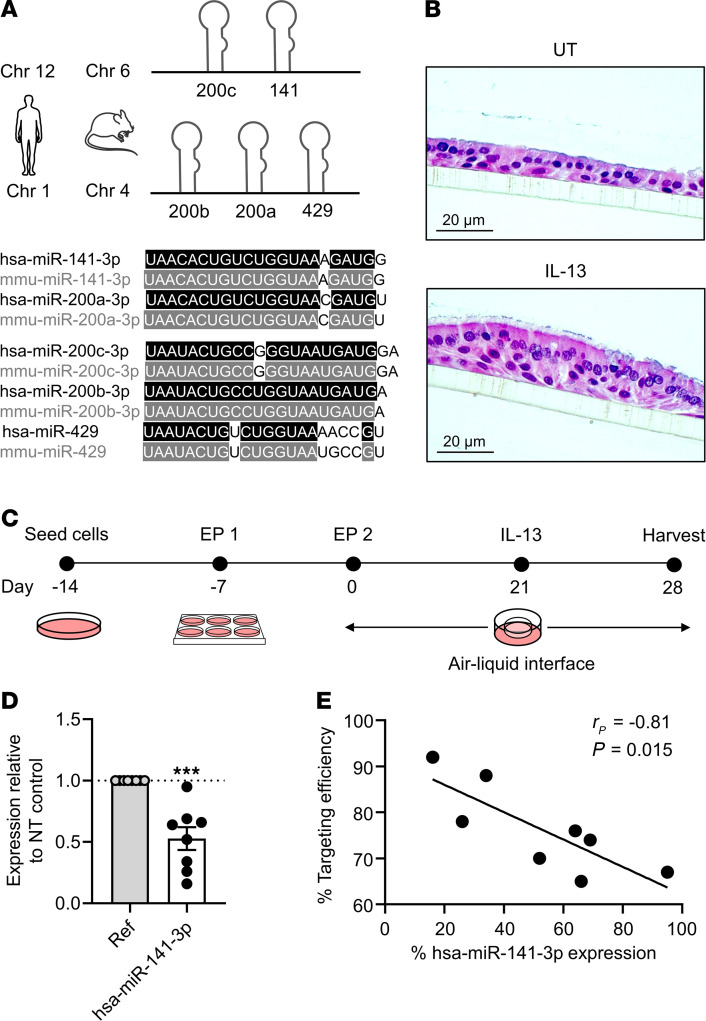
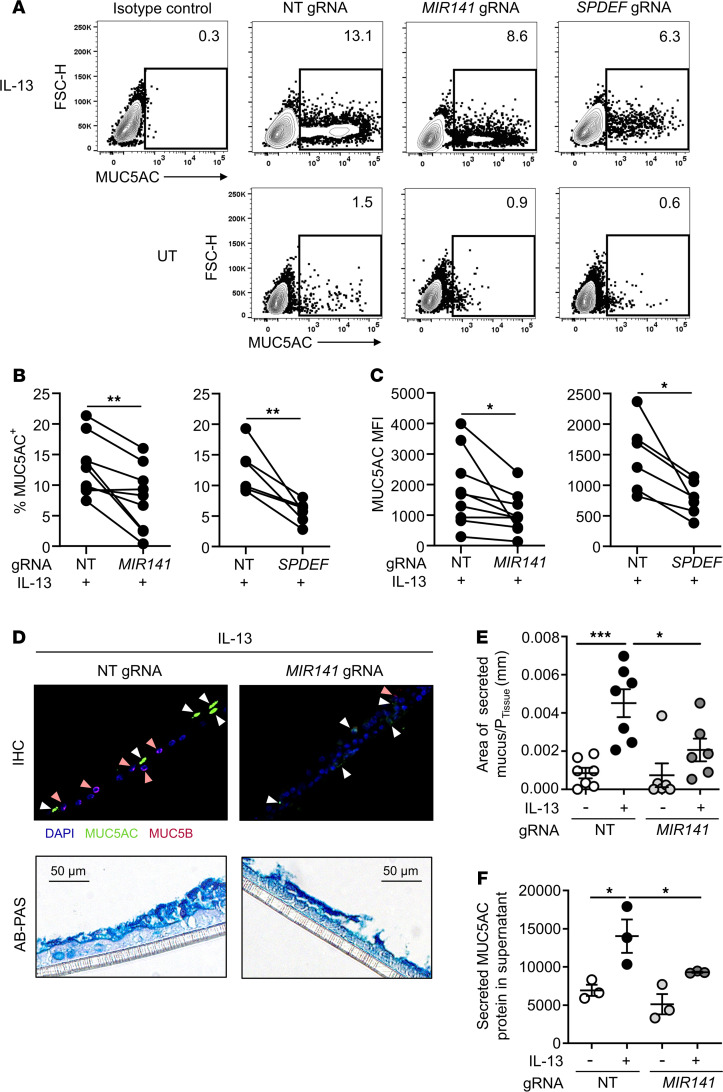
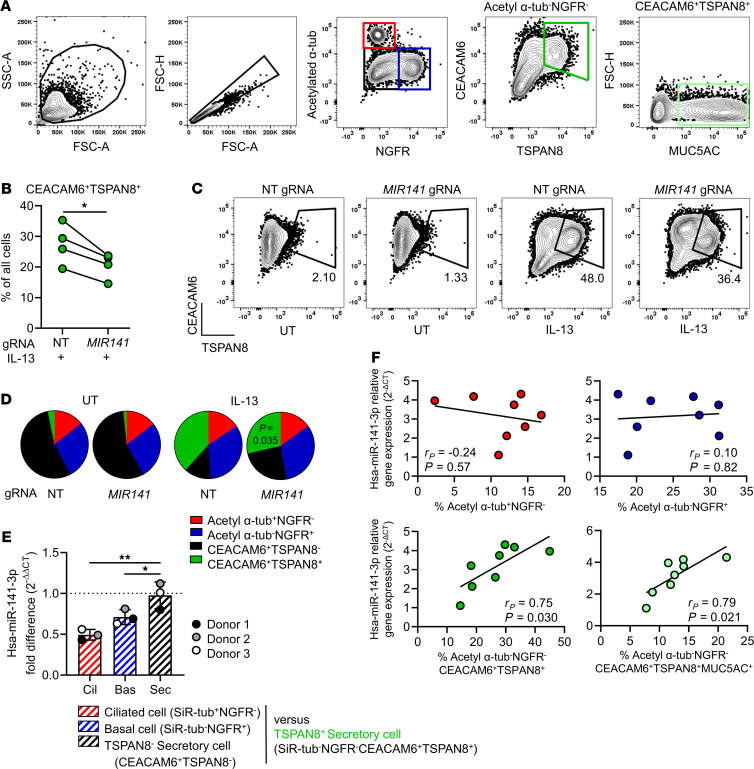
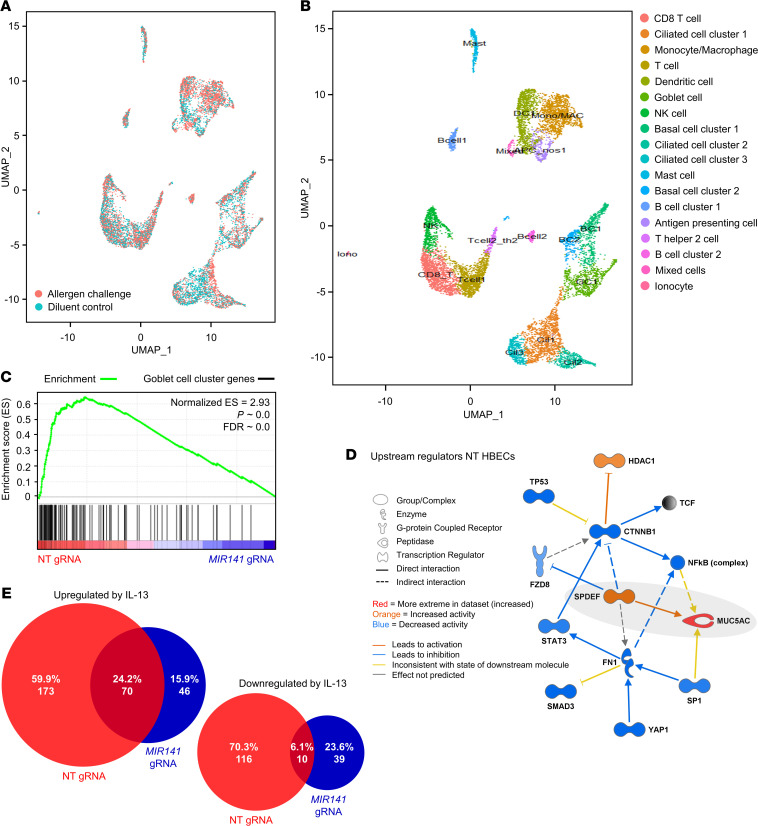
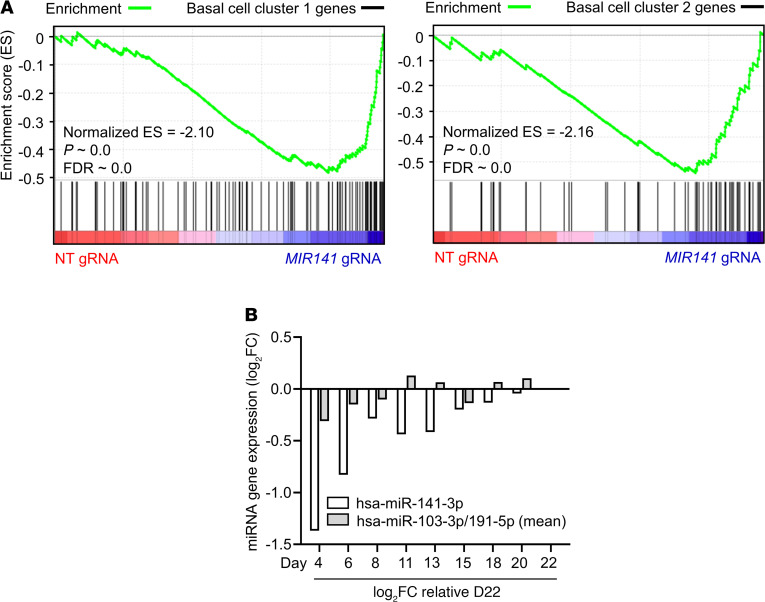
IL-13-induced goblet cell metaplasia contributes to airway remodeling and pathological mucus hypersecretion in asthma. miRNAs are potent modulators of cellular responses, but their role in mucus regulation is largely unexplored. We hypothesized that airway epithelial miRNAs play roles in IL-13-induced mucus regulation. miR-141 is highly expressed in human and mouse airway epithelium, is altered in bronchial brushings from asthmatic subjects at baseline, and is induced shortly after airway allergen exposure. We established a CRISPR/Cas9-based protocol to target miR-141 in primary human bronchial epithelial cells that were differentiated at air-liquid-interface, and goblet cell hyperplasia was induced by IL-13 stimulation. miR-141 disruption resulted in decreased goblet cell frequency, intracellular MUC5AC, and total secreted mucus. These effects correlated with a reduction in a goblet cell gene expression signature and enrichment of a basal cell gene expression signature defined by single cell RNA sequencing. Furthermore, intranasal administration of a sequence-specific mmu-miR-141-3p inhibitor in mice decreased Aspergillus-induced secreted mucus and mucus-producing cells in the lung and reduced airway hyperresponsiveness without affecting cellular inflammation. In conclusion, we have identified a miRNA that regulates pathological airway mucus production and is amenable to therapeutic manipulation through an inhaled route.
IL-13 诱导的杯状细胞化生导致哮喘气道重塑和病理性黏液高分泌。miRNAs 是细胞反应的有效调节剂,但它们在黏液调节中的作用在很大程度上尚未被探索。我们假设气道上皮细胞 miRNAs 在 IL-13 诱导的黏液调节中发挥作用。miR-141 在人及小鼠气道上皮细胞中高表达,在哮喘患者支气管刷检物中基线时发生改变,并在气道变应原暴露后不久被诱导。我们建立了一种基于 CRISPR/Cas9 的方案,用于靶向在气液界面分化的原代人支气管上皮细胞中的 miR-141,并用 IL-13 刺激诱导杯状细胞增生。miR-141 缺失导致杯状细胞频率、细胞内 MUC5AC 和总分泌黏液减少。这些作用与降低杯状细胞基因表达特征和富集单细胞 RNA 测序定义的基底细胞基因表达特征相关。此外,在小鼠中鼻内给予特异性的 mmu-miR-141-3p 抑制剂可减少烟曲霉诱导的肺部分泌性黏液和产生黏液的细胞,并降低气道高反应性,而不影响细胞炎症。总之,我们已经确定了一种 miRNA,它可调节病理性气道黏液生成,并且可通过吸入途径进行治疗干预。