Zare Mina, Pemmada Rakesh, Madhavan Maya, Shailaja Aswathy, Ramakrishna Seeram, Kandiyil Sumodan Padikkala, Donahue James M, Thomas Vinoy
Center for Nanotechnology and Sustainability, Department of Mechanical Engineering, National University of Singapore, Singapore 117581, Singapore.
Department of Food and Nutrition, University of Helsinki, 00014 Helsinki, Finland.
Pharmaceutics. 2022 Aug 3;14(8):1620. doi: 10.3390/pharmaceutics14081620.
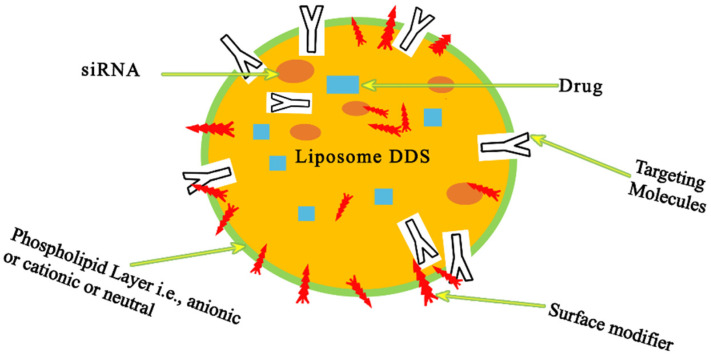
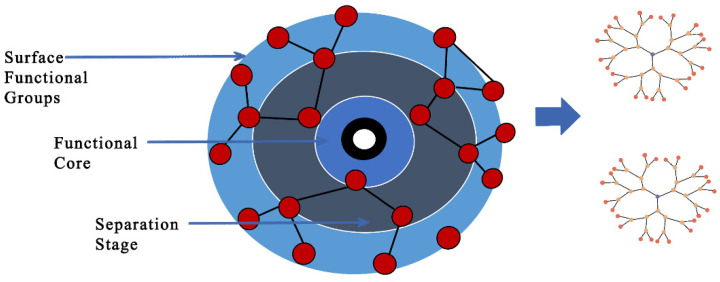
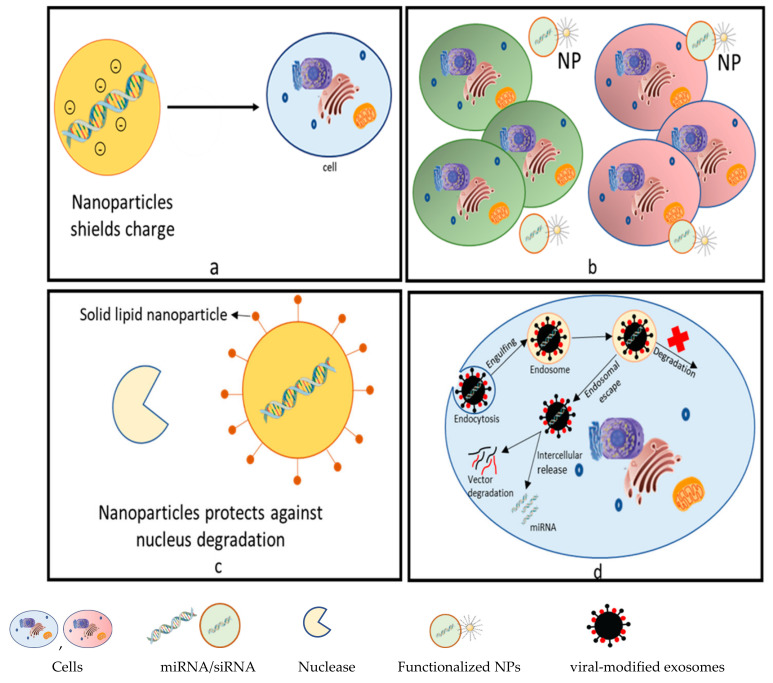
Globally, cancer is amongst the most deadly diseases due to the low efficiency of the conventional and obsolete chemotherapeutic methodologies and their many downsides. The poor aqueous solubility of most anticancer medications and their low biocompatibility make them ineligible candidates for the design of delivery systems. A significant drawback associated with chemotherapy is that there are no advanced solutions to multidrug resistance, which poses a major obstacle in cancer management. Since RNA interference (RNAi) can repress the expression of genes, it is viewed as a novel tool for advanced drug delivery. this is being explored as a promising drug targeting strategy for the treatment of multiple diseases, including cancer. However, there are many obstructions that hinder the clinical uses of siRNA drugs due to their low permeation into cells, off-target impacts, and possible unwanted immune responses under physiological circumstances. Thus, in this article, we review the design measures for siRNA conveyance frameworks and potential siRNA and miRNA drug delivery systems for malignant growth treatment, including the use of liposomes, dendrimers, and micelle-based nanovectors and functional polymer-drug delivery systems. This article sums up the advancements and challenges in the use of nanocarriers for siRNA delivery and remarkably centers around the most critical modification strategies for nanocarriers to build multifunctional siRNA and miRNA delivery vectors. In short, we hope this review will throw light on the dark areas of RNA interference, which will further open novel research arenas in the development of RNAi drugs for cancer.
在全球范围内,由于传统且过时的化疗方法效率低下及其诸多弊端,癌症是最致命的疾病之一。大多数抗癌药物的水溶性差且生物相容性低,这使得它们不适合用于设计给药系统。化疗的一个显著缺点是,对于多药耐药性没有先进的解决方案,这在癌症治疗中构成了重大障碍。由于RNA干扰(RNAi)可以抑制基因表达,它被视为一种先进药物递送的新工具。这正被探索为一种有前景的药物靶向策略,用于治疗包括癌症在内的多种疾病。然而,由于小干扰RNA(siRNA)药物在细胞内的低渗透性、脱靶效应以及在生理环境下可能产生的不必要免疫反应,存在许多阻碍其临床应用的障碍。因此,在本文中,我们综述了用于siRNA递送框架的设计措施以及用于恶性肿瘤治疗的潜在siRNA和微小RNA(miRNA)药物递送系统,包括脂质体、树枝状大分子和基于胶束的纳米载体以及功能性聚合物药物递送系统的应用。本文总结了使用纳米载体进行siRNA递送的进展和挑战,并特别关注纳米载体构建多功能siRNA和miRNA递送载体的最关键修饰策略。简而言之,我们希望这篇综述能为RNA干扰的未知领域带来曙光,这将进一步为癌症RNAi药物的开发开辟新的研究领域。