Balachandran Shreyas, Polyanskii Anatolii, Chetri Santosh, Dhakal Pashupati, Su Yi-Feng, Sung Zu-Hawn, Lee Peter J
Applied Superconductivity Center, NHMFL-FSU, Tallahassee, FL, 32309, USA.
Thomas Jefferson National Accelerator Facility, Newport News, VA, 23606, USA.
Sci Rep. 2021 Mar 8;11(1):5364. doi: 10.1038/s41598-021-84498-x.
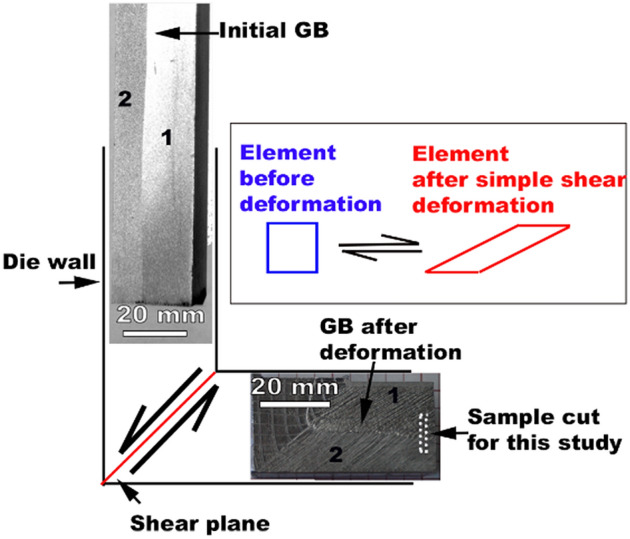
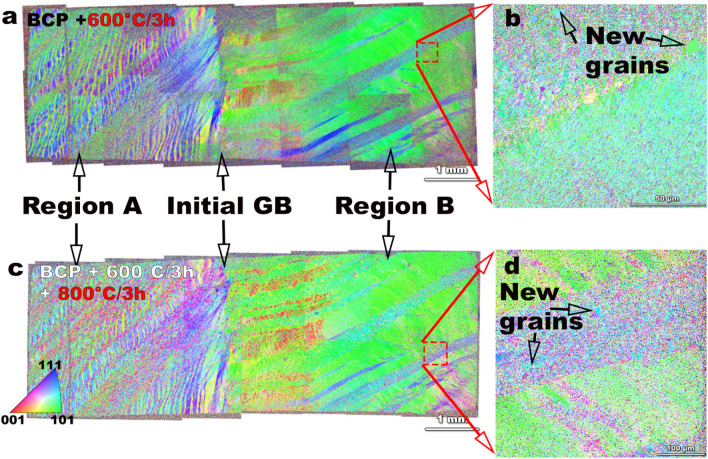
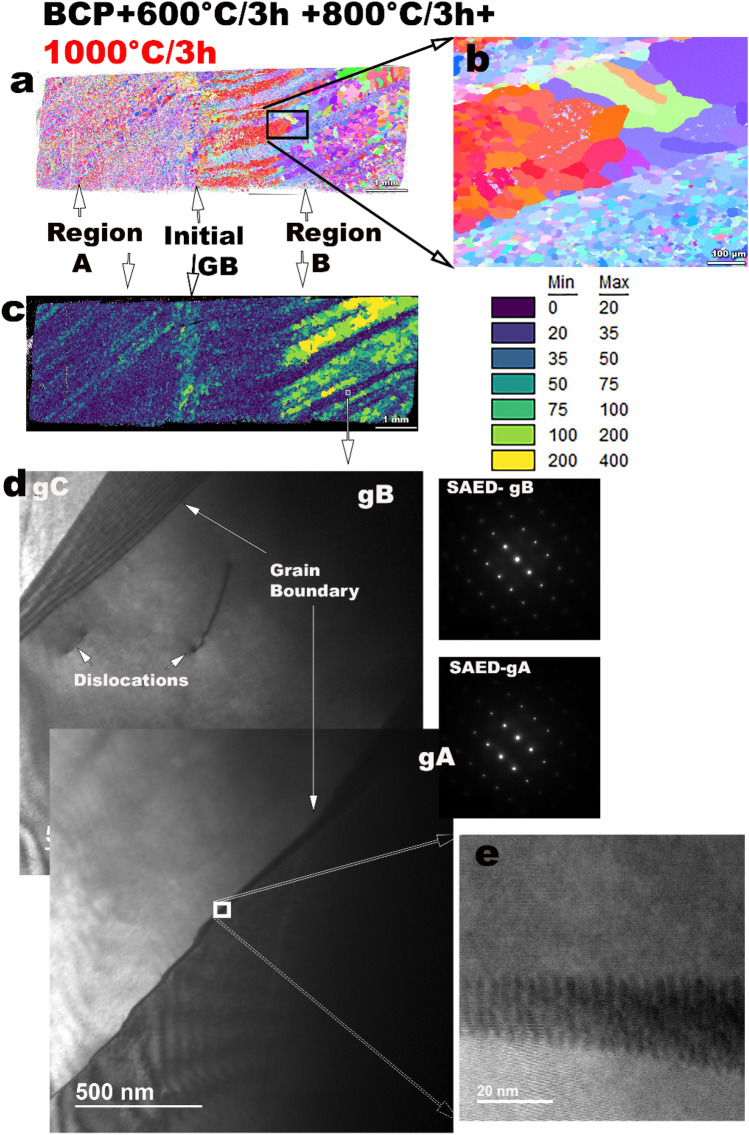
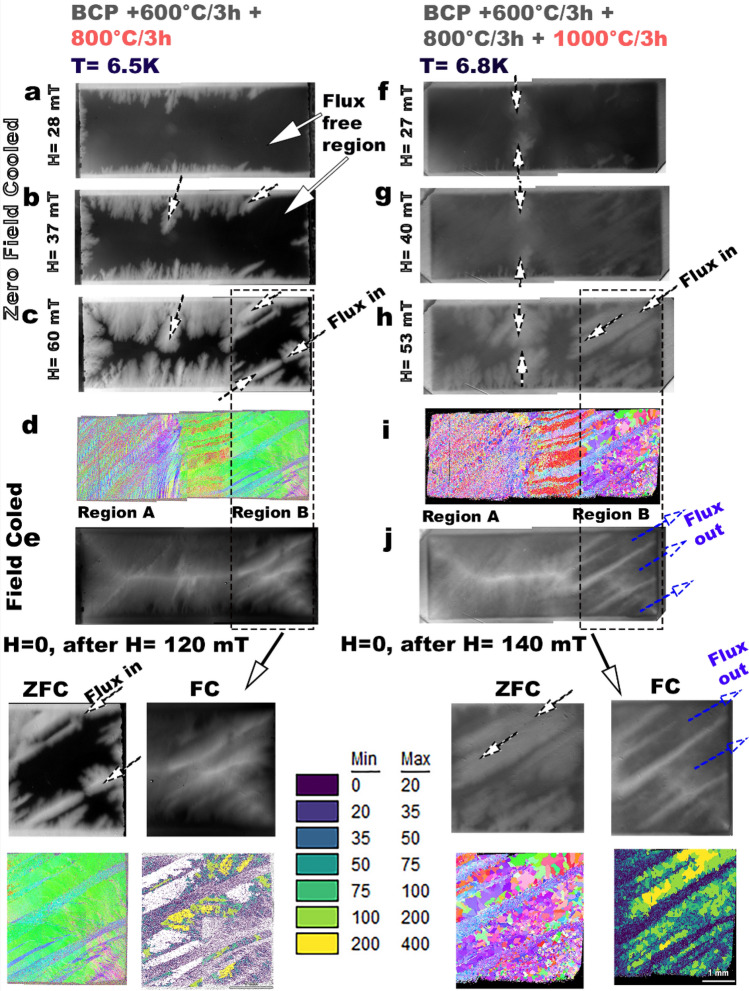
Elemental type-II superconducting niobium is the material of choice for superconducting radiofrequency cavities used in modern particle accelerators, light sources, detectors, sensors, and quantum computing architecture. An essential challenge to increasing energy efficiency in rf applications is the power dissipation due to residual magnetic field that is trapped during the cool down process due to incomplete magnetic field expulsion. New SRF cavity processing recipes that use surface doping techniques have significantly increased their cryogenic efficiency. However, the performance of SRF Nb accelerators still shows vulnerability to a trapped magnetic field. In this manuscript, we report the observation of a direct link between flux trapping and incomplete flux expulsion with spatial variations in microstructure within the niobium. Fine-grain recrystallized microstructure with an average grain size of 10-50 µm leads to flux trapping even with a lack of dislocation structures in grain interiors. Larger grain sizes beyond 100-400 µm do not lead to preferential flux trapping, as observed directly by magneto-optical imaging. While local magnetic flux variations imaged by magneto-optics provide clarity on a microstructure level, bulk variations are also indicated by variations in pinning force curves with sequential heat treatment studies. The key results indicate that complete control of the niobium microstructure will help produce higher performance superconducting resonators with reduced rf losses related to the magnetic flux trapping.
元素型II超导铌是现代粒子加速器、光源、探测器、传感器和量子计算架构中使用的超导射频腔的首选材料。提高射频应用能量效率的一个关键挑战是由于在冷却过程中由于磁场排出不完全而捕获的残余磁场导致的功率耗散。使用表面掺杂技术的新的超导射频腔加工工艺显著提高了它们的低温效率。然而,超导射频铌加速器的性能仍然显示出对捕获磁场的脆弱性。在本手稿中,我们报告了在铌内部微观结构的空间变化与磁通捕获和不完全磁通排出之间存在直接联系的观察结果。平均晶粒尺寸为10-50微米的细晶粒再结晶微观结构即使在晶粒内部缺乏位错结构的情况下也会导致磁通捕获。通过磁光成像直接观察到,超过100-400微米的较大晶粒尺寸不会导致优先磁通捕获。虽然通过磁光成像的局部磁通量变化在微观结构层面上提供了清晰度,但通过连续热处理研究的钉扎力曲线变化也表明了整体变化。关键结果表明,完全控制铌的微观结构将有助于生产出性能更高的超导谐振器,减少与磁通捕获相关的射频损耗。