Department of Medicine, Solna, Karolinska Institutet, Stockholm, Sweden.
Theme of Emergency and Reparative Medicine, Karolinska University Hospital, Stockholm, Sweden.
PLoS One. 2021 Mar 10;16(3):e0247881. doi: 10.1371/journal.pone.0247881. eCollection 2021.
There is evidence that emergency department (ED) crowding is associated with increased mortality, however large multicenter studies of high quality are scarce. In a prior study, we introduced a proxy-measure for crowding that was associated with increased mortality. The national registry SVAR enables us to study the association in a more heterogenous group of EDs with more recent data. The aim is to investigate the association between ED crowding and mortality.
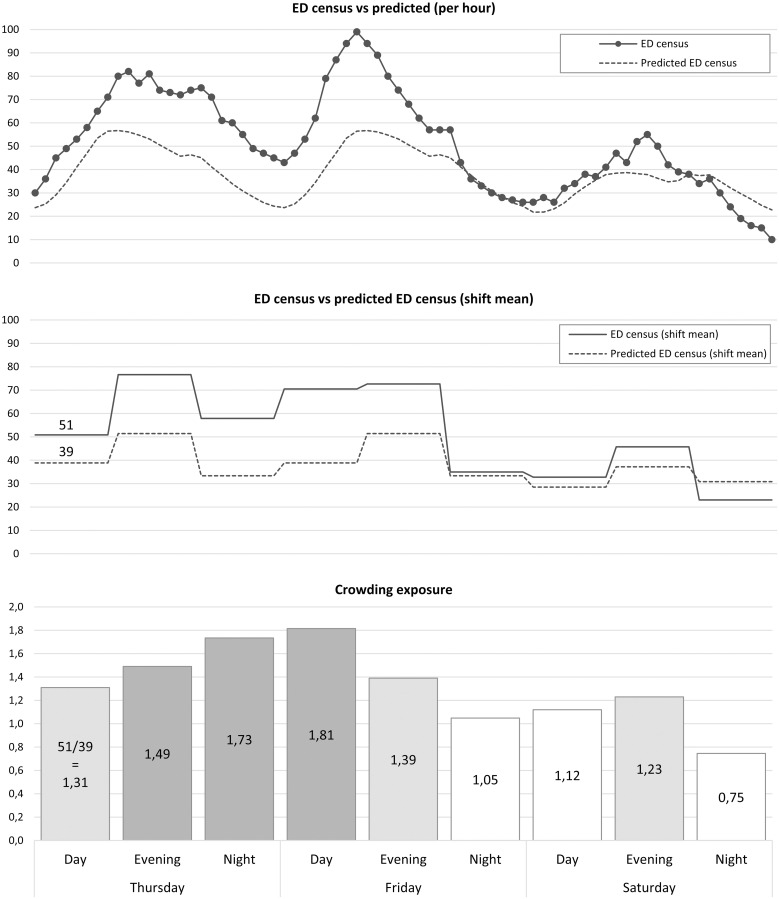
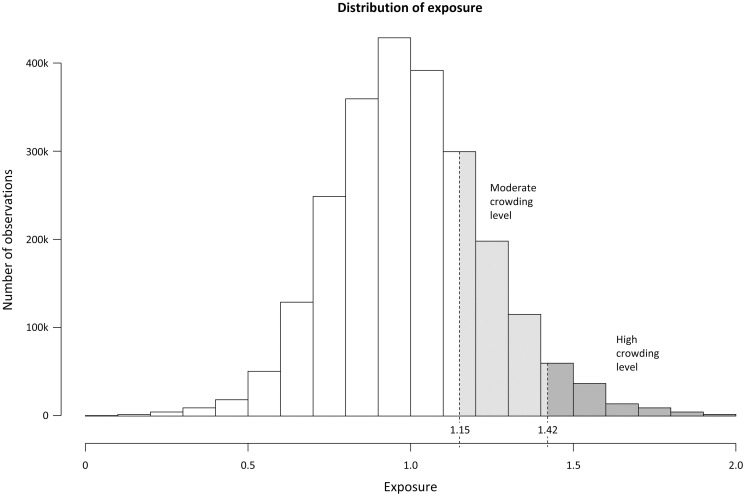
This was an observational cohort study including visits from 14 EDs in Sweden 2015-2019. Crowding was defined as the mean ED-census divided with expected ED-census during the work-shift that the patient arrived. The crowding exposure was categorized in three groups: low, moderate and high. Hazard ratios (HR) for mortality within 7 and 30 days were estimated with a cox proportional hazards model. The model was adjusted for age, sex, triage priority, arrival hour, weekend, arrival mode and chief complaint. Subgroup analysis by county and for admitted patients by county were performed.
2,440,392 visits from 1,142,631 unique patients were analysed. A significant association was found between crowding and 7-day mortality but not with 30-day mortality. Subgroup analysis also yielded mixed results with a clear association in only one of the three counties. The estimated HR (95% CI) for 30-day mortality for admitted patients in this county was 1.06 (1.01-1.12) in the moderate crowding category, and 1.11 (1.01-1.22) in the high category.
The association between crowding and mortality may not be universal. Factors that influence the association between crowding and mortality at different EDs are still unknown but a high hospital bed occupancy, impacting admitted patients may play a role.
有证据表明,急诊科(ED)拥挤与死亡率增加有关,但高质量的多中心大型研究却很少。在之前的一项研究中,我们引入了一个与死亡率增加相关的拥挤替代指标。SVAR 国家登记处使我们能够在一个具有更多最近数据的异质 ED 群体中研究这种关联。目的是调查 ED 拥挤与死亡率之间的关系。
这是一项观察性队列研究,包括 2015 年至 2019 年瑞典 14 家急诊科的就诊情况。拥挤被定义为患者到达的工作班次期间,实际急诊科就诊人数除以预期急诊科就诊人数的平均值。拥挤暴露分为三组:低、中、高。使用 Cox 比例风险模型估计 7 天和 30 天内死亡率的风险比(HR)。该模型调整了年龄、性别、分诊优先级、到达时间、周末、到达方式和主要投诉。对按县进行的亚组分析和按县进行的入院患者亚组分析进行了分析。
对 1142631 名独特患者的 2440392 次就诊进行了分析。发现拥挤与 7 天死亡率之间存在显著关联,但与 30 天死亡率无关。亚组分析也得出了混合结果,仅在三个县中的一个县存在明确关联。在该县,中度拥挤类别中入院患者 30 天死亡率的估计 HR(95%CI)为 1.06(1.01-1.12),高度拥挤类别中为 1.11(1.01-1.22)。
拥挤与死亡率之间的关系可能不是普遍存在的。影响不同急诊科拥挤与死亡率之间关系的因素尚不清楚,但高医院床位占用率,影响入院患者可能发挥作用。