Department of Biological Science, Florida State University, 319 Stadium Drive, Tallahassee, Florida, 32306-4296, USA.
Department of Ocean Science and Hong Kong Branch of the Southern Marine Science and Engineering Guangdong Laboratory, The Hong Kong University of Science and Technology, Clear Water Bay, Kowloon, Hong Kong.
Ecology. 2021 Jun;102(6):e03324. doi: 10.1002/ecy.3324.
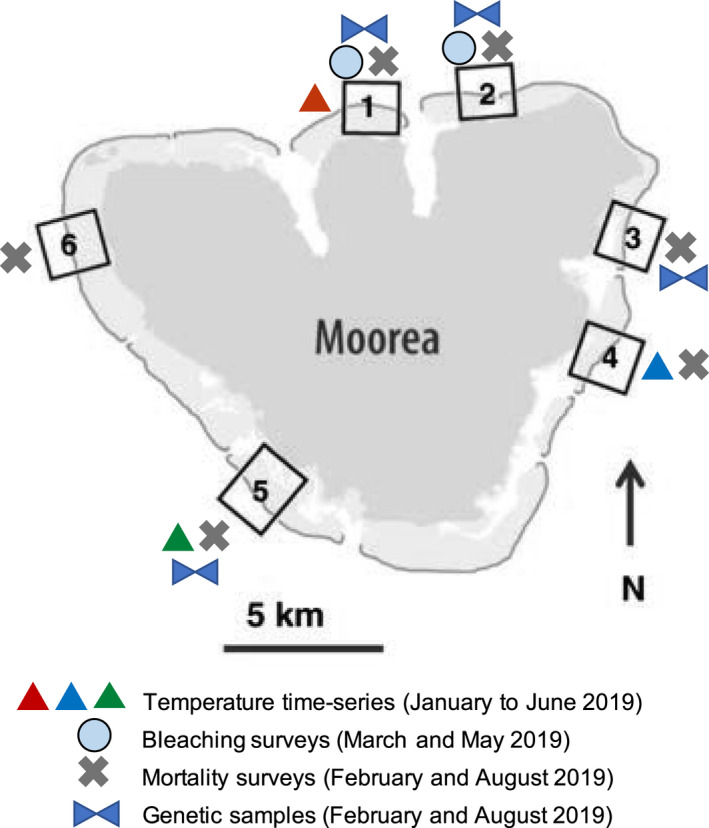
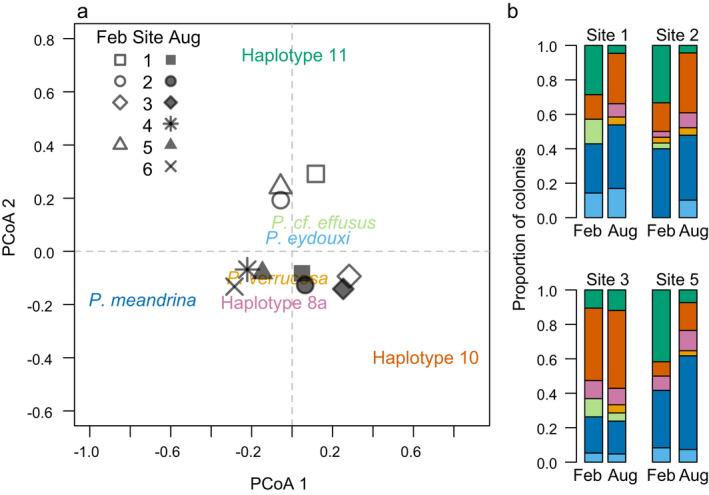
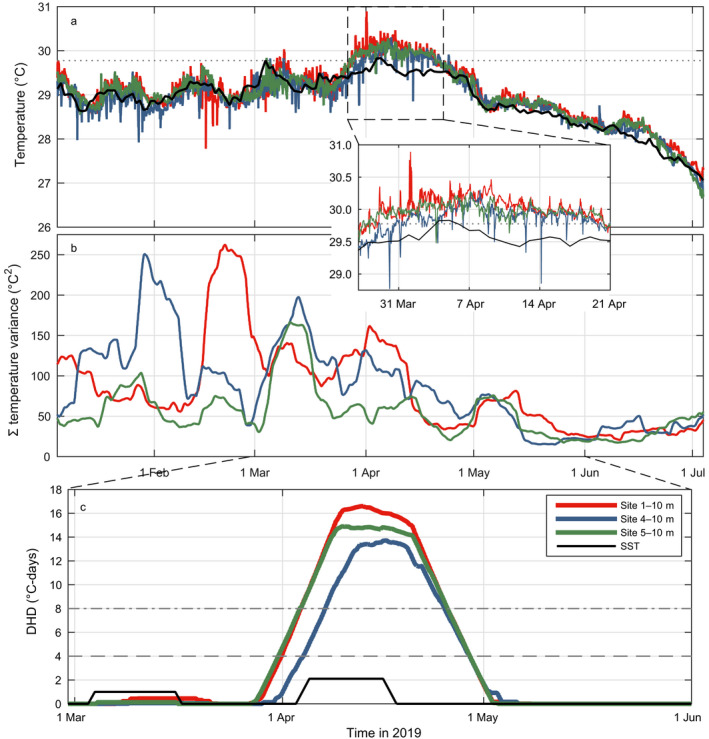
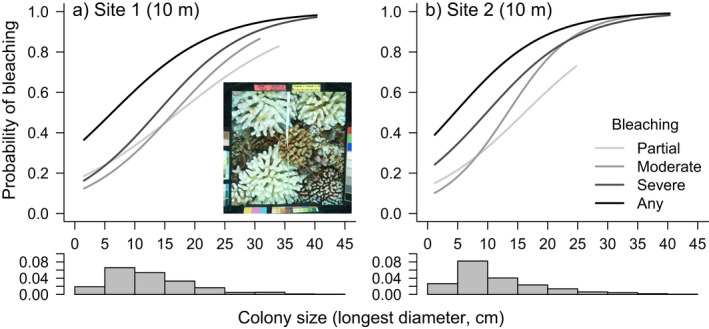
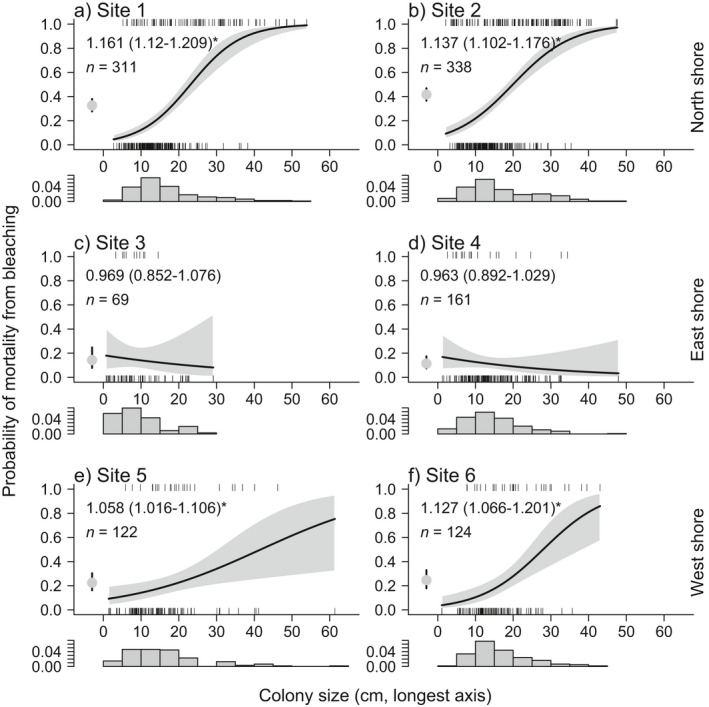
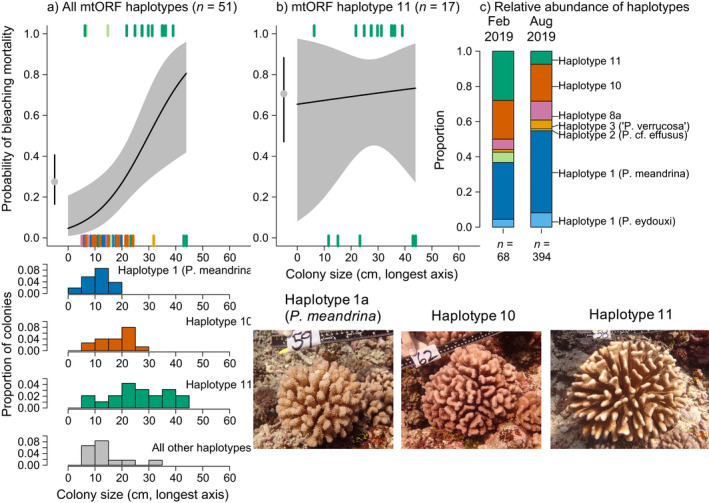
Variation among functionally similar species in their response to environmental stress buffers ecosystems from changing states. Functionally similar species may often be cryptic species representing evolutionarily distinct genetic lineages that are morphologically indistinguishable. However, the extent to which cryptic species differ in their response to stress, and could therefore provide a source of response diversity, remains unclear because they are often not identified or are assumed to be ecologically equivalent. Here, we uncover differences in the bleaching response between sympatric cryptic species of the common Indo-Pacific coral, Pocillopora. In April 2019, prolonged ocean heating occurred at Moorea, French Polynesia. 72% of pocilloporid colonies bleached after 22 d of severe heating (>8 C-days) at 10 m depth on the north shore fore reef. Colony mortality ranged from 11% to 42% around the island four months after heating subsided. The majority (86%) of pocilloporids that died from bleaching belonged to a single haplotype, despite twelve haplotypes, representing at least five species, being sampled. Mitochondrial (open reading frame) sequence variation was greater between the haplotypes that experienced mortality versus haplotypes that all survived than it was between nominal species that all survived. Colonies > 30 cm in diameter were identified as the haplotype experiencing the most mortality, and in 1125 colonies that were not genetically identified, bleaching and mortality increased with colony size. Mortality did not increase with colony size within the haplotype suffering the highest mortality, suggesting that size-dependent bleaching and mortality at the genus level was caused instead by differences among cryptic species. The relative abundance of haplotypes shifted between February and August, driven by declines in the same common haplotype for which mortality was estimated directly, at sites where heat accumulation was greatest, and where larger colony sizes occurred. The identification of morphologically indistinguishable species that differ in their response to thermal stress, but share a similar ecological function in terms of maintaining a coral-dominated state, has important consequences for uncovering response diversity that drives resilience, especially in systems with low or declining functional diversity.
功能相似的物种在应对环境压力方面的差异缓冲了生态系统从状态变化。功能相似的物种可能经常是代表进化上不同遗传谱系的隐种,在形态上无法区分。然而,隐种在应对压力方面的差异程度,以及因此提供响应多样性的来源仍然不清楚,因为它们通常未被识别或被假定为具有生态等效性。在这里,我们揭示了共生的印度洋-太平洋普通珊瑚 Pocillopora 隐种之间在漂白反应上的差异。2019 年 4 月,法属波利尼西亚莫雷阿岛发生了长时间的海洋加热。在北岸前礁 10 米深处,严重加热(>8°C 天)持续 22 天后,72%的石珊瑚属珊瑚白化。加热消退四个月后,整个岛屿周围的珊瑚死亡率从 11%到 42%不等。尽管在 12 个代表至少五个物种的单倍型中采样,但大多数(86%)因漂白而死亡的石珊瑚属属于单一单倍型。与所有存活的单倍型相比,经历死亡的单倍型之间的线粒体(开放阅读框)序列变异大于所有存活的名义物种之间的序列变异。直径大于 30 厘米的珊瑚被鉴定为经历最高死亡率的单倍型,在 1125 个未进行基因鉴定的珊瑚中,漂白和死亡率随着珊瑚大小的增加而增加。在经历最高死亡率的单倍型内,死亡率没有随珊瑚大小的增加而增加,这表明属级别的大小依赖型漂白和死亡率是由隐种之间的差异引起的。在热积累最大和较大珊瑚大小发生的地方,由于直接估计死亡率的相同常见单倍型的下降,2 月至 8 月之间的单倍型相对丰度发生了变化。在功能多样性较低或下降的系统中,发现驱动恢复力的响应多样性具有重要意义,特别是在维持以珊瑚为主的状态方面具有相似生态功能的形态上无法区分的物种的鉴定。