Kakutani Naoya, Fukushima Arata, Kinugawa Shintaro, Yokota Takashi, Oikawa Tatsuya, Nishikawa Mikito, Nakamura Risako, Tsukada Takanori, Mori Shigeki, Yoshida Ichiro, Anzai Toshihisa
Department of Cardiovascular Medicine, Faculty of Medicine and Graduate School of Medicine, Hokkaido University Sapporo Japan.
Cardiac Rehabilitation Center, Social Welfare Corporation, Hokkaido Social Work Association Obihiro Hospital Obihiro Japan.
Circ Rep. 2019 Feb 19;1(3):123-130. doi: 10.1253/circrep.CR-19-0004.
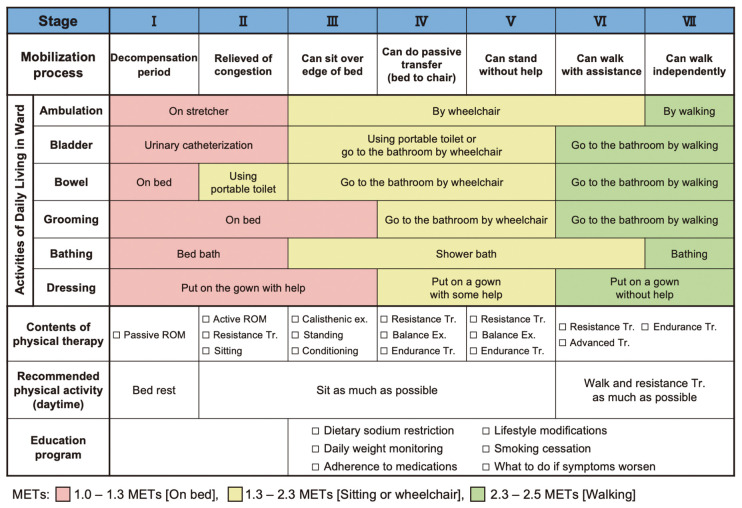
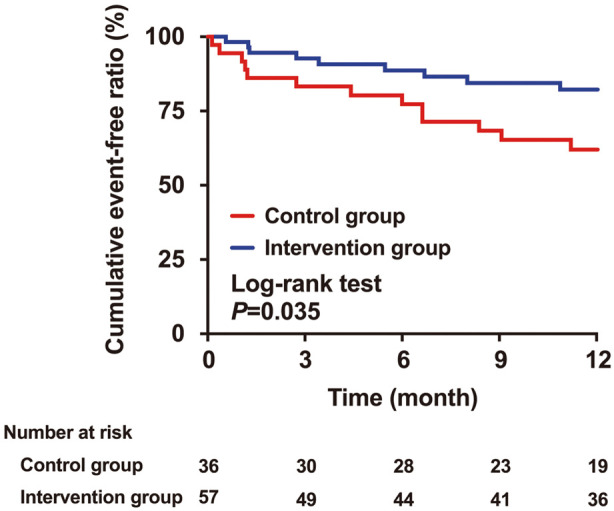
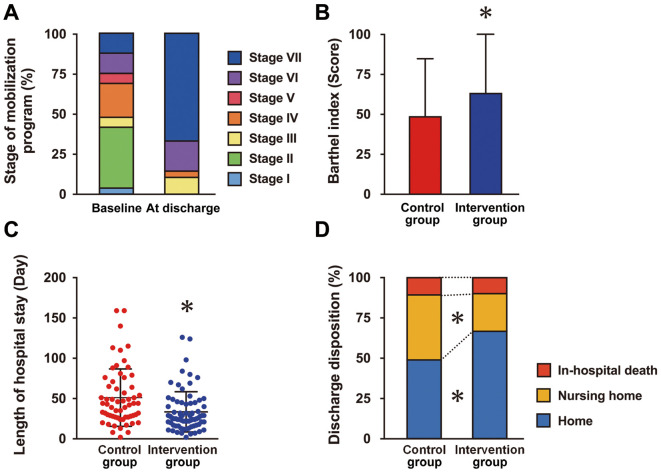
Early ambulation has been shown to be associated with shorter hospital stay and better clinical outcomes in patients with acute heart failure (HF). Early mobilization program in combination with structured exercise training is recommended, but has yet to be developed and implemented in HF. We developed a progressive mobilization program for HF patients that classifies the mobilization process into 7 stages based on disease condition and physical function. We retrospectively analyzed 136 patients with acute HF (80±11 years), who were assigned either to the mobilization program (intervention group, n=75) or to usual care (control group, n=61). The program was safely implemented without any adverse events. Hospital stay was significantly reduced in the intervention group compared with the control group (33±25 vs. 51±36 days, P<0.01). The intervention group had higher activities of daily living (ADL) score at discharge evaluated using the Barthel index (64±38 vs. 49±36, P<0.05). The intervention group also had a higher percentage of discharge to home (71% vs. 52%, P<0.05) and a lower rate of HF-related readmission (16% vs. 36%, P<0.05) compared with the control group. The progressive mobilization program for acute HF was feasible and was associated with better ADL and reduced hospital stay, leading to improvement of clinical outcome.
早期活动已被证明与急性心力衰竭(HF)患者缩短住院时间和改善临床结局相关。建议将早期活动计划与结构化运动训练相结合,但在HF中尚未得到开发和实施。我们为HF患者制定了一个渐进性活动计划,该计划根据疾病状况和身体功能将活动过程分为7个阶段。我们回顾性分析了136例急性HF患者(80±11岁),他们被分配到活动计划组(干预组,n = 75)或常规治疗组(对照组,n = 61)。该计划安全实施,未发生任何不良事件。与对照组相比,干预组的住院时间显著缩短(33±25天对51±36天,P<0.01)。使用Barthel指数评估,干预组出院时的日常生活活动(ADL)评分更高(64±38对49±36,P<0.05)。与对照组相比,干预组出院回家的比例也更高(71%对52%,P<0.05),HF相关再入院率更低(16%对36%,P<0.05)。急性HF的渐进性活动计划是可行的,并且与更好的ADL和缩短住院时间相关,从而改善了临床结局。