Navrátil Jiří, King Alan, Rios Jesus, Kollias Georgios, Torrado Ruben, Codas Andrés
IBM Research, Yorktown Heights, NY, United States.
Repsol S.A., Móstoles, Spain.
Front Big Data. 2019 Sep 20;2:33. doi: 10.3389/fdata.2019.00033. eCollection 2019.
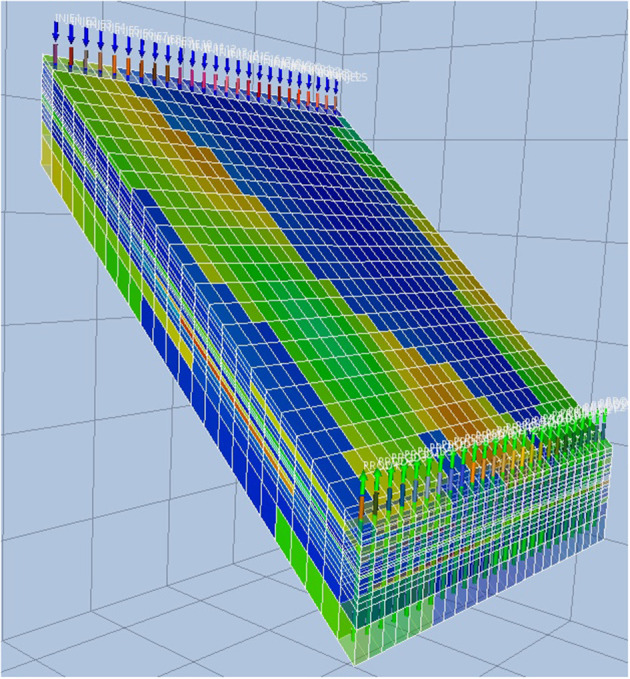
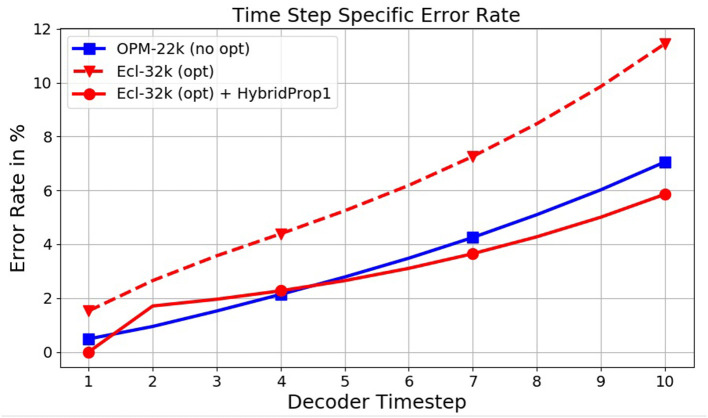
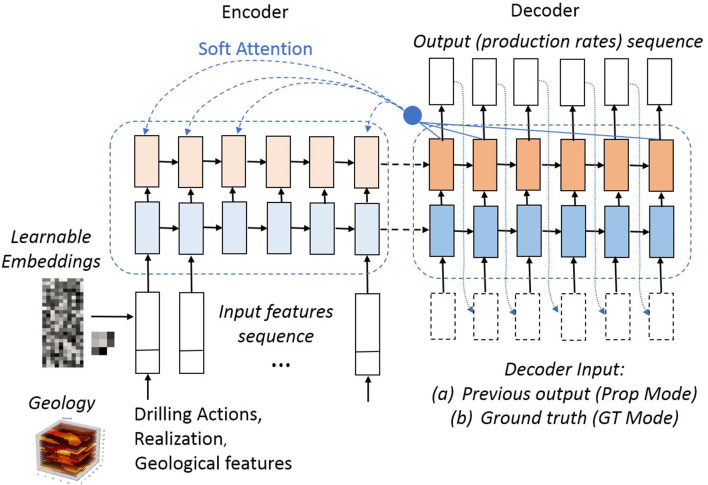
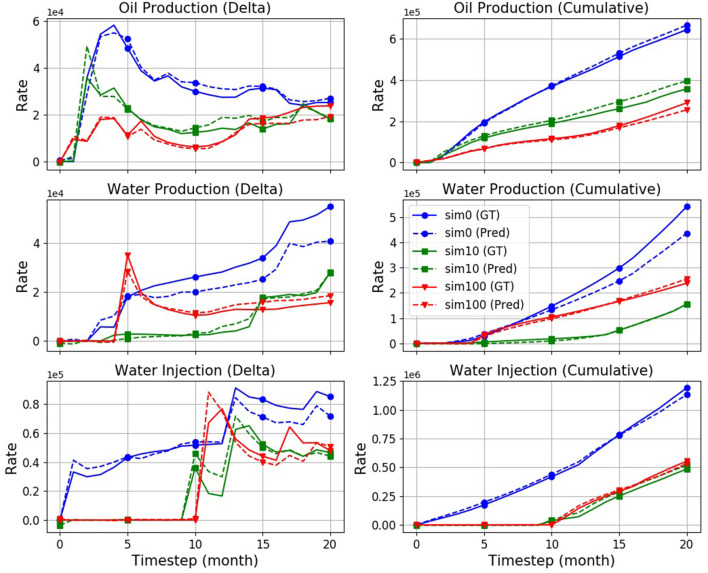
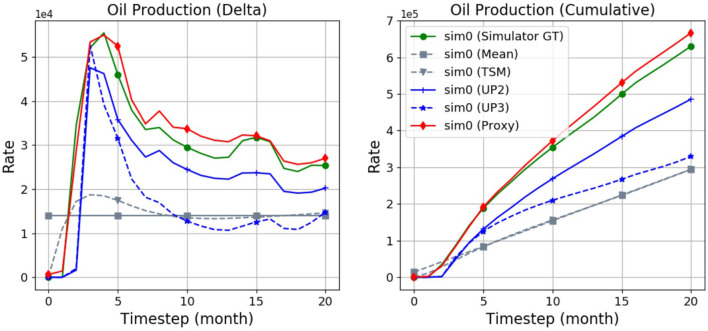
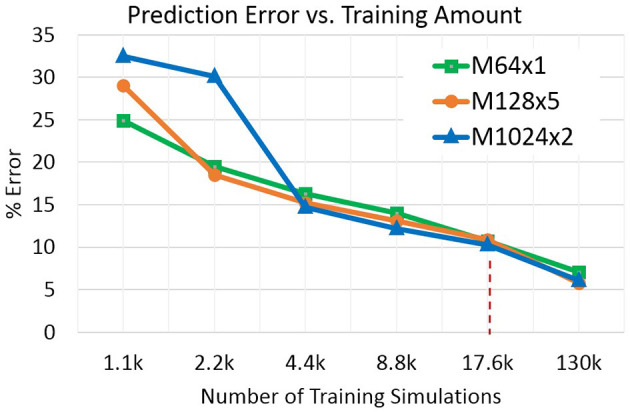
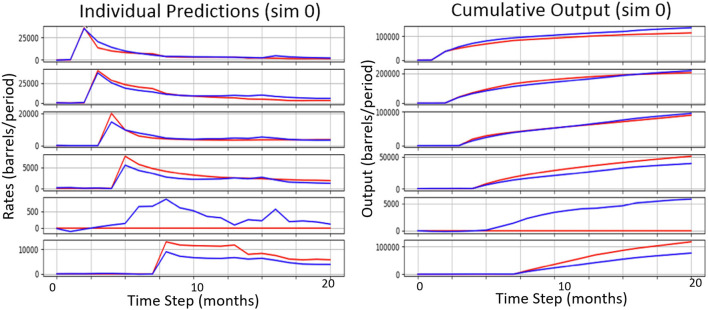
We develop a proxy model based on deep learning methods to accelerate the simulations of oil reservoirs-by three orders of magnitude-compared to industry-strength physics-based PDE solvers. This paper describes a new architectural approach to this task modeling a simulator as an end-to-end black box, accompanied by a thorough experimental evaluation on a publicly available reservoir model. We demonstrate that in a practical setting a speedup of more than 2000X can be achieved with an average sequence error of about 10% relative to the simulator. The task involves varying well locations and varying geological realizations. The end-to-end proxy model is contrasted with several baselines, including upscaling, and is shown to outperform these by two orders of magnitude. We believe the outcomes presented here are extremely promising and offer a valuable benchmark for continuing research in oil field development optimization. Due to its domain-agnostic architecture, the presented approach can be extended to many applications beyond the field of oil and gas exploration.
我们基于深度学习方法开发了一种代理模型,以加速油藏模拟——与基于工业强度物理的偏微分方程求解器相比,可加快三个数量级。本文描述了一种针对此任务的新架构方法,即将模拟器建模为一个端到端的黑箱,并对一个公开可用的油藏模型进行了全面的实验评估。我们证明,在实际场景中,相对于模拟器,可实现超过2000倍的加速,平均序列误差约为10%。该任务涉及改变井位和不同的地质实现。端到端代理模型与包括粗化在内的几个基线进行了对比,并显示出比这些基线性能优两个数量级。我们相信这里展示的结果极有前景,并为油田开发优化的持续研究提供了一个有价值的基准。由于其与领域无关的架构,所提出的方法可以扩展到油气勘探领域之外的许多应用。