Department of Medicine, Division of Endocrinology, Leiden University Medical Center, P.O. Box 9600, 2300 RC Leiden, The Netherlands.
Einthoven Laboratory for Experimental Vascular Medicine, Leiden University Medical Center, Leiden, The Netherlands.
Cardiovasc Res. 2022 Jan 29;118(2):489-502. doi: 10.1093/cvr/cvab076.
Fibroblast growth factor (FGF) 21, a key regulator of energy metabolism, is currently evaluated in humans for treatment of type 2 diabetes and non-alcoholic steatohepatitis. However, the effects of FGF21 on cardiovascular benefit, particularly on lipoprotein metabolism in relation to atherogenesis, remain elusive.
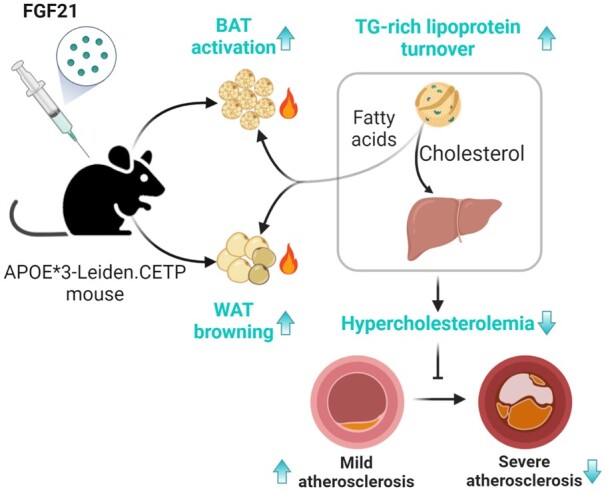
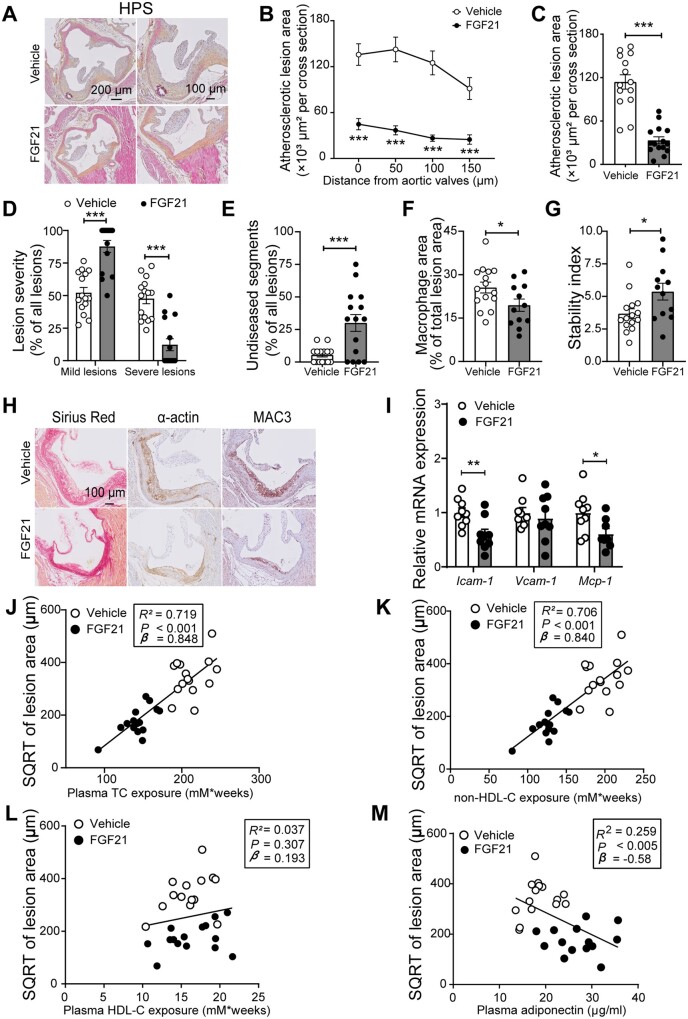
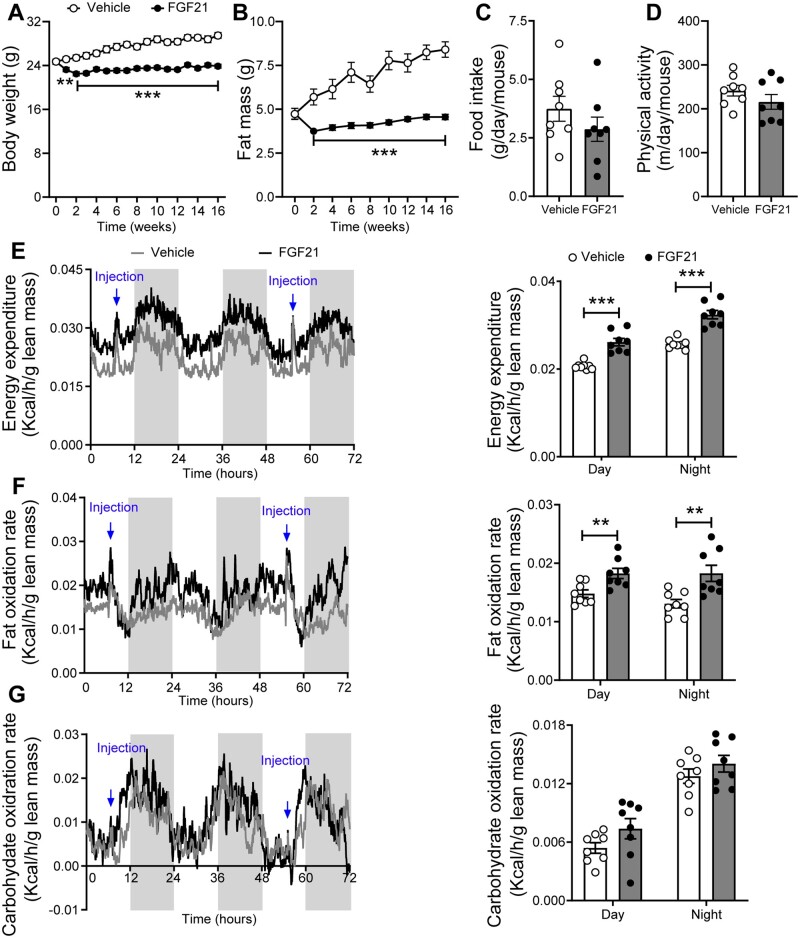
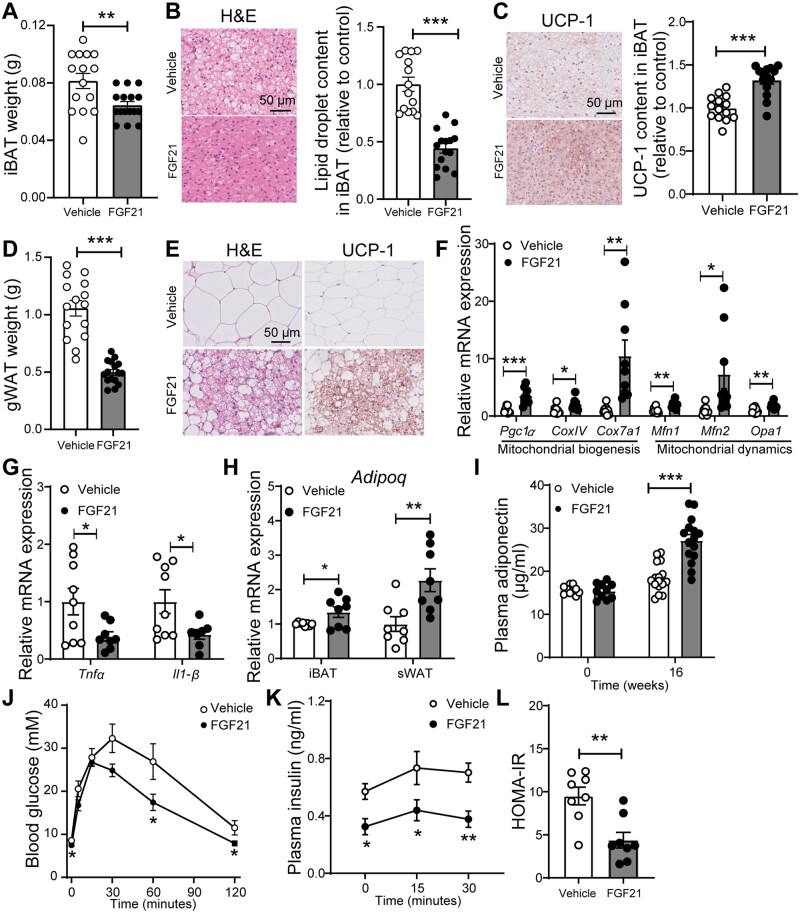
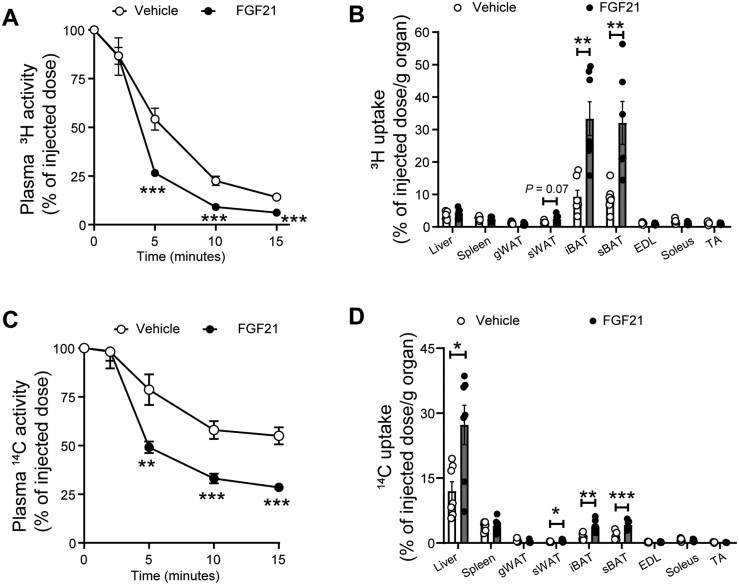
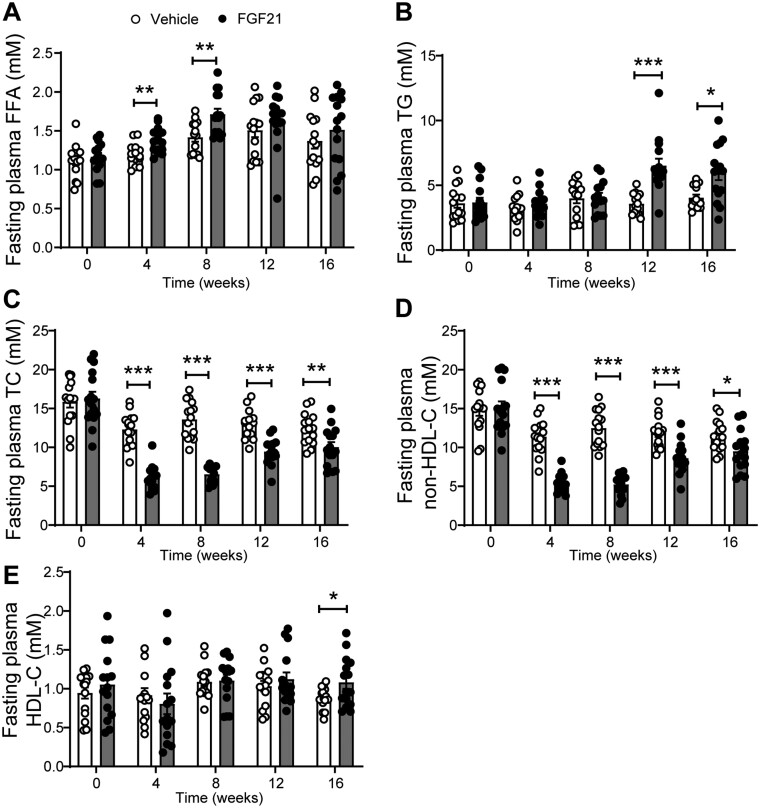
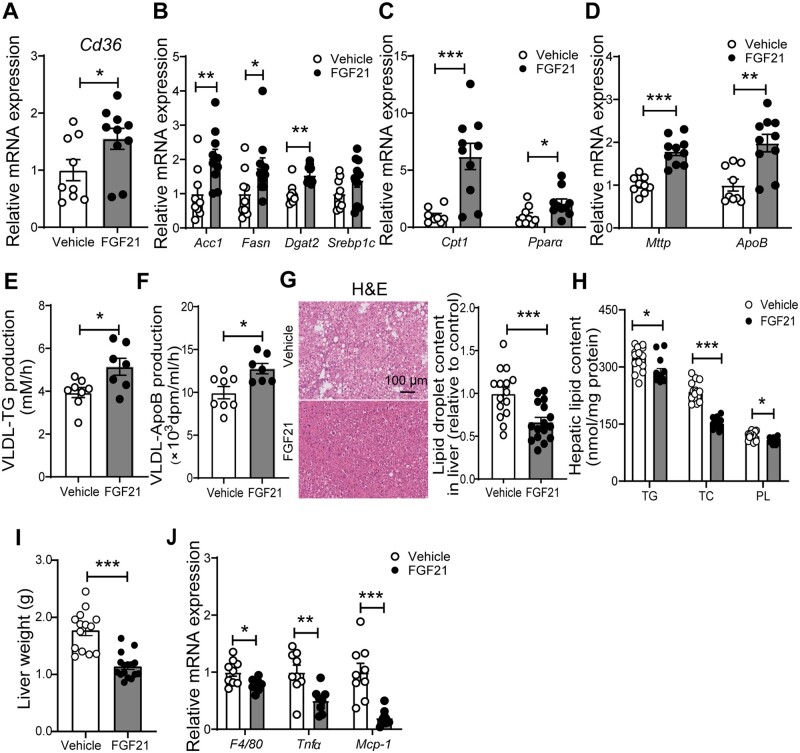
Here, the role of FGF21 in lipoprotein metabolism in relation to atherosclerosis development was investigated by pharmacological administration of a half-life extended recombinant FGF21 protein to hypercholesterolaemic APOE*3-Leiden.CETP mice, a well-established model mimicking atherosclerosis initiation and development in humans. FGF21 reduced plasma total cholesterol, explained by a reduction in non-HDL-cholesterol. Mechanistically, FGF21 promoted brown adipose tissue (BAT) activation and white adipose tissue (WAT) browning, thereby enhancing the selective uptake of fatty acids from triglyceride-rich lipoproteins into BAT and into browned WAT, consequently accelerating the clearance of the cholesterol-enriched remnants by the liver. In addition, FGF21 reduced body fat, ameliorated glucose tolerance and markedly reduced hepatic steatosis, related to up-regulated hepatic expression of genes involved in fatty acid oxidation and increased hepatic VLDL-triglyceride secretion. Ultimately, FGF21 largely decreased atherosclerotic lesion area, which was mainly explained by the reduction in non-HDL-cholesterol as shown by linear regression analysis, decreased lesion severity, and increased atherosclerotic plaque stability index.
FGF21 improves hypercholesterolaemia by accelerating triglyceride-rich lipoprotein turnover as a result of activating BAT and browning of WAT, thereby reducing atherosclerotic lesion severity and increasing atherosclerotic lesion stability index. We have thus provided additional support for the clinical use of FGF21 in the treatment of atherosclerotic cardiovascular disease.
成纤维细胞生长因子 21(FGF21)是能量代谢的关键调节剂,目前正在评估其在人类 2 型糖尿病和非酒精性脂肪性肝炎治疗中的作用。然而,FGF21 对心血管益处的影响,特别是与动脉粥样硬化形成有关的脂蛋白代谢,仍不清楚。
在这里,通过给高脂血症 APOE*3-Leiden.CETP 小鼠(一种模拟人类动脉粥样硬化起始和发展的成熟模型)给予半衰期延长的重组 FGF21 蛋白,研究了 FGF21 对脂蛋白代谢与动脉粥样硬化发展的关系。FGF21 降低了血浆总胆固醇,这可以解释为非高密度脂蛋白胆固醇的减少。从机制上讲,FGF21 促进了棕色脂肪组织(BAT)的激活和白色脂肪组织(WAT)的褐色化,从而增强了富含甘油三酯的脂蛋白中的脂肪酸选择性摄取到 BAT 和褐色化的 WAT 中,进而加速富含胆固醇的残留在肝脏中的清除。此外,FGF21 减少了体脂肪,改善了葡萄糖耐量,并显著减少了肝脂肪变性,与涉及脂肪酸氧化的基因在肝脏中的表达上调以及肝 VLDL-甘油三酯分泌增加有关。最终,FGF21 大大减少了动脉粥样硬化病变面积,这主要是由于线性回归分析显示非高密度脂蛋白胆固醇的减少、病变严重程度的降低和动脉粥样硬化斑块稳定性指数的增加。
FGF21 通过激活 BAT 和 WAT 的褐色化,加速富含甘油三酯的脂蛋白的周转,从而改善高脂血症,降低动脉粥样硬化病变的严重程度,增加动脉粥样硬化病变的稳定性指数。我们为此提供了更多支持,表明 FGF21 在治疗动脉粥样硬化性心血管疾病方面具有临床应用价值。