Department of Internal Medicine, Virginia Commonwealth University/McGuire VA Medical Centre, Richmond, VA, USA; College of Food Science and Technology, Shanghai Ocean University, Shanghai, China.
DURECT Corporation, Cupertino, CA, USA.
J Lipid Res. 2021;62:100063. doi: 10.1016/j.jlr.2021.100063. Epub 2021 Mar 8.
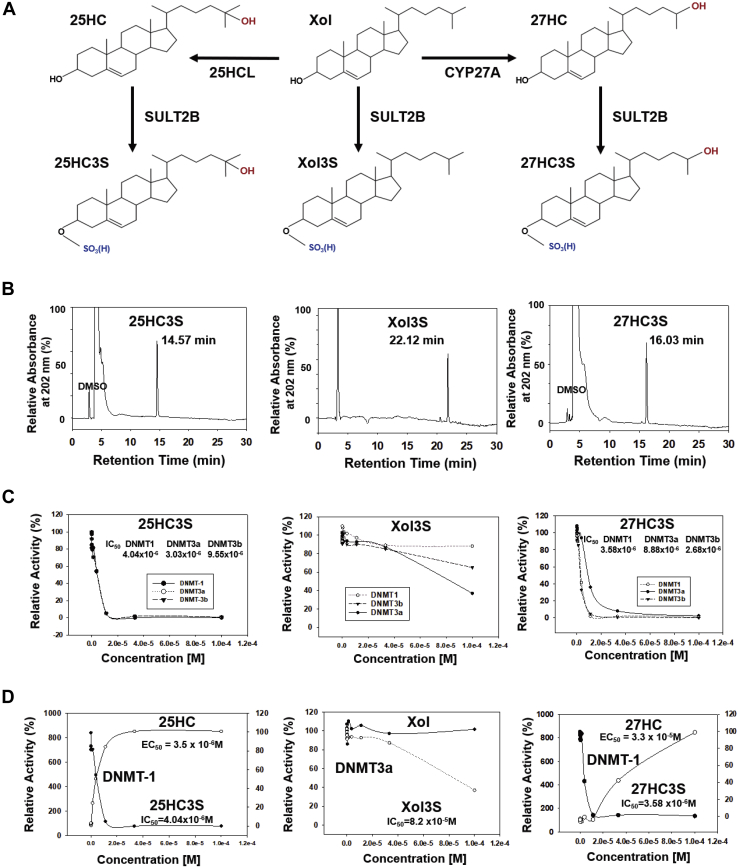
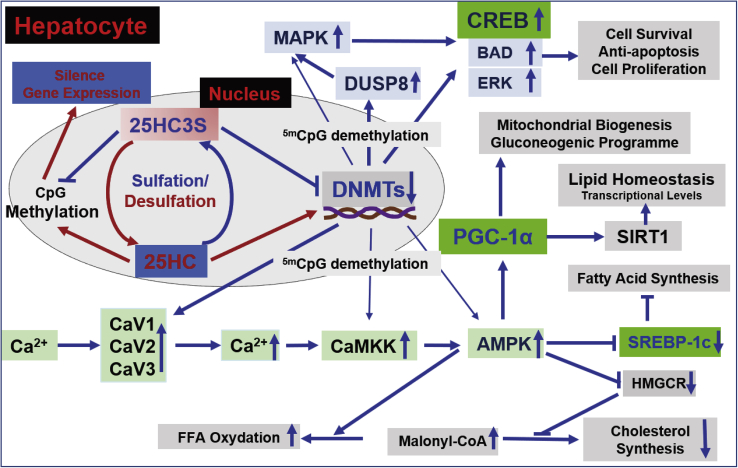
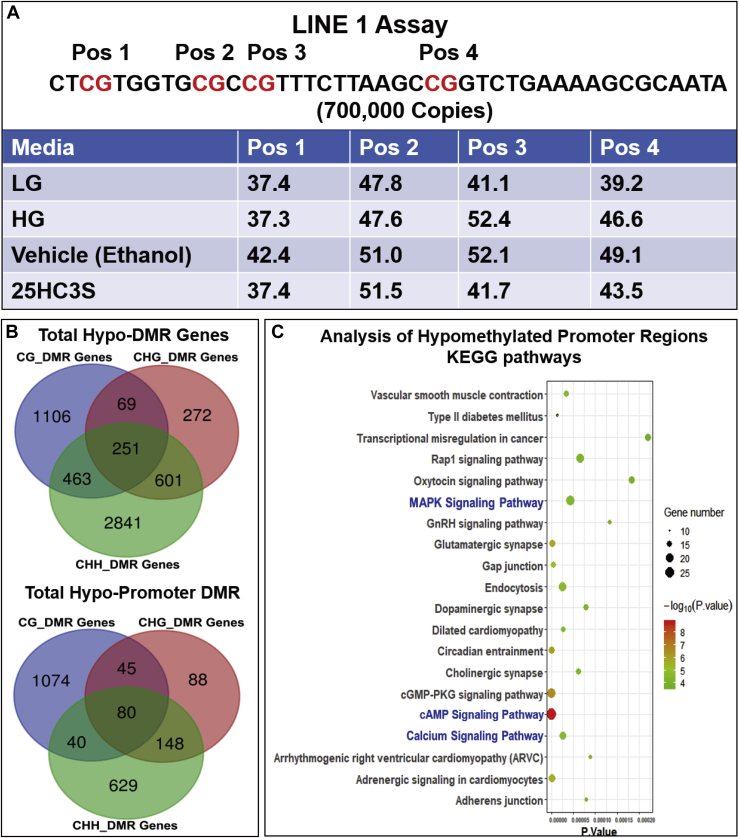
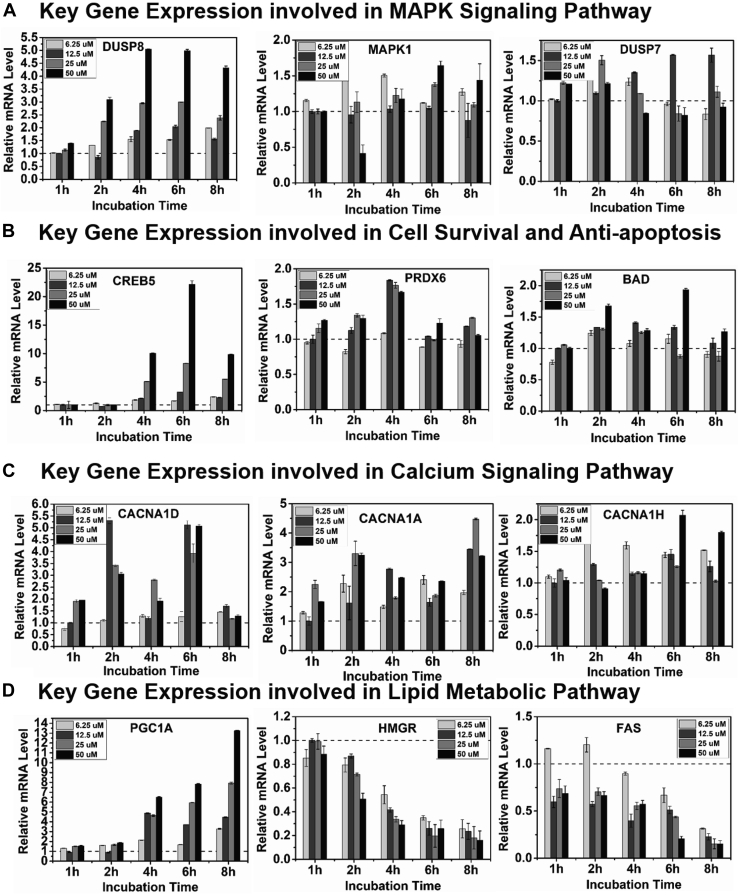
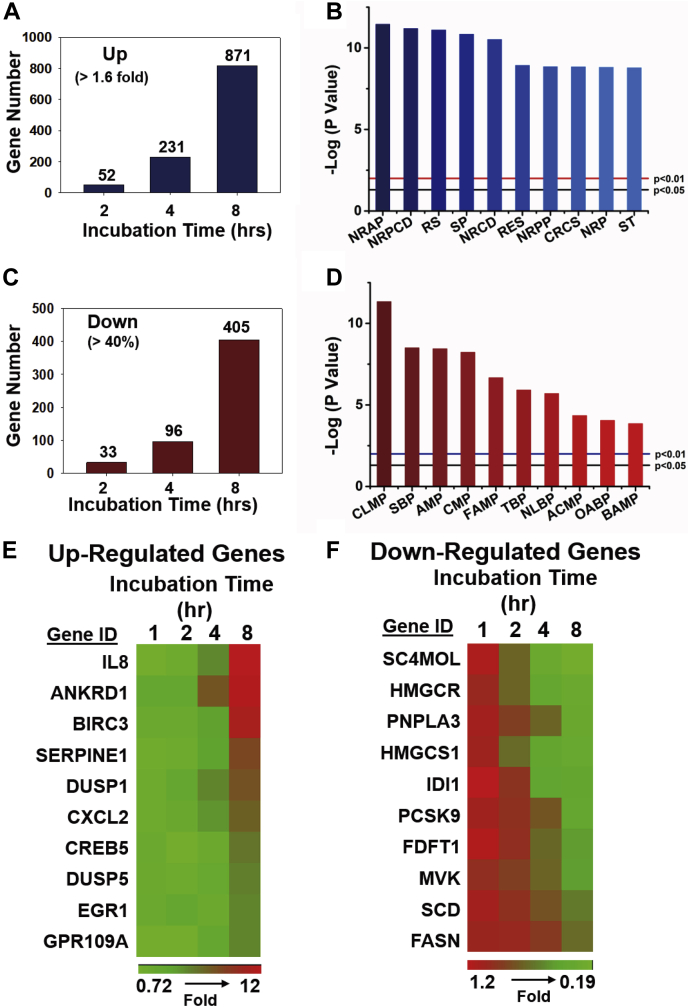
The oxysterol sulfate, 25-hydroxycholesterol 3-sulfate (25HC3S), has been shown to play an important role in lipid metabolism, inflammatory response, and cell survival. However, the mechanism(s) of its function in global regulation is unknown. The current study investigates the molecular mechanism by which 25HC3S functions as an endogenous epigenetic regulator. To study the effects of oxysterols/sterol sulfates on epigenetic modulators, 12 recombinant epigenetic enzymes were used to determine whether 25HC3S acts as their endogenous ligand. The enzyme kinetic study demonstrated that 25HC3S specifically inhibited DNA methyltransferases (DNMTs), DNMT1, DNMT3a, and DNMT3b with IC of 4.04, 3.03, and 9.05 × 10 M, respectively. In human hepatocytes, high glucose induces lipid accumulation by increasing promoter CpG methylation of key genes involved in development of nonalcoholic fatty liver diseases. Using this model, whole genome bisulfate sequencing analysis demonstrated that 25HC3S converts the CpG to CpG in the promoter regions of 1,074 genes. In addition, we observed increased expression of the demethylated genes, which are involved in the master signaling pathways, including MAPK-ERK, calcium-AMP-activated protein kinase, and type II diabetes mellitus pathways. mRNA array analysis showed that the upregulated genes encoded for key elements of cell survival; conversely, downregulated genes encoded for key enzymes that decrease lipid biosynthesis. Taken together, our results indicate that the expression of these key elements and enzymes are regulated by the demethylated signaling pathways. We summarized that 25HC3S DNA demethylation of CpG in promoter regions is a potent regulatory mechanism.
氧化固醇硫酸酯,25-羟胆固醇 3-硫酸盐(25HC3S),已被证明在脂质代谢、炎症反应和细胞存活中发挥重要作用。然而,其在全局调节中的功能机制尚不清楚。本研究探讨了 25HC3S 作为内源性表观遗传调节剂发挥作用的分子机制。为了研究氧化固醇/固醇硫酸盐对表观遗传调节剂的影响,使用了 12 种重组表观遗传酶来确定 25HC3S 是否作为它们的内源性配体。酶动力学研究表明,25HC3S 特异性抑制 DNA 甲基转移酶(DNMTs),DNMT1、DNMT3a 和 DNMT3b 的 IC 分别为 4.04、3.03 和 9.05×10 M。在人肝细胞中,高葡萄糖通过增加参与非酒精性脂肪性肝病发展的关键基因启动子 CpG 甲基化来诱导脂质积累。使用该模型,全基因组亚硫酸氢盐测序分析表明,25HC3S 将 CpG 转化为 1074 个基因启动子区域中的 CpG。此外,我们观察到去甲基化基因的表达增加,这些基因参与了包括 MAPK-ERK、钙-AMP 激活蛋白激酶和 II 型糖尿病途径在内的主要信号通路。mRNA 数组分析显示,上调的基因编码细胞存活的关键元素;相反,下调的基因编码减少脂质生物合成的关键酶。总之,我们的结果表明,这些关键元素和酶的表达受去甲基化信号通路的调节。我们总结得出,25HC3S 在启动子区域对 CpG 的 DNA 去甲基化是一种有效的调节机制。