Department of Medicinal Pharmacology, Graduate School of Medicine, Dentistry and Pharmaceutical Sciences, Okayama University, Okayama, Japan.
Environmental Biology Laboratory, Faculty of Medicine, University of Tsukuba, Ibaraki, Japan.
J Biol Chem. 2021 Jan-Jun;296:100524. doi: 10.1016/j.jbc.2021.100524. Epub 2021 Mar 8.
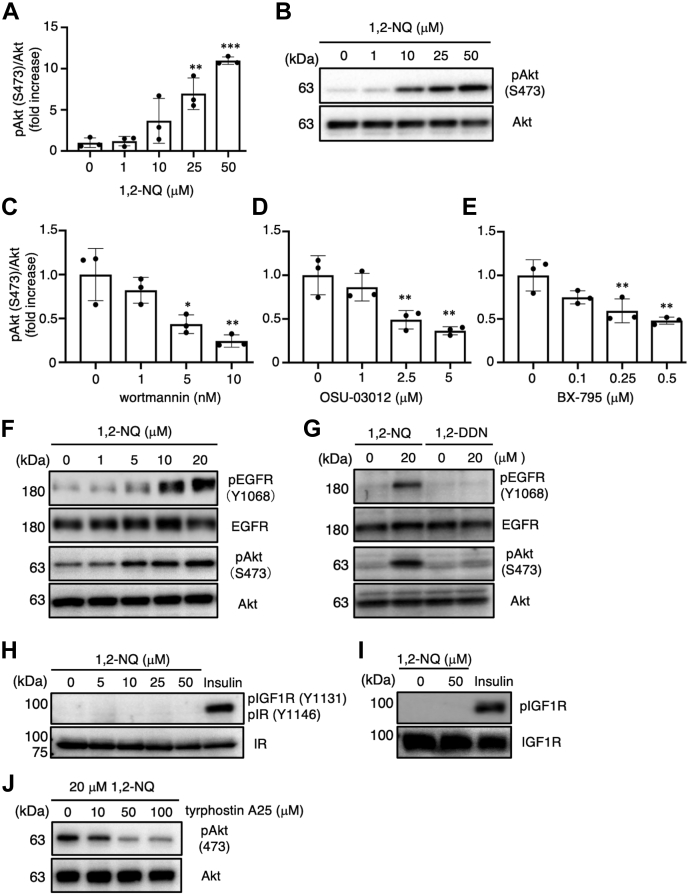
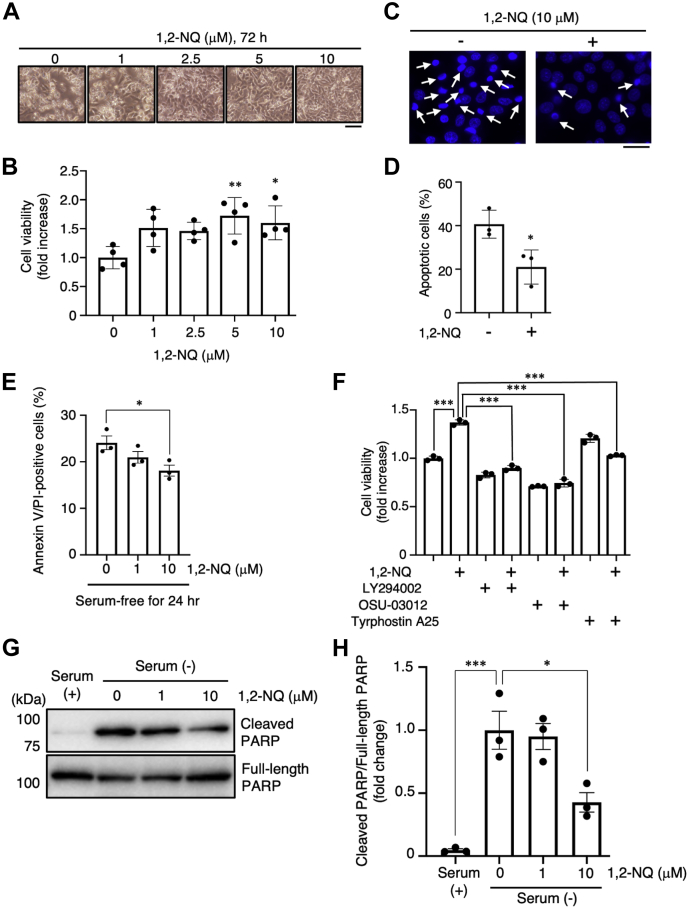
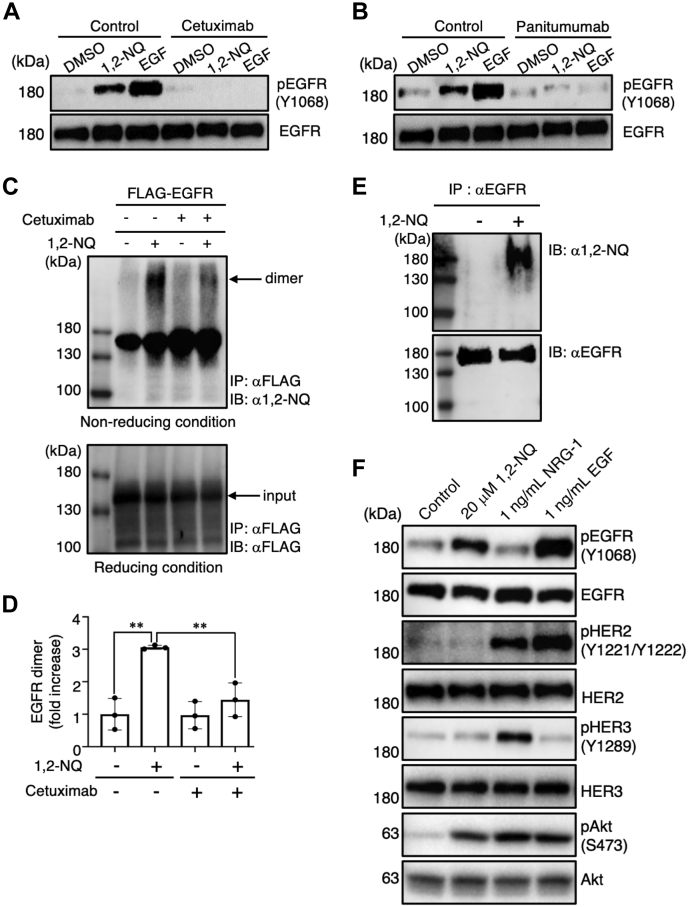
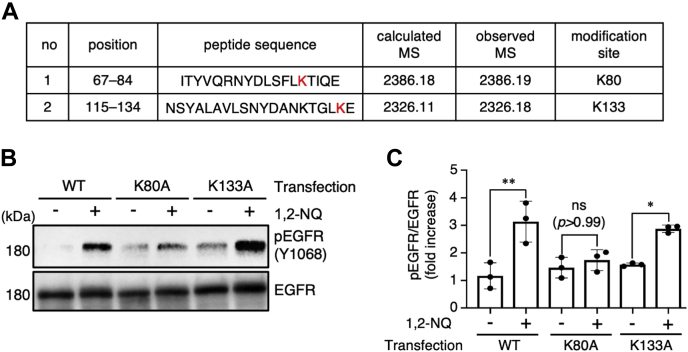
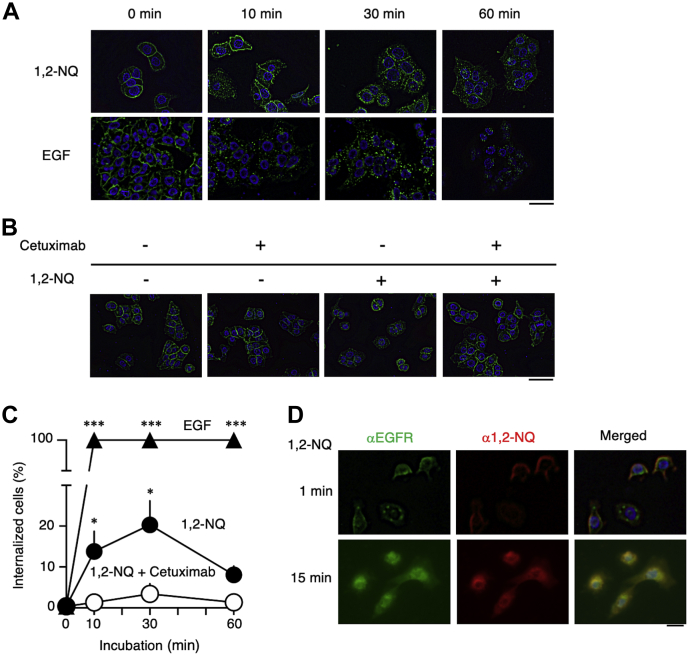
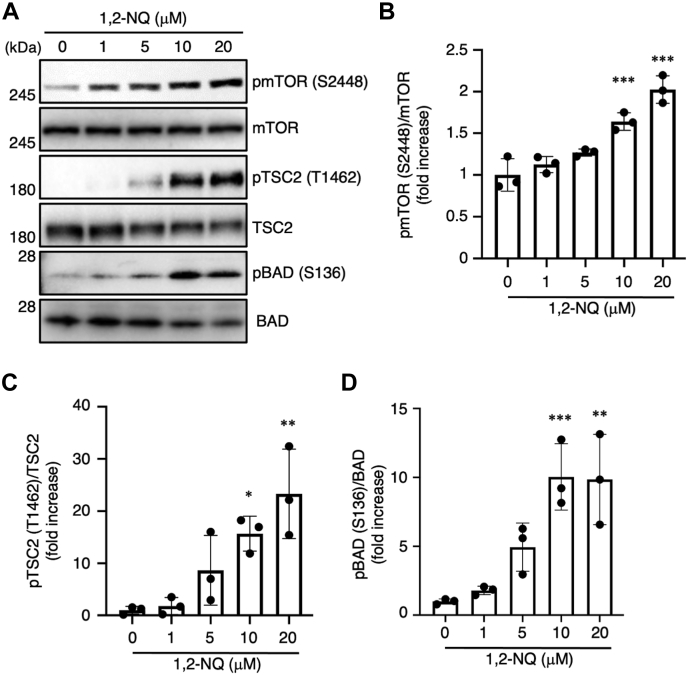
The epidermal growth factor receptor (EGFR) is the most intensively investigated receptor tyrosine kinase. Several EGFR mutations and modifications have been shown to lead to abnormal self-activation, which plays a critical role in carcinogenesis. Environmental air pollutants, which are associated with cancer and respiratory diseases, can also activate EGFR. Specifically, the environmental electrophile 1,2-naphthoquinone (1,2-NQ), a component of diesel exhaust particles and particulate matter more generally, has previously been shown to impact EGFR signaling. However, the detailed mechanism of 1,2-NQ function is unknown. Here, we demonstrate that 1,2-NQ is a novel chemical activator of EGFR but not other EGFR family proteins. We found that 1,2-NQ forms a covalent bond, in a reaction referred to as N-arylation, with Lys80, which is in the ligand-binding domain. This modification activates the EGFR-Akt signaling pathway, which inhibits serum deprivation-induced cell death in a human lung adenocarcinoma cell line. Our study reveals a novel mode of EGFR pathway activation and suggests a link between abnormal EGFR activation and environmental pollutant-associated diseases such as cancer.
表皮生长因子受体(EGFR)是研究最为深入的受体酪氨酸激酶之一。已经发现几种 EGFR 突变和修饰会导致异常的自我激活,这在致癌作用中起着关键作用。与癌症和呼吸道疾病相关的环境空气污染物也可以激活 EGFR。具体来说,环境亲电体 1,2-萘醌(1,2-NQ),它是柴油废气颗粒和更一般的颗粒物的成分之一,先前已被证明会影响 EGFR 信号。然而,1,2-NQ 的详细作用机制尚不清楚。在这里,我们证明 1,2-NQ 是 EGFR 的一种新型化学激活剂,但不是其他 EGFR 家族蛋白的激活剂。我们发现 1,2-NQ 与位于配体结合域的 Lys80 形成共价键,即所谓的 N-芳基化反应。这种修饰激活了 EGFR-Akt 信号通路,该通路抑制了人肺腺癌细胞系在血清剥夺诱导的细胞死亡中的作用。我们的研究揭示了 EGFR 通路激活的一种新方式,并表明异常的 EGFR 激活与环境污染物相关疾病(如癌症)之间存在联系。