Ministry of Health and Medical Educations, HIV and STI Control Office, Tehran, Iran.
Ministry of Health and Medical Educations, Tehran, Iran.
BMC Public Health. 2021 Mar 11;21(1):483. doi: 10.1186/s12889-021-10520-6.
The reproductive health and Prevention of Mother-to-Child Transmission (PMTCT) of HIV programs in Iran were integrated as a pilot project in September 2014. This study aims to provide a comprehensive evaluation and analysis of the PMTCT of HIV program in Iran.
The pilot phase of PMTCT of HIV was launched in early September 2014 in selected centers including 170 health centers and 40 hospitals affiliated to medical universities of 16 provinces of Iran. In each medical university, a researcher-made checklist was administered to all newly-diagnosed HIV-positive pregnant women by an AIDS expert. Data was analyzed using SPSS 19.
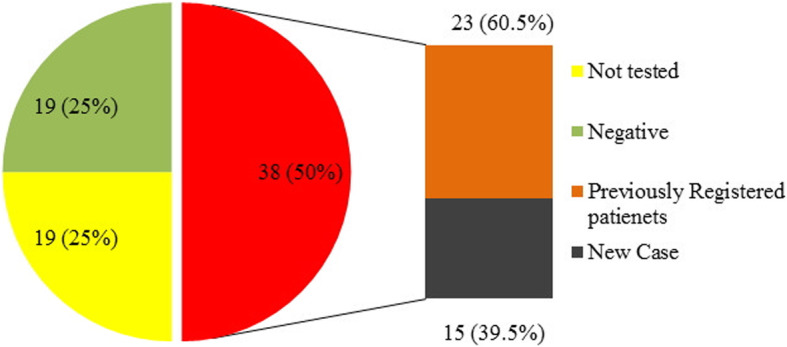
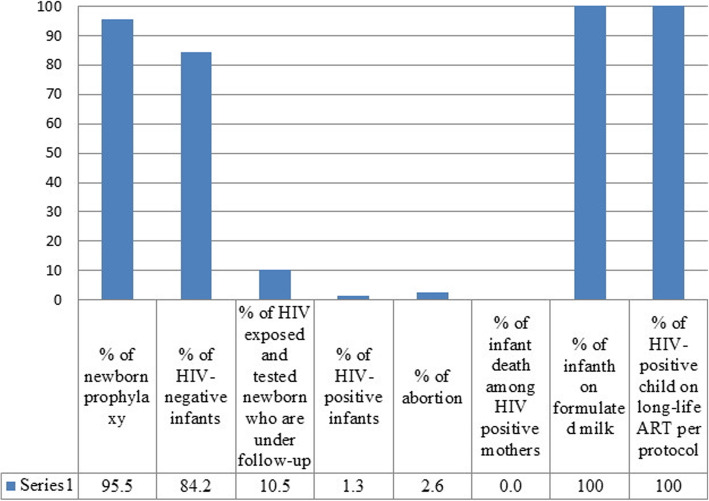
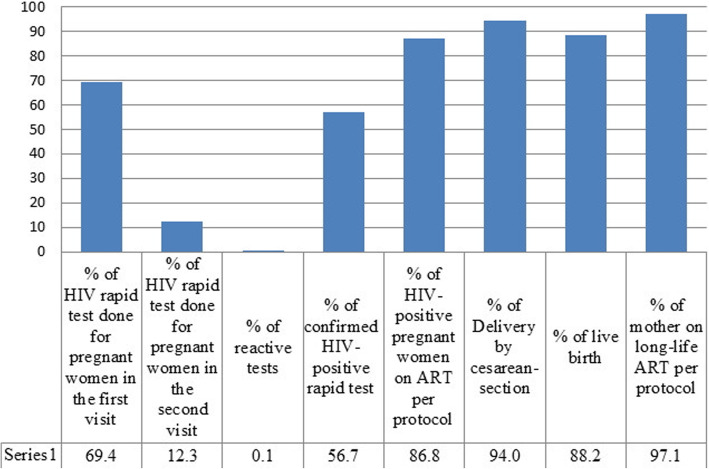
Overall, 69.4% of eligible pregnant women were enrolled in the pilot phase. From 134 reactive cases, 76 (56.7%) were confirmed as HIV positive. ARV consumption was irregular in 10 (13.2%) of HIV positive pregnant women. Also, 82.5% had CD4 count more than 350 after treatment, with an average of 55.5% increase in the number of CD4 in comparison to the baseline, and 84.8% had viral load suppression (< 200 copies/ml). Counseling and testing was done for the husbands of 75% of the women that resulted in the identification of 15 (39.5%) new HIV cases among husbands. Among the tested individuals, 23 (60.5%) males already knew their HIV status and were registered as HIV patients. HIV was diagnosed in one (1.5%) newborn.
Implementation of rapid HIV testing and PMTCT in Iran is one of the strengths of the national HIV control program. To eliminate MTCT, it is necessary to understand and overcome the barriers and challenges to the program in the pilot phase.
伊朗的生殖健康和预防母婴传播(PMTCT)艾滋病毒项目于 2014 年 9 月作为试点项目整合在一起。本研究旨在对伊朗的艾滋病毒 PMTCT 方案进行全面评估和分析。
艾滋病毒母婴传播的试点阶段于 2014 年 9 月初在包括伊朗 16 个省的 170 个卫生中心和 40 所医科大学附属医院在内的选定中心启动。在每所医科大学,艾滋病专家通过研究者制作的检查表对所有新诊断为艾滋病毒阳性的孕妇进行调查。使用 SPSS 19 对数据进行分析。
总体而言,有 69.4%的合格孕妇参加了试点阶段。在 134 例反应性病例中,有 76 例(56.7%)确认为艾滋病毒阳性。10 例(13.2%)艾滋病毒阳性孕妇的抗逆转录病毒药物服用不规则。此外,82.5%的患者在治疗后 CD4 计数超过 350,与基线相比,CD4 计数平均增加了 55.5%,84.8%的患者病毒载量得到抑制(<200 拷贝/ml)。对 75%的妇女的丈夫进行了咨询和检测,结果发现 15 例(39.5%)新的丈夫艾滋病毒病例。在接受检测的人群中,有 23 人(60.5%)男性已经了解到自己的艾滋病毒状况,并被登记为艾滋病毒患者。新生儿中有 1 例(1.5%)被诊断为 HIV 阳性。
在伊朗实施快速艾滋病毒检测和 PMTCT 是国家艾滋病毒控制方案的优势之一。为了消除母婴传播,有必要了解和克服试点阶段方案面临的障碍和挑战。