Kim Minha, Kim So-Dam, Kim Kyoung In, Jeon Eun Hae, Kim Min Gee, Lim Yu-Ree, Lkhagva-Yondon Enkhmaa, Oh Yena, Na Kwangmin, Chung Young Cheul, Jin Byung Kwan, Song Yun Seon, Jeon Myung-Shin
Translational Research Center, Department of Molecular Biomedicine, IRIMS, and College of Medicine, Inha University, Incheon 22332, Korea.
College of Pharmacy, Sookmyung Women's University, Seoul 04310, Korea.
Exp Neurobiol. 2021 Apr 30;30(2):155-169. doi: 10.5607/en20062.
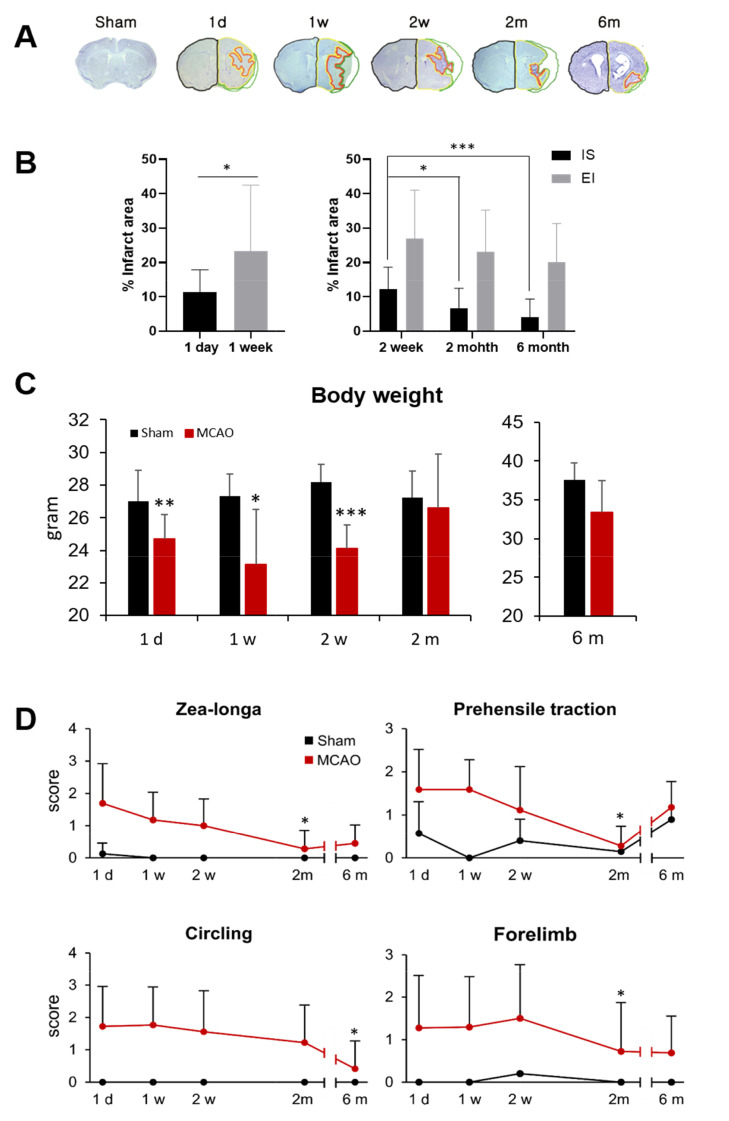
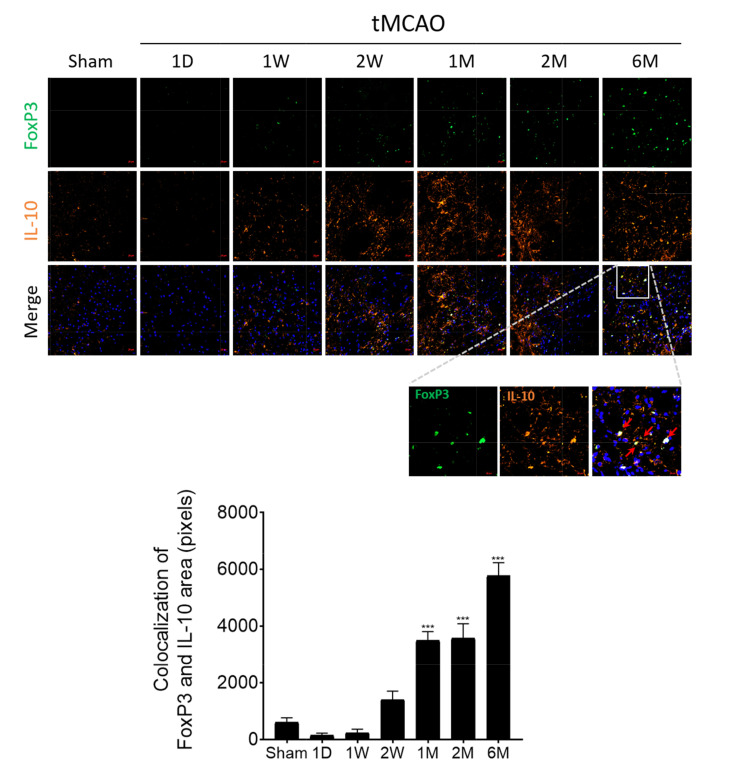
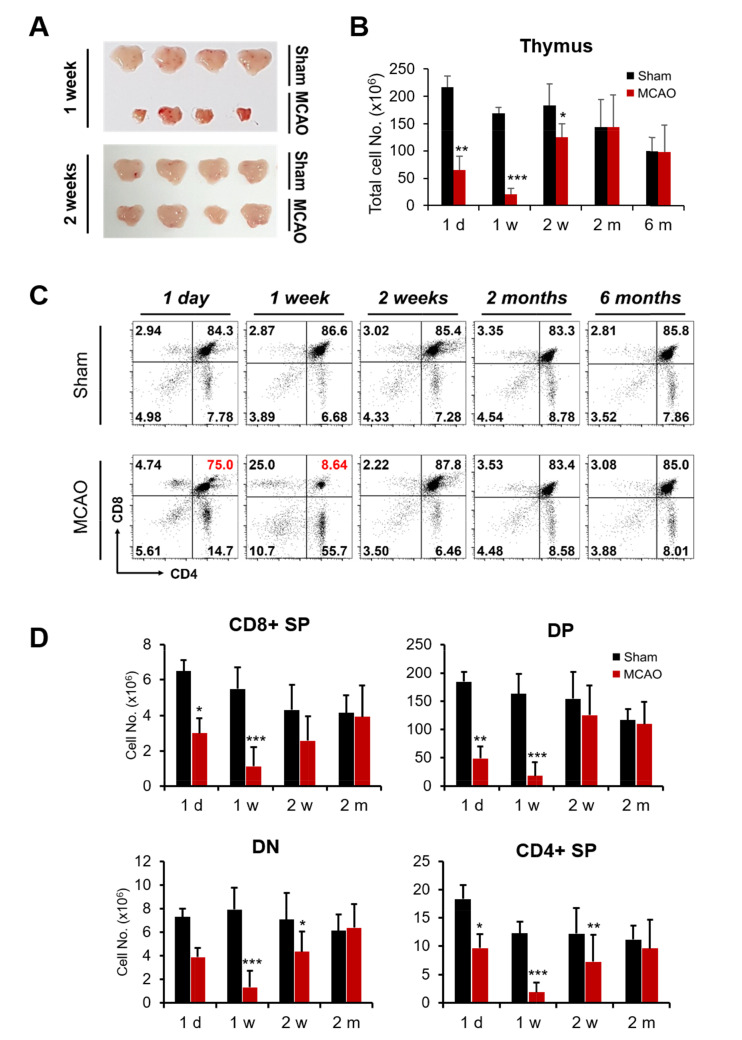
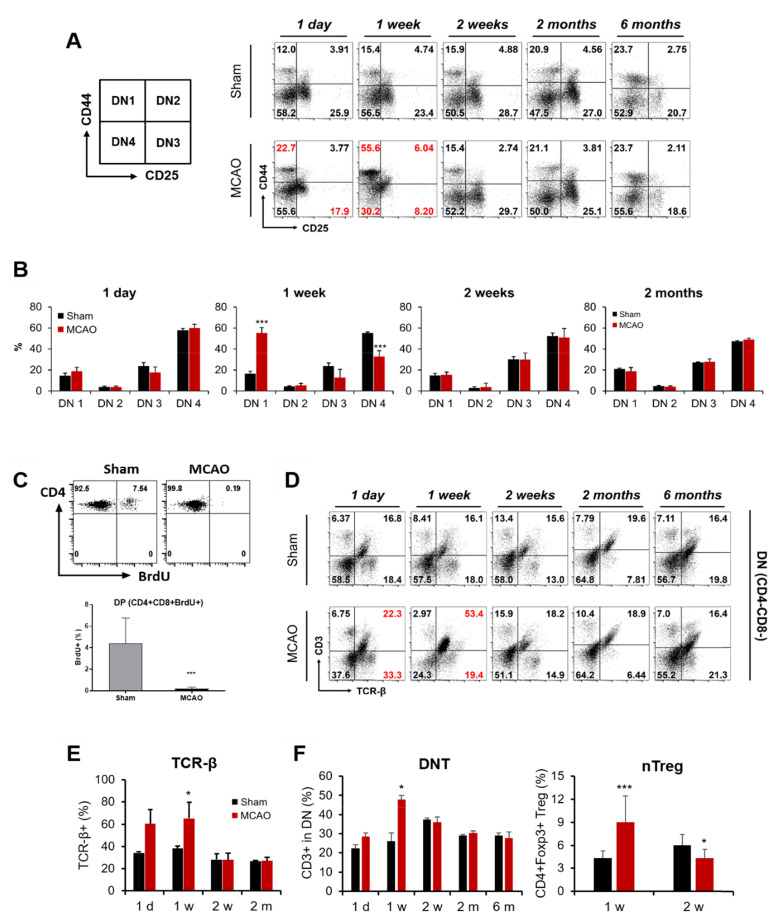
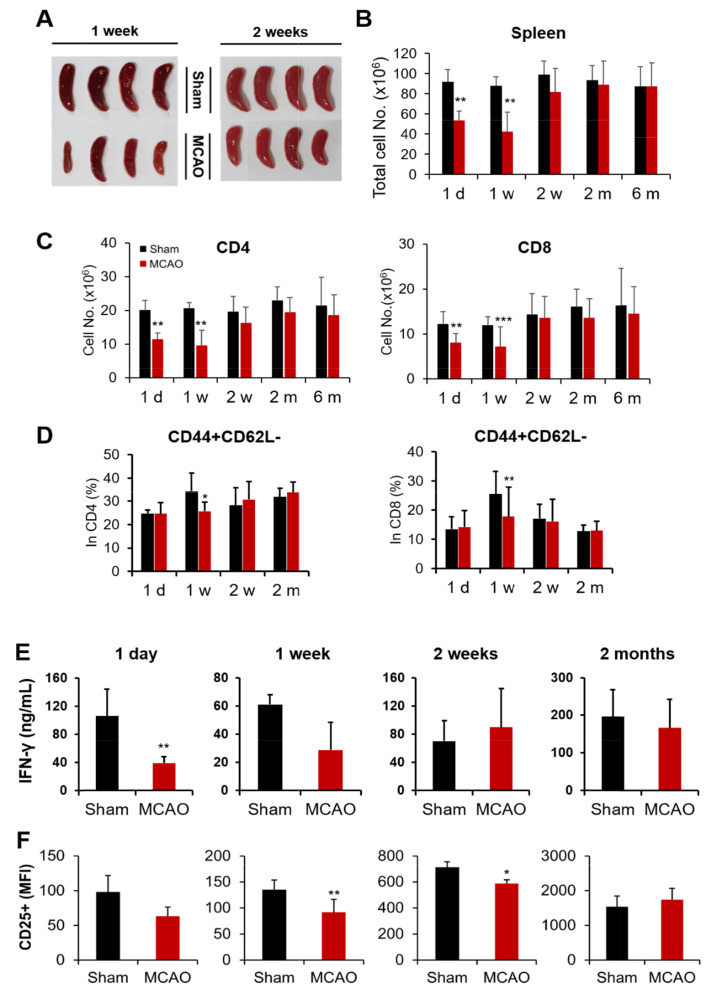
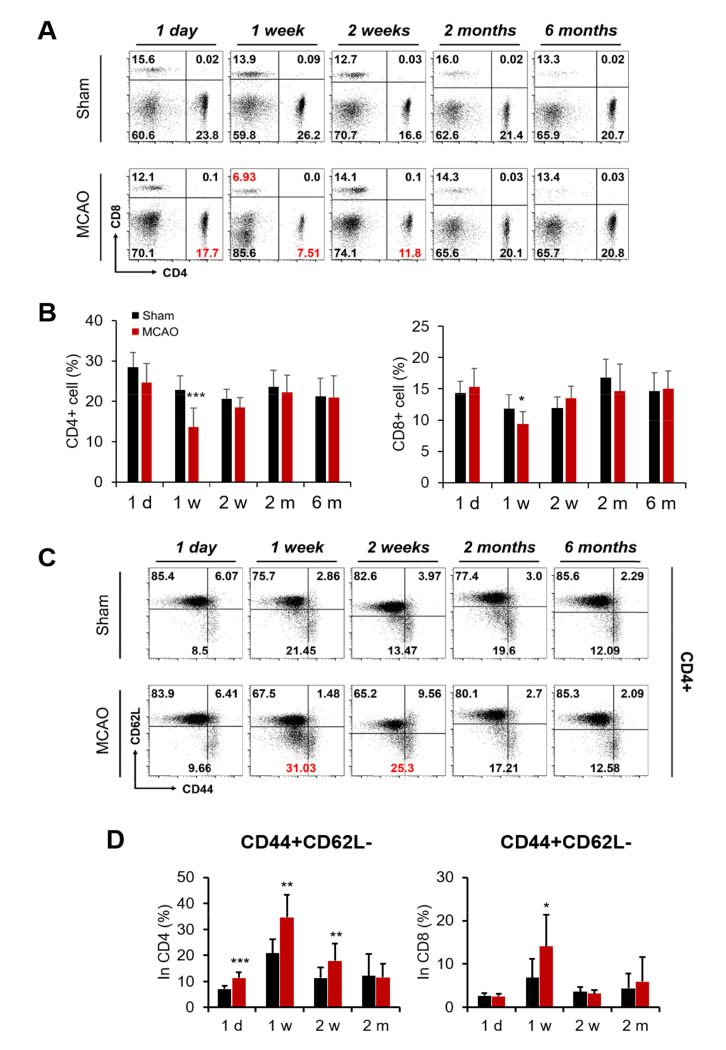
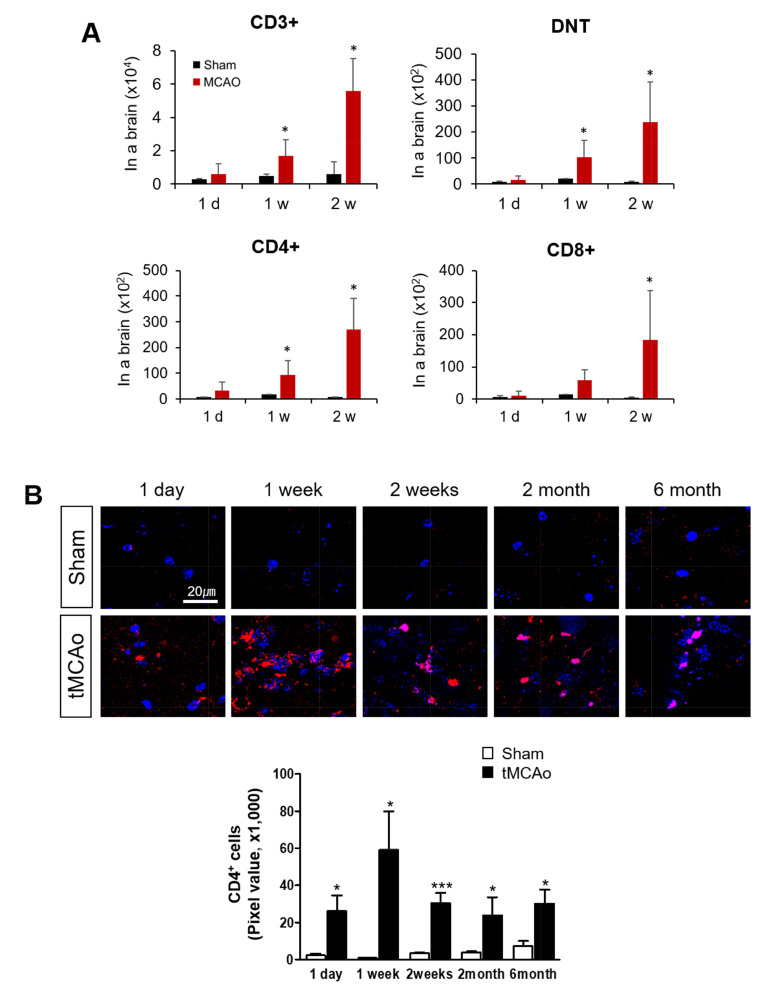
Stroke causes systemic immunosuppression. T lymphocytes are involved in infarct size in the early stages of stroke. However, the phenotypes of T lymphocytes and their functions in peripheral immune organs and the brain have not been well analyzed in the acute and chronic phases of stroke. Here, we investigated pathological phenotypic alterations in the systemic immune response, especially changes in T lymphocytes, from one day to six months after ischemic stroke in mice. Impairment in thymocyte numbers, development, proliferation, and apoptosis were observed for up to two weeks. The number of mature T cells in the spleen and blood decreased and showed reduced interferon-γ production. Increased numbers of CD4CD8CD3 double-negative T cells were observed in the mouse brain during the early stages of stroke, whereas interleukin (IL)-10Foxp3 regulatory T lymphocytes increased from two weeks during the chronic phase. These phenotypes correlated with body weight and neurological severity scores. The recovery of T lymphocyte numbers and increases in IL-10Foxp3 regulatory T lymphocytes may be important for long-term neurological outcomes. Dynamic changes in T lymphocytes between the acute and chronic phases may play different roles in pathogenesis and recovery. This study provides fundamental information regarding the T lymphocyte alterations from the brain to the peripheral immune organs following stroke.
中风会导致全身免疫抑制。T淋巴细胞参与中风早期的梗死面积形成。然而,在中风的急性期和慢性期,T淋巴细胞的表型及其在外周免疫器官和大脑中的功能尚未得到充分分析。在此,我们研究了小鼠缺血性中风后1天至6个月全身免疫反应中的病理表型改变,尤其是T淋巴细胞的变化。观察到胸腺细胞数量、发育、增殖和凋亡的损害持续长达两周。脾脏和血液中成熟T细胞数量减少,且干扰素-γ产生减少。在中风早期,小鼠大脑中CD4CD8CD3双阴性T细胞数量增加,而白细胞介素(IL)-10Foxp3调节性T淋巴细胞在慢性期从两周开始增加。这些表型与体重和神经严重程度评分相关。T淋巴细胞数量的恢复以及IL-10Foxp3调节性T淋巴细胞的增加可能对长期神经学预后很重要。急性期和慢性期之间T淋巴细胞的动态变化可能在发病机制和恢复中发挥不同作用。本研究提供了关于中风后从大脑到外周免疫器官T淋巴细胞改变的基础信息。