Leeds Institute of Rheumatic and Musculoskeletal Medicine and NIHR Leeds Biomedical Research Centre, University of Leeds, Leeds, UK.
Division of Haematology and Immunology, Leeds Institute of Medical Research, University of Leeds, Leeds, UK.
Aging Cell. 2021 Apr;20(4):e13341. doi: 10.1111/acel.13341. Epub 2021 Mar 12.
Age-related immune deficiencies are thought to be responsible for increased susceptibility to infection in older adults, with alterations in lymphocyte populations becoming more prevalent over time. The loss of humoral immunity in ageing was attributed to the diminished numbers of B cells and the reduced ability to generate immunoglobulin.
To compare the intrinsic B-cell capacity for differentiation into mature plasma cells (PCs), between young and old donors, using in vitro assays, providing either effective T-cell help or activation via TLR engagement.
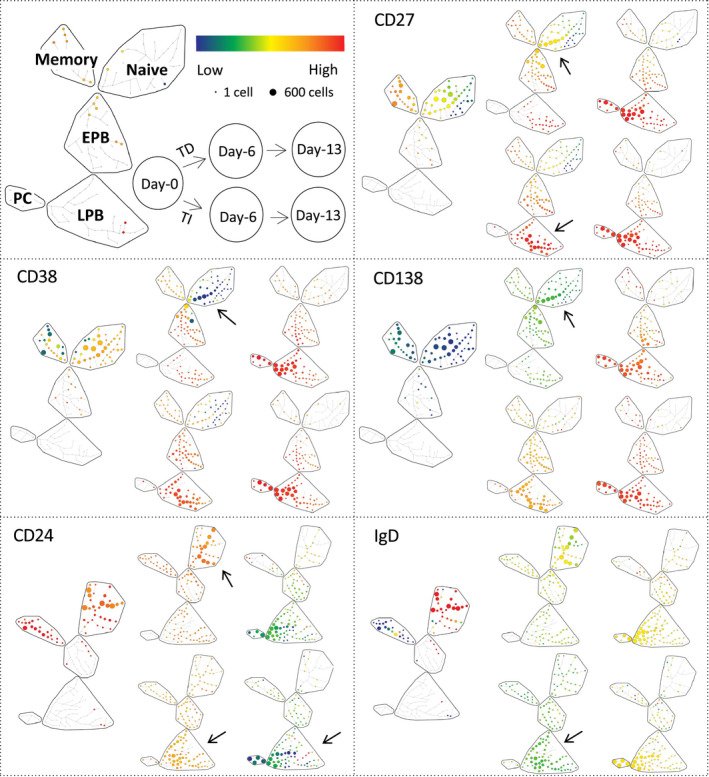
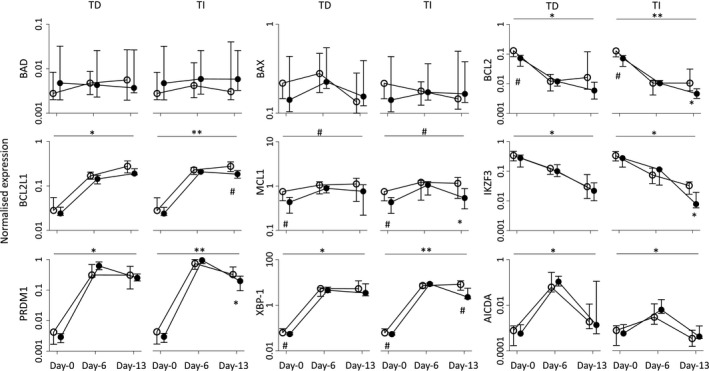
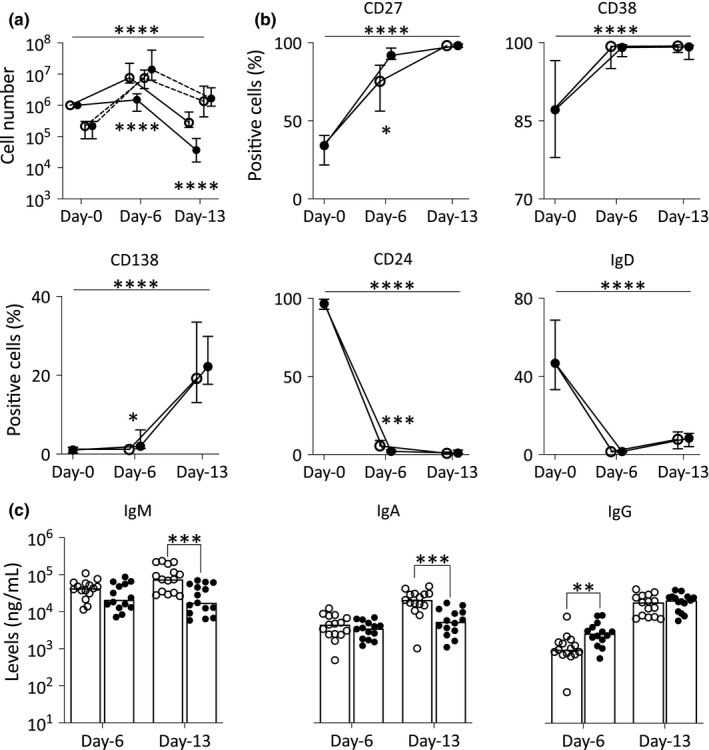
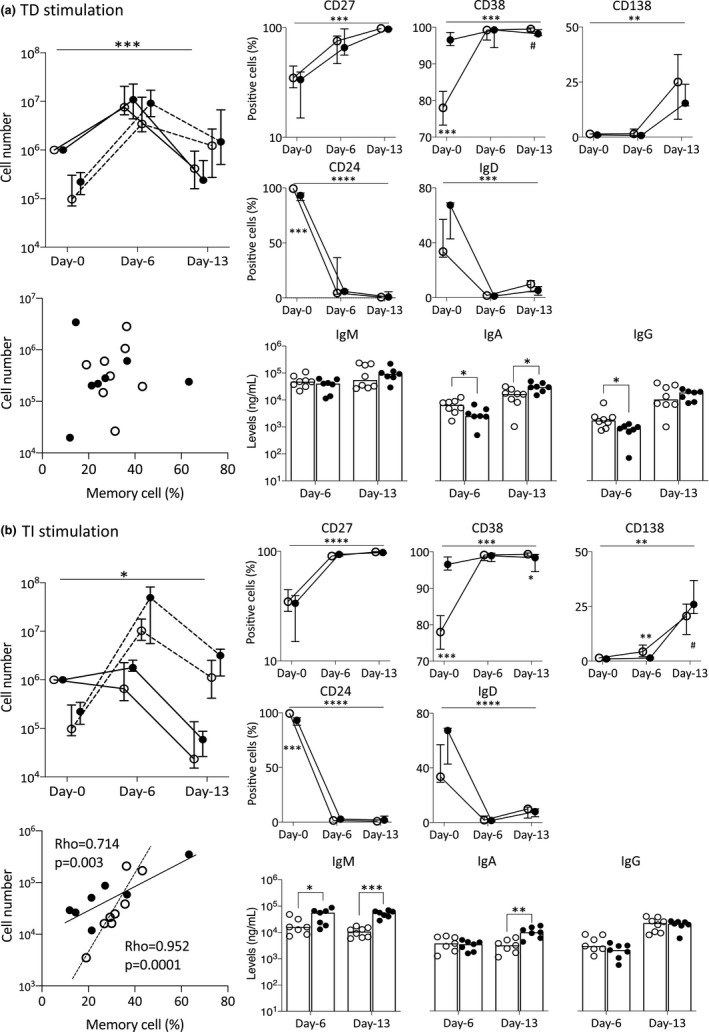
B cells were isolated from healthy individuals, in younger (30-38 years) and older (60-64 years) donors. An in vitro model system of B-cell differentiation was used, analysing 5 differentiation markers by flow cytometry, under T-dependent (TD: CD40/BCR stimulation) or T-independent (TI: TLR7/BCR activation) conditions. Antibody secretion was measured by ELISA and gene expression using qPCR.
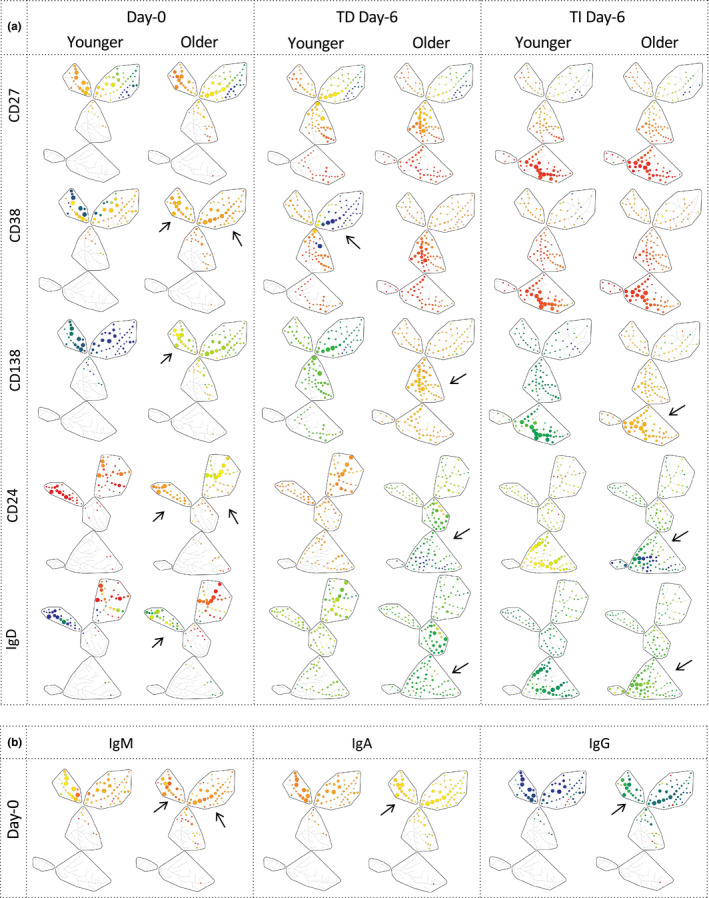
TI and TD differentiation resulted in effective proliferation of B cells followed by their differentiation into PC. B-cell-executed TI differentiation was faster, all differentiation marker and genes being expressed earlier than under TD differentiation (day 6), although generating less viable cells and lower antibody levels (day 13). Age-related differences in B-cell capacity for differentiation were minimal in TD differentiation. In contrast, in TI differentiation age significantly affected proliferation, viability, differentiation, antibody secretion and gene expression, older donors being more efficient.
Altogether, B-cell differentiation into PC appeared similar between age groups when provided with T-cell help, in contrast to TI differentiation, where multiple age-related changes suggest better capacities in older donors. These new findings may help explain the emergence of autoantibodies in ageing.
人们认为与年龄相关的免疫缺陷是导致老年人易感染的原因,随着时间的推移,淋巴细胞群体的改变变得更加普遍。衰老过程中体液免疫的丧失归因于 B 细胞数量的减少和产生免疫球蛋白的能力降低。
使用体外测定法比较年轻和老年供体之间固有 B 细胞分化为成熟浆细胞 (PC) 的能力,该方法提供有效的 T 细胞帮助或通过 TLR 结合进行激活。
从健康个体中分离 B 细胞,分别来自年轻(30-38 岁)和老年(60-64 岁)供体。使用体外 B 细胞分化模型系统,通过流式细胞术分析 5 种分化标志物,在 T 依赖性(TD:CD40/BCR 刺激)或 T 非依赖性(TI:TLR7/BCR 激活)条件下。通过 ELISA 测量抗体分泌,通过 qPCR 测量基因表达。
TI 和 TD 分化导致 B 细胞有效增殖,然后分化为 PC。B 细胞执行 TI 分化更快,所有分化标志物和基因的表达都早于 TD 分化(第 6 天),尽管生成的活细胞和抗体水平较低(第 13 天)。TD 分化中与年龄相关的 B 细胞分化能力差异最小。相比之下,在 TI 分化中,年龄对增殖、活力、分化、抗体分泌和基因表达有显著影响,老年供体更有效。
总之,当提供 T 细胞帮助时,B 细胞向 PC 的分化在年龄组之间似乎相似,与 TI 分化相反,其中多个与年龄相关的变化表明老年供体具有更好的能力。这些新发现可能有助于解释衰老中自身抗体的出现。