Bonneau Valérie, Nizon Mathilde, Latypova Xenia, Gaultier Aurélie, Hoarau Eugénie, Bézieau Stéphane, Minguet Guy, Turrini Mauro, Jourdain Maud, Isidor Bertrand
Département de Médecine Générale, Université de Nantes, 44000, Nantes, France.
USR 3491 Maison Des Sciences de L'Homme Ange Guepin, 44000, Nantes, France.
Orphanet J Rare Dis. 2021 Mar 12;16(1):130. doi: 10.1186/s13023-021-01754-z.
Until very recently, preconception genetic testing was only conducted in particular communities, ethnic groups or families for which an increased risk of genetic disease was identified. To detect in general population a risk for a couple to have a child affected by a rare, recessive or X-linked, genetic disease, carrier screening is proposed in several countries. We aimed to determine the current public opinion relative to this approach in France, using either a printed or web-based questionnaire.
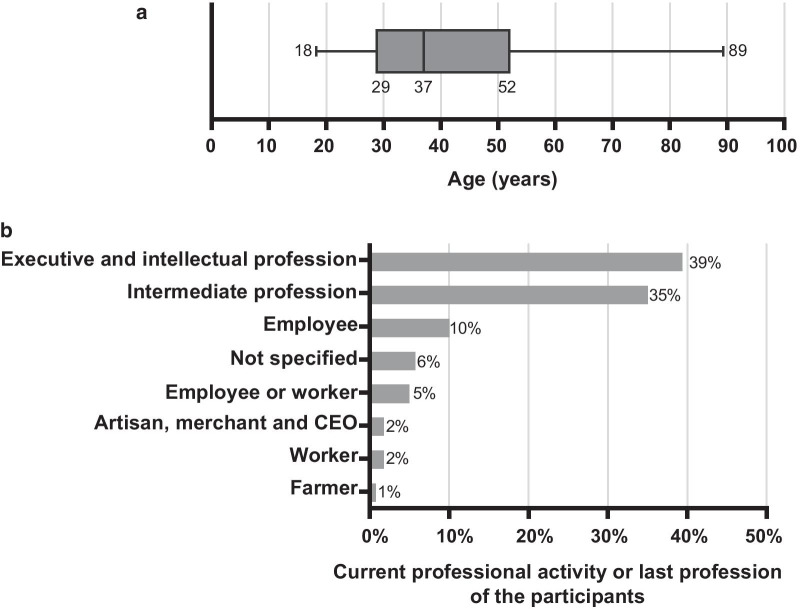
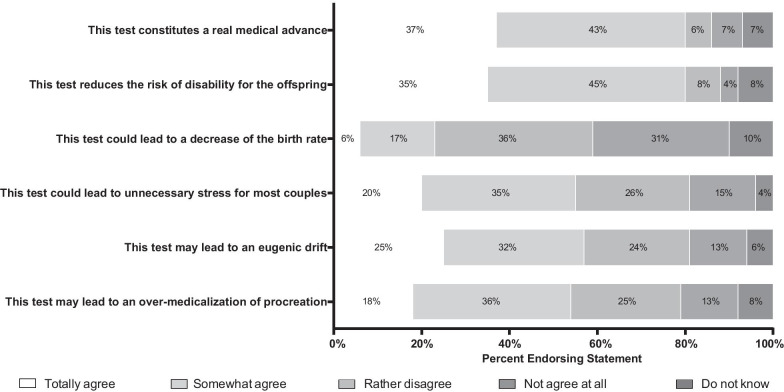
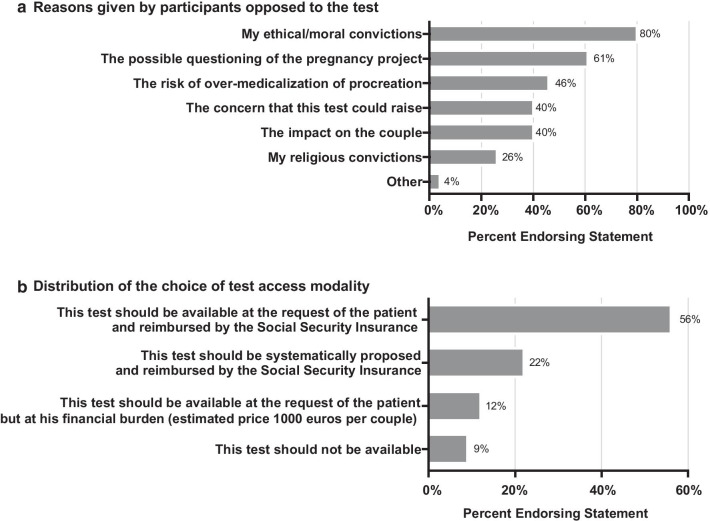
Among the 1568 participants, 91% are favorable to preconception genetic tests and 57% declare to be willing to have the screening if the latter is available. A medical prescription by a family doctor or a gynecologist would be the best way to propose the test for 73%, with a reimbursement from the social security insurance. However, 19% declare not to be willing to use the test because of their ethic or moral convictions, and the fear that the outcome would question the pregnancy. Otherwise, most participants consider that the test is a medical progress despite the risk of an increased medicalization of the pregnancy.
This first study in France highlights a global favorable opinion for the preconception genetic carrier testing under a medical prescription and a reimbursement by social security insurance. Our results emphasize as well the complex concerns underpinned by the use of this screening strategy. Therefore, the ethical issues related to these tests include the risk of eugenic drift mentioned by more than half of the participants.
直到最近,孕前基因检测仅在已确定遗传疾病风险增加的特定社区、族群或家庭中进行。为了在普通人群中检测夫妻生育患有罕见、隐性或X连锁遗传病孩子的风险,一些国家提议进行携带者筛查。我们旨在通过纸质问卷或网络问卷来确定法国公众目前对这种方法的看法。
在1568名参与者中,91%的人赞成孕前基因检测,57%的人表示如果有机会愿意接受筛查。73%的人认为由家庭医生或妇科医生开具医疗处方并由社会保险报销是推荐该项检测的最佳方式。然而,19%的人表示由于道德信念以及担心检测结果会影响妊娠而不愿接受检测。此外,尽管担心妊娠医疗化程度增加,但大多数参与者认为该项检测是医学进步。
法国的这项首次研究表明,公众总体上赞成在医疗处方和社会保险报销的情况下进行孕前基因携带者检测。我们的结果还强调了使用这种筛查策略背后的复杂问题。因此,与这些检测相关的伦理问题包括超过半数参与者提到的优生学倾向风险。