Ali Samina, Hopkin Gareth, Poonai Naveen, Richer Lawrence, Yaskina Maryna, Heath Anna, Klassen Terry Paul, McCabe Chris
Department of Pediatrics, University of Alberta, AB, Edmonton, Canada.
Women and Children's Health Research Institute, University of Alberta, Edmonton, Alberta, Canada.
Trials. 2021 Mar 12;22(1):206. doi: 10.1186/s13063-021-05164-1.
Patients and their families often have preferences for medical care that relate to wider considerations beyond the clinical effectiveness of the proposed interventions. Traditionally, these preferences have not been adequately considered in research. Research questions where patients and families have strong preferences may not be appropriate for traditional randomized controlled trials (RCTs) due to threats to internal and external validity, as there may be high levels of drop-out and non-adherence or recruitment of a sample that is not representative of the treatment population. Several preference-informed designs have been developed to address problems with traditional RCTs, but these designs have their own limitations and may not be suitable for many research questions where strong preferences and opinions are present.
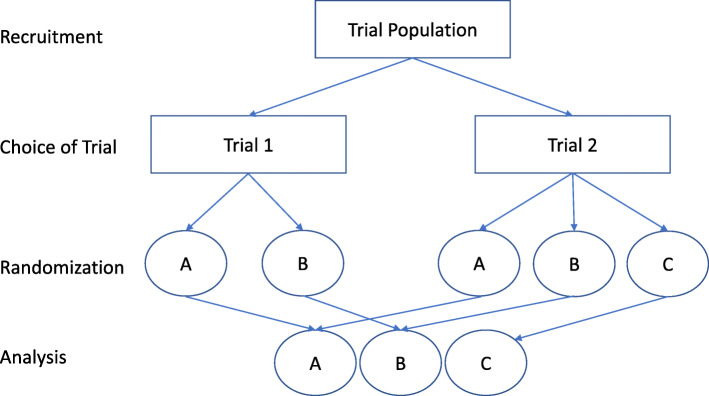
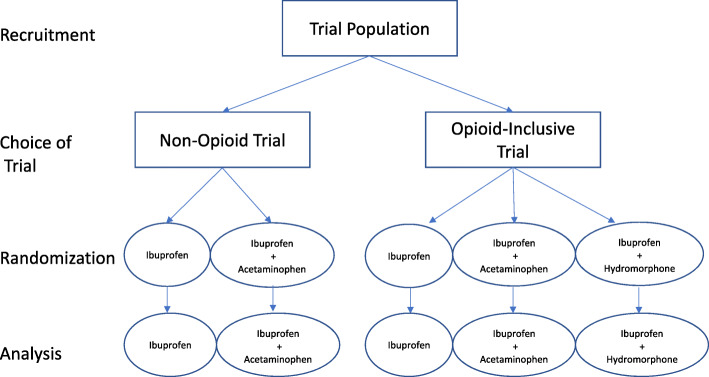
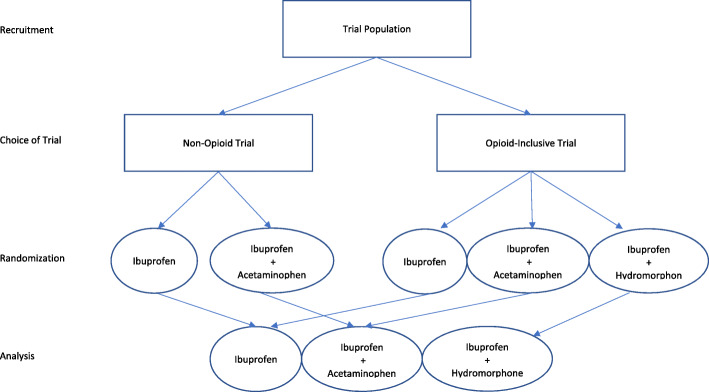
In this paper, we propose a novel and innovative preference-informed complementary trial (PICT) design which addresses key weaknesses with both traditional RCTs and available preference-informed designs. In the PICT design, complementary trials would be operated within a single study, and patients and/or families would be given the opportunity to choose between a trial with all treatment options available and a trial with treatment options that exclude the option which is subject to strong preferences. This approach would allow those with strong preferences to take part in research and would improve external validity through recruiting more representative populations and internal validity. Here we discuss the strengths and limitations of the PICT design and considerations for analysis and present a motivating example for the design based on the use of opioids for pain management for children with musculoskeletal injuries.
PICTs provide a novel and innovative design for clinical trials with more than two arms, which can address problems with existing preference-informed trial designs and enhance the ability of researchers to reflect shared decision-making in research as well as improving the validity of trials of topics with strong preferences.
患者及其家属对于医疗护理往往有一些偏好,这些偏好涉及到比所提议干预措施的临床效果更广泛的考量。传统上,这些偏好在研究中并未得到充分考虑。由于对内部和外部效度存在威胁,患者和家属有强烈偏好的研究问题可能不适用于传统的随机对照试验(RCT),因为可能会有高比例的退出和不依从情况,或者招募到的样本不能代表治疗人群。已经开发了几种偏好告知设计来解决传统RCT的问题,但这些设计有其自身的局限性,可能不适用于许多存在强烈偏好和意见的研究问题。
在本文中,我们提出了一种新颖且创新的偏好告知补充试验(PICT)设计,该设计解决了传统RCT和现有偏好告知设计的关键弱点。在PICT设计中,补充试验将在单个研究中进行,患者和/或家属将有机会在一个提供所有治疗选项的试验和一个排除了存在强烈偏好的选项的治疗选项试验之间进行选择。这种方法将使那些有强烈偏好的人能够参与研究,并通过招募更具代表性的人群来提高外部效度和内部效度。在这里,我们讨论了PICT设计的优势和局限性以及分析的考量因素,并基于使用阿片类药物治疗肌肉骨骼损伤儿童的疼痛管理给出了该设计的一个激励性示例。
PICT为具有两个以上臂的临床试验提供了一种新颖且创新的设计,它可以解决现有偏好告知试验设计的问题,并增强研究人员在研究中反映共同决策的能力,同时提高对存在强烈偏好的主题进行试验的效度。