Department of Medicine, The University of Oklahoma Health Sciences Center, Oklahoma City, OK 73104, United States; Department of Surgery, The University of Oklahoma Health Sciences Center, Oklahoma City, OK 73104, United States.
Department of Biostatistics and Epidemiology, Hudson College of Public Health, The University of Oklahoma Health Sciences Center, Oklahoma City, OK 73104, United States.
EBioMedicine. 2021 Mar;65:103271. doi: 10.1016/j.ebiom.2021.103271. Epub 2021 Mar 10.
N6-methyladenosine (m6A) is the most abundant mRNA modification. Whether m6A regulators can determine tumor aggressiveness and risk of immune evasion in pancreatic ductal adenocarcinoma (PDAC) remains unknown.
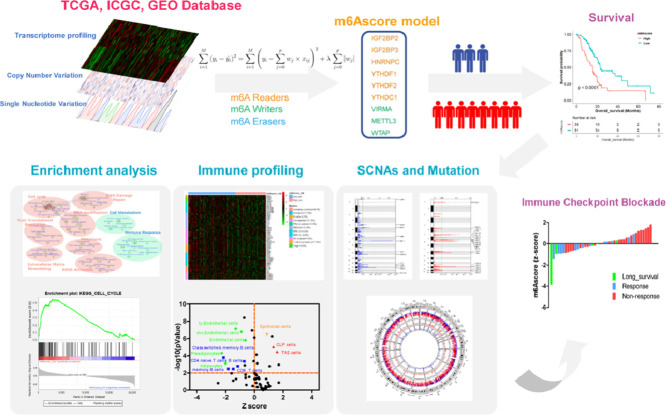
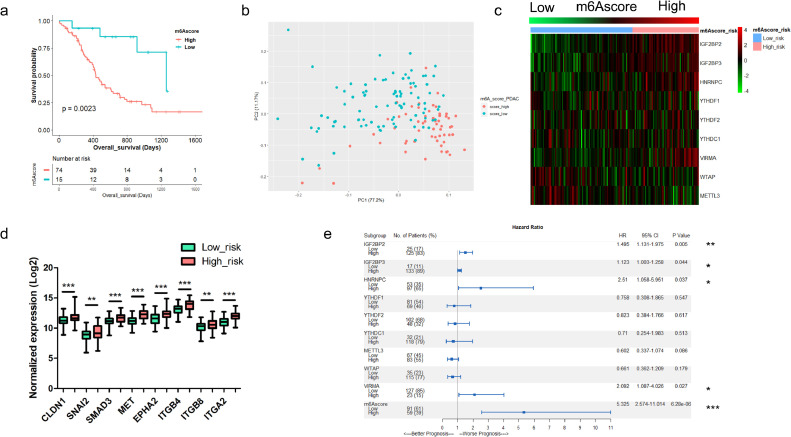
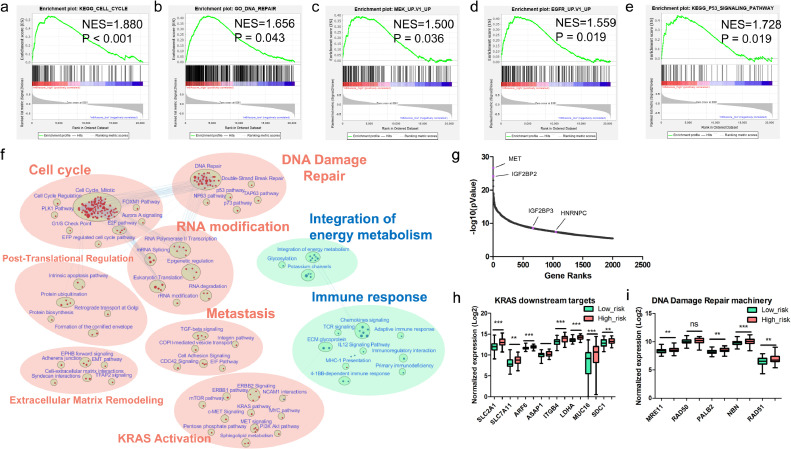
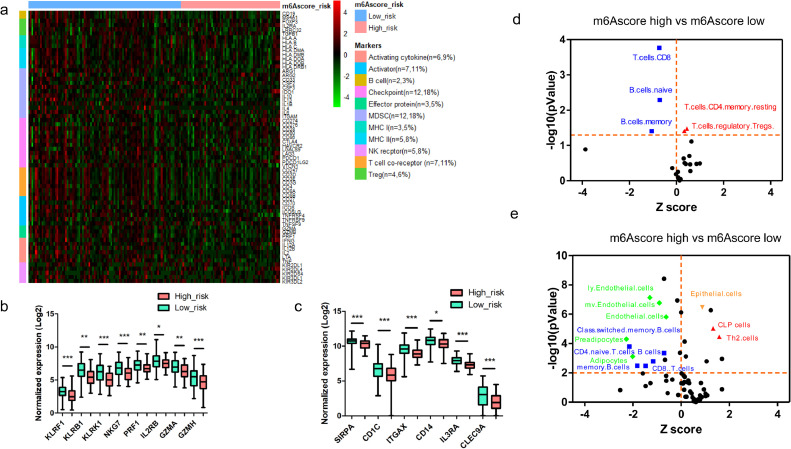
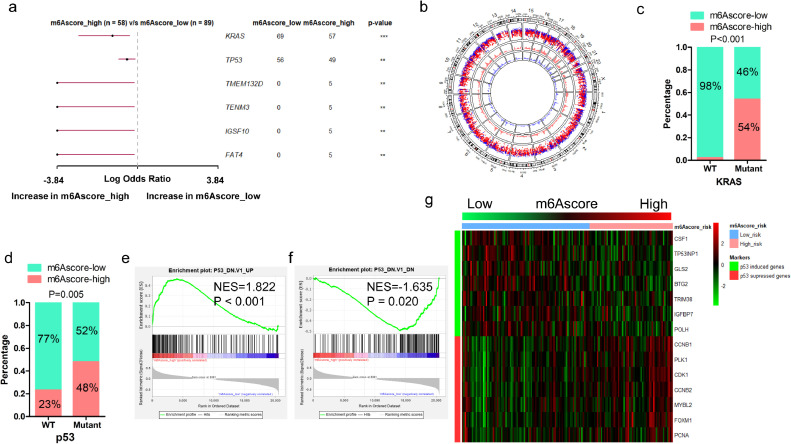
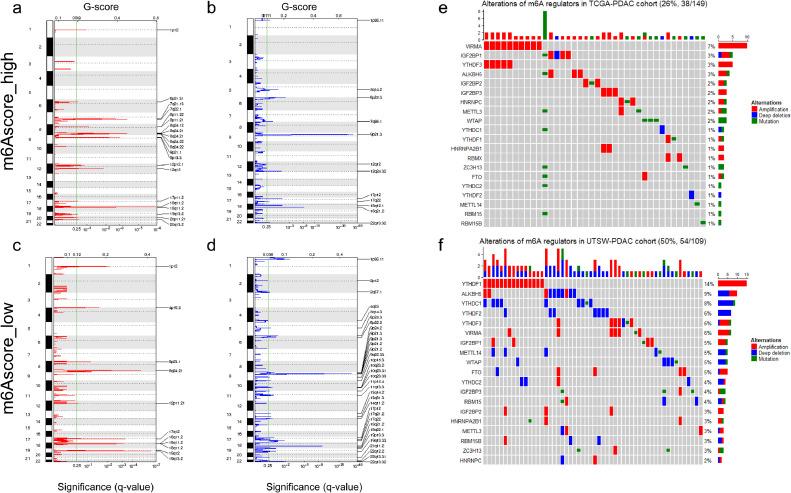
An integrated model named "m6Ascore" is constructed based on RNA-seq data of m6A regulators in PDAC. Association of m6Ascore and overall survival is validated across several different datasets. Overlaps of m6Ascore and established molecular classifications of PDAC is examined. Immune infiltration, enriched pathways, somatic copy number alterations (SCNAs), mutation profiles and response to immune checkpoint inhibitors are compared between m6Ascore-high and m6Ascore-low tumors.
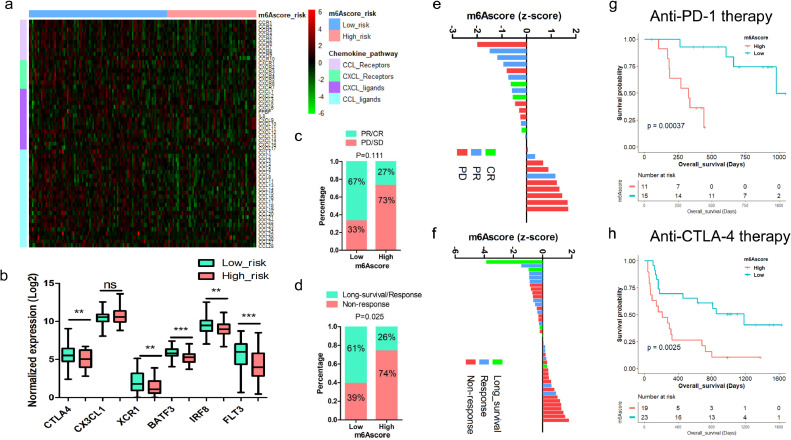
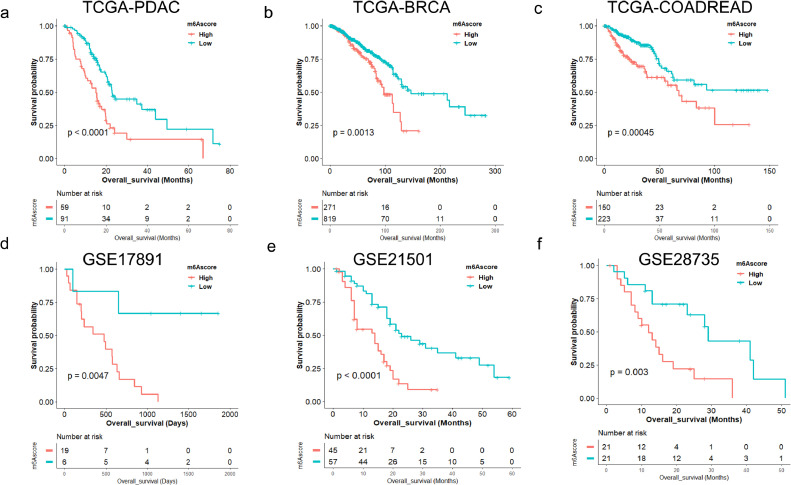
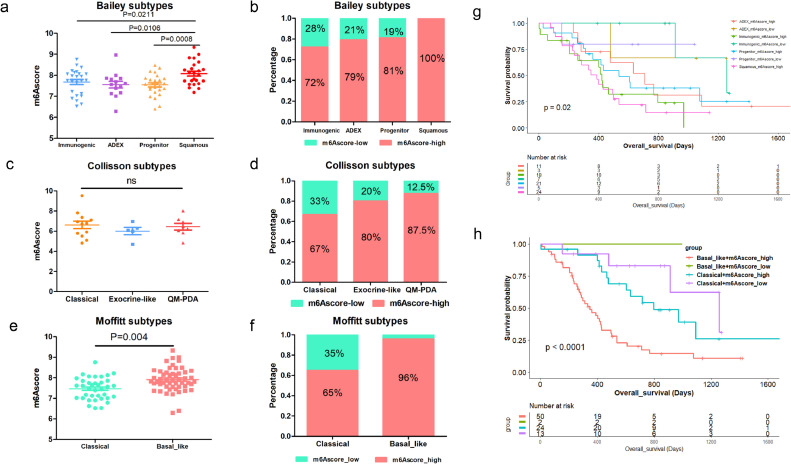
m6Ascore is associated with dismal overall survival and increased tumor recurrence in PDAC as well as several other solid tumors including colorectal cancer and breast cancer. Basal-like (Squamous) PDAC has higher m6Ascore than that in the classical PDAC. Mechanism study showed m6Ascore-high tumors are characterized with reduced immune infiltration and T cells exhaustion. Meanwhile, m6Ascore is associated with genes regulating cachexia and chemoresistance in PDAC. Furthermore, distinct SCNAs patterns and mutation profiles of KRAS and TP53 are present in m6Ascore-high tumors, indicating immune evasion. m6Ascore-low tumors have higher response rates to immune checkpoint inhibitors (ICIs).
These findings indicate m6Ascore can predict aggressiveness and immune evasion in pancreatic cancer. This model has implications for pancreatic cancer prognosis and treatment response to ICIs.
This work was supported in part by National Institutes of Health (NIH) grants to M. Li (R01 CA186338, R01 CA203108, R01 CA247234 and the William and Ella Owens Medical Research Foundation) and NIH/National Cancer Institute Q39 award P30CA225520 to Stephenson Cancer Center.
N6-甲基腺苷(m6A)是最丰富的 mRNA 修饰。m6A 调节剂是否能决定胰腺导管腺癌(PDAC)的肿瘤侵袭性和免疫逃逸风险尚不清楚。
基于 PDAC 中 m6A 调节剂的 RNA-seq 数据,构建了一个名为“m6Ascore”的综合模型。在几个不同的数据集上验证了 m6Ascore 与总生存期的相关性。检查了 m6Ascore 与 PDAC 已建立的分子分类之间的重叠。比较了 m6Ascore 高和 m6Ascore 低肿瘤之间的免疫浸润、富集途径、体细胞拷贝数改变(SCNAs)、突变谱和对免疫检查点抑制剂的反应。
m6Ascore 与 PDAC 以及包括结直肠癌和乳腺癌在内的其他几种实体肿瘤的预后不良和肿瘤复发增加相关。基底样(鳞状)PDAC 的 m6Ascore 高于经典 PDAC。机制研究表明,m6Ascore 高的肿瘤具有免疫浸润减少和 T 细胞衰竭的特征。同时,m6Ascore 与 PDAC 中调节恶病质和化疗耐药的基因有关。此外,m6Ascore 高的肿瘤存在 KRAS 和 TP53 基因不同的 SCNAs 模式和突变谱,表明存在免疫逃逸。m6Ascore 低的肿瘤对免疫检查点抑制剂(ICI)的反应率更高。
这些发现表明,m6Ascore 可预测胰腺癌的侵袭性和免疫逃逸。该模型对胰腺癌的预后和对 ICI 的治疗反应具有重要意义。
这项工作得到了美国国立卫生研究院(NIH)给 M. Li 的部分资助(R01 CA186338、R01 CA203108、R01 CA247234 和 William 和 Ella Owens 医学研究基金会)和 NIH/National Cancer Institute Q39 奖 P30CA225520 给斯蒂芬森癌症中心。