Gim Sang-A, Park Dong-Ju, Kang Ju-Bin, Shah Fawad-Ali, Koh Phil-Ok
Department of Anatomy, College of Veterinary Medicine, Research Institute of Life Science, Gyeongsang National University, 501 Jinjudaero, Jinju, 52828, South Korea.
Current affiliation: Riphah Institute of Pharmaceutical Sciences, Riphah International University, near Hajj Complex, I-14, Islamabad, Islamabad Capital Territory 46000, Pakistan.
J Vet Med Sci. 2021 Apr 24;83(4):724-733. doi: 10.1292/jvms.21-0013. Epub 2021 Mar 12.
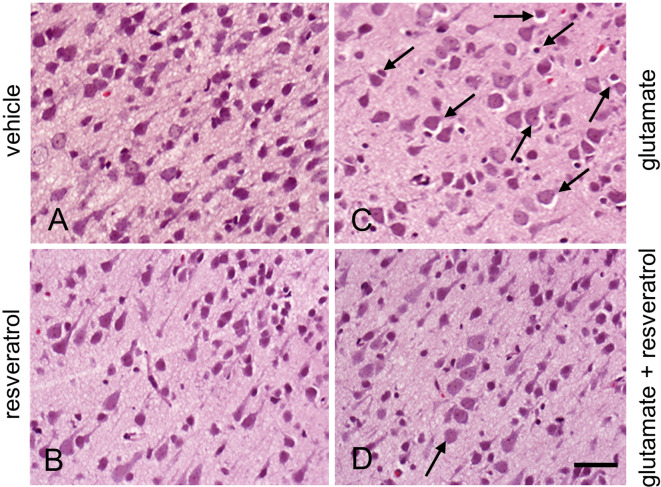
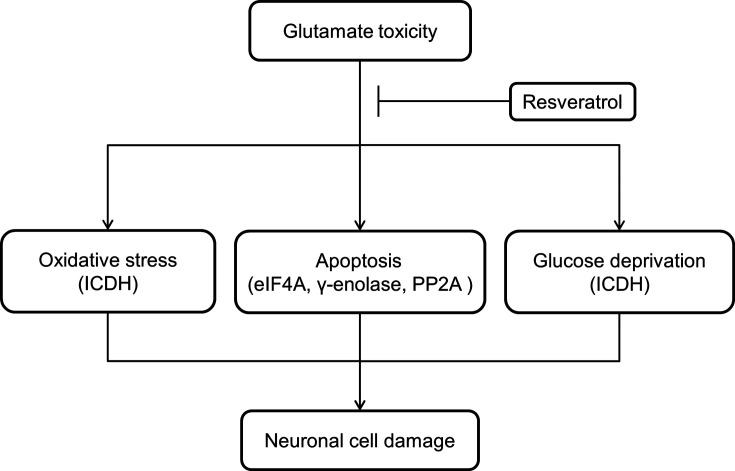
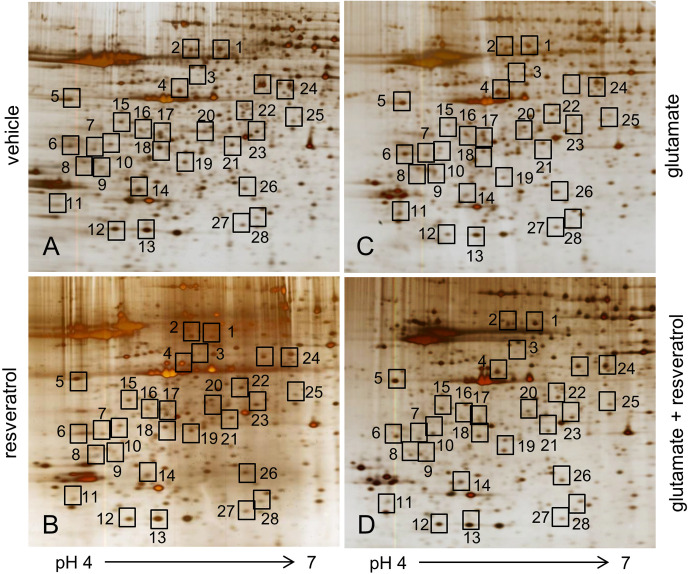
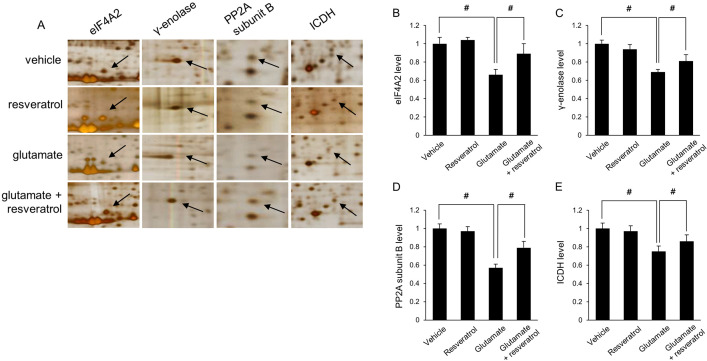
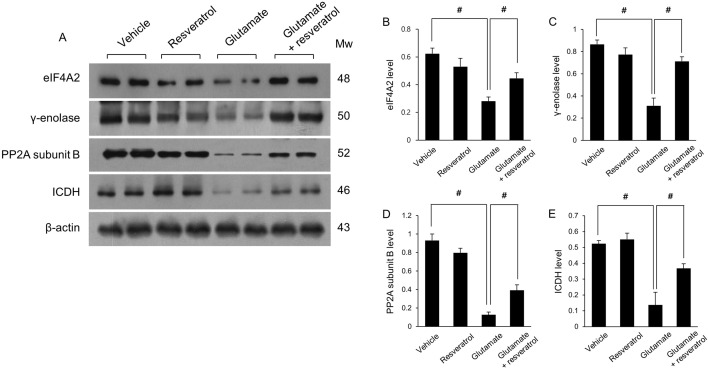
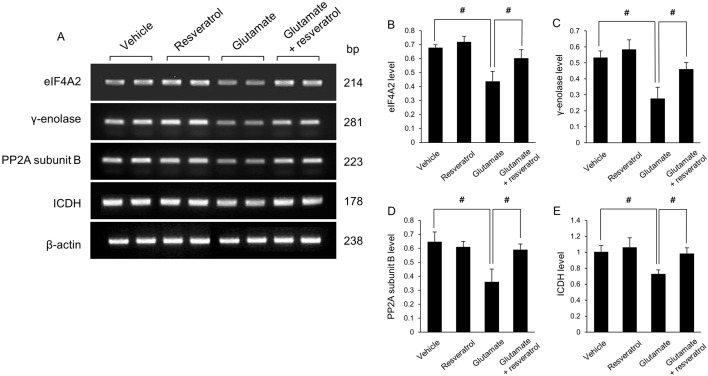
Glutamate induces neuronal damage by generating oxidative stress and neurotoxicities. The neurological damage caused by glutamate is more severe during brain development in newborns than in adults. Resveratrol is naturally present in a variety of fruits and medicinal plants and exerts a neuroprotective effect against brain damage. The goal of this study was to evaluate the neuroprotective effects of resveratrol and to identify changed proteins in response to resveratrol treatment during glutamate-induced neonatal cortical damage. Sprague-Dawley rat pups (7 days old) were randomly divided into vehicle, resveratrol, glutamate, and glutamate and resveratrol groups. The animals were intraperitoneally injected with glutamate (10 mg/kg) and/or resveratrol (20 mg/kg) and their brain tissue was collected 4 hr after drug administration. Glutamate exposure caused severe histopathological changes, while resveratrol attenuated this damage. We identified regulated proteins by resveratrol in glutamate-induced cortical damaged tissue using two-dimensional gel electrophoresis and mass spectrometry. Among identified proteins, we focused on eukaryotic initiation factor 4A2, γ-enolase, protein phosphatase 2A subunit B, and isocitrate dehydrogenase. These proteins decreased in the glutamate-treated group, whereas the combination treatment of glutamate and resveratrol attenuated these protein reductions. These proteins are anti-oxidant proteins and anti-apoptotic proteins. These results suggest that glutamate induces brain cortical damage in newborns; resveratrol exerts a neuroprotective effect by controlling expression of various proteins with anti-oxidant and anti-apoptotic functions.
谷氨酸通过产生氧化应激和神经毒性来诱导神经元损伤。谷氨酸所致的神经损伤在新生儿脑发育过程中比在成人中更为严重。白藜芦醇天然存在于多种水果和药用植物中,并对脑损伤发挥神经保护作用。本研究的目的是评估白藜芦醇的神经保护作用,并确定在谷氨酸诱导的新生儿皮质损伤过程中,白藜芦醇处理后发生变化的蛋白质。将7日龄的Sprague-Dawley幼鼠随机分为溶剂对照组、白藜芦醇组、谷氨酸组以及谷氨酸+白藜芦醇组。给动物腹腔注射谷氨酸(10mg/kg)和/或白藜芦醇(20mg/kg),给药4小时后收集脑组织。谷氨酸暴露导致严重的组织病理学变化,而白藜芦醇减轻了这种损伤。我们使用二维凝胶电泳和质谱法鉴定了白藜芦醇在谷氨酸诱导的皮质损伤组织中调控的蛋白质。在鉴定出的蛋白质中,我们重点关注真核起始因子4A2、γ-烯醇化酶、蛋白磷酸酶2A亚基B和异柠檬酸脱氢酶。这些蛋白质在谷氨酸处理组中减少,而谷氨酸和白藜芦醇联合处理减轻了这些蛋白质的减少。这些蛋白质是抗氧化蛋白和抗凋亡蛋白。这些结果表明,谷氨酸诱导新生儿脑皮质损伤;白藜芦醇通过控制具有抗氧化和抗凋亡功能的各种蛋白质的表达发挥神经保护作用。