Arslan Gökmen, Coşkun Muhammet
Department of Psychological Counseling and Guidance, Mehmet Akif Ersoy University, Burdur, Turkey.
Department of Psychological Counseling and Guidance, Kafkas University, Kars, Turkey.
Int J Ment Health Addict. 2022;20(4):2165-2179. doi: 10.1007/s11469-021-00506-1. Epub 2021 Mar 8.
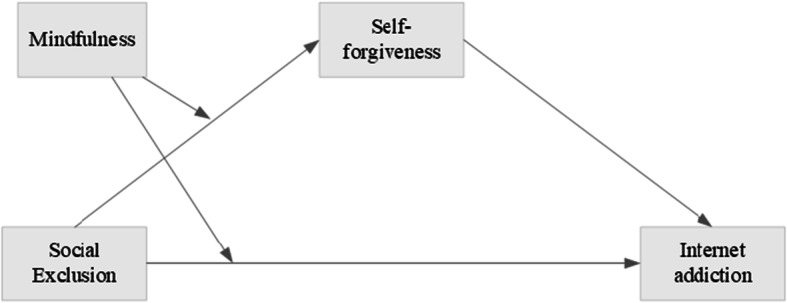
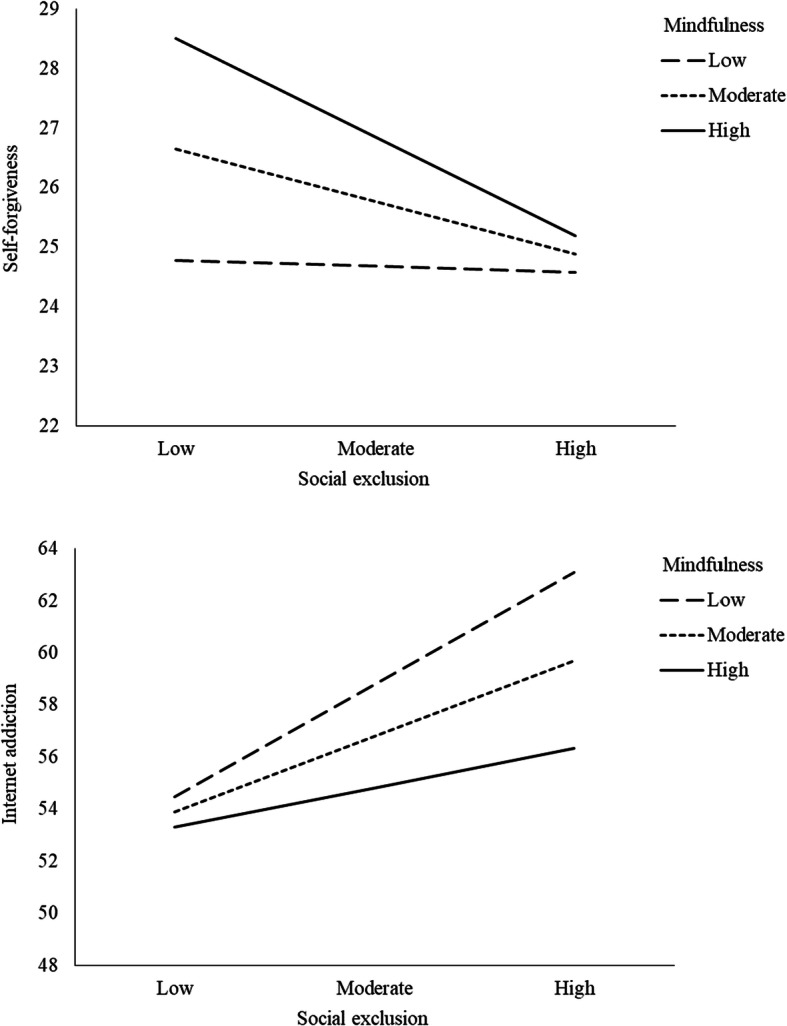
Internet addiction is a growingly prevalent behavioral addiction that causes numerous psychosocial problems. Investigating the causes and consequences of Internet addiction is fundamental to comprehend and prevent it. Therefore, the current study provided protective and promotive factors for undesired effects of social exclusion on Internet addiction. The study examined a moderated mediation model to test whether mindfulness moderated the mediating role of self-forgiveness in the association between social exclusion and Internet addiction among young adults. The participants of the present study included 358 undergraduate students attending a state university in Turkey. They ranged in age from 20 to 28 years ( = 21.89, = 1.95). The participants comprised 206 (57.5%) female and 152 (42.5%) male college young adults. Overall, the study findings indicated that self-forgiveness mediated the relationship between social exclusion and Internet addiction, and mindfulness moderated the mediating role of self-forgiveness in this association. Contending with negative outcomes of social exclusion and Internet addiction, and mitigating and buffering roles of self-forgiveness and mindfulness provide important implications to design prevention and intervention services for reducing Internet-related addictive behaviors.
网络成瘾是一种日益普遍的行为成瘾,会引发众多心理社会问题。探究网络成瘾的成因及后果对于理解和预防该问题至关重要。因此,本研究为社会排斥对网络成瘾的不良影响提供了保护因素和促进因素。该研究考察了一个有调节的中介模型,以检验正念是否调节了自我宽恕在社会排斥与年轻人网络成瘾之间的中介作用。本研究的参与者包括358名就读于土耳其一所国立大学的本科生。他们的年龄在20岁至28岁之间(均值 = 21.89,标准差 = 1.95)。参与者包括206名(57.5%)女大学生和152名(42.5%)男大学生。总体而言,研究结果表明,自我宽恕介导了社会排斥与网络成瘾之间的关系,且正念调节了自我宽恕在这一关联中的中介作用。应对社会排斥和网络成瘾的负面结果,以及自我宽恕和正念的缓解与缓冲作用,为设计减少与网络相关成瘾行为的预防和干预服务提供了重要启示。