Gunasinghe Sachith D, Peres Newton G, Goyette Jesse, Gaus Katharina
EMBL Australia Node in Single Molecule Science, University of New South Wales, Sydney, NSW, Australia.
ARC Centre of Excellence in Advanced Molecular Imaging, University of New South Wales, Sydney, NSW, Australia.
Front Immunol. 2021 Feb 25;12:600829. doi: 10.3389/fimmu.2021.600829. eCollection 2021.
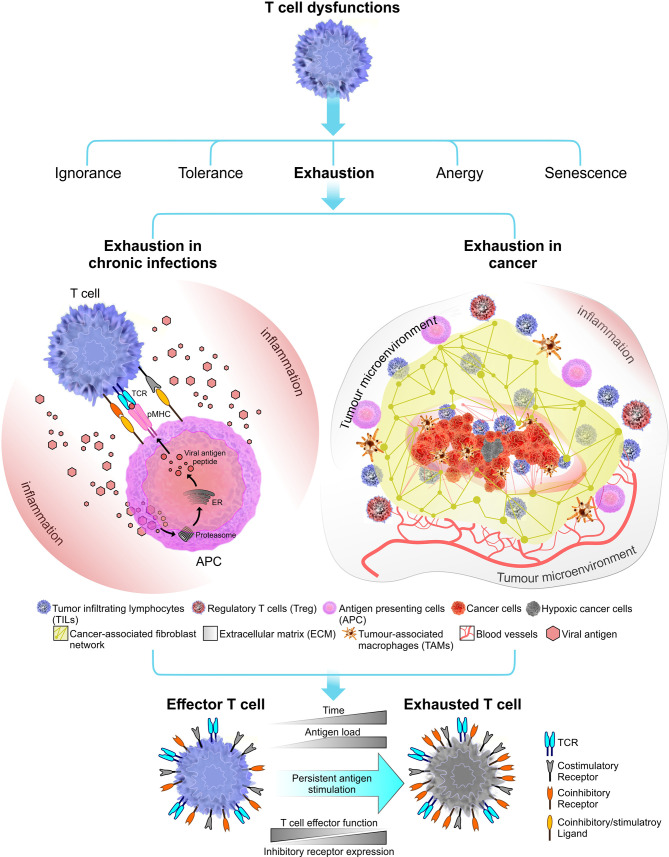
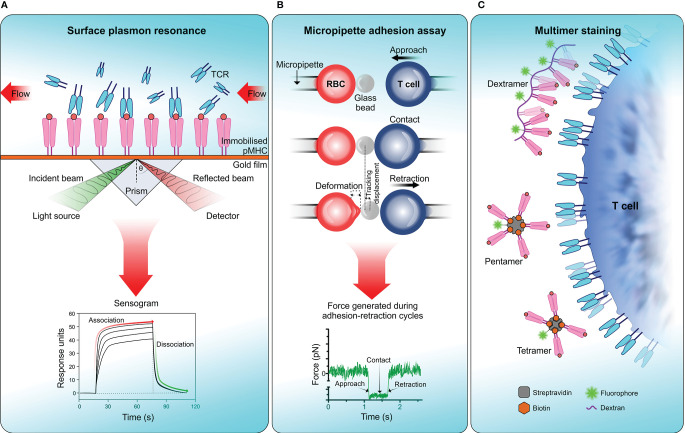
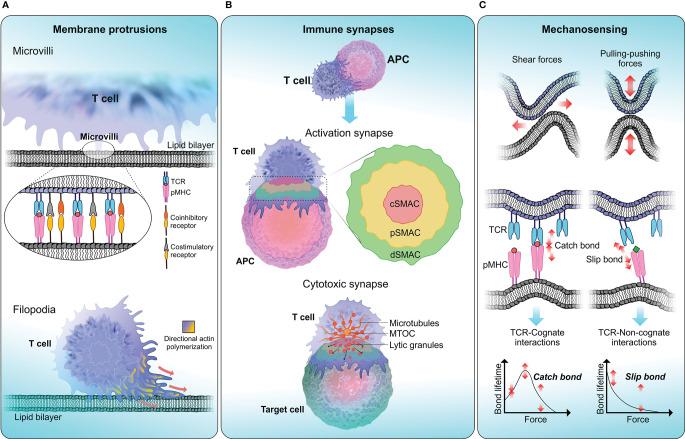
Understanding the mechanisms behind T cell dysfunctions during chronic diseases is critical in developing effective immunotherapies. As demonstrated by several animal models and human studies, T cell dysfunctions are induced during chronic diseases, spanning from infections to cancer. Although factors governing the onset and the extent of the functional impairment of T cells can differ during infections and cancer, most dysfunctional phenotypes share common phenotypic traits in their immune receptor and biophysical landscape. Through the latest developments in biophysical techniques applied to explore cell membrane and receptor-ligand dynamics, we are able to dissect and gain further insights into the driving mechanisms behind T cell dysfunctions. These insights may prove useful in developing immunotherapies aimed at reinvigorating our immune system to fight off infections and malignancies more effectively. The recent success with checkpoint inhibitors in treating cancer opens new avenues to develop more effective, targeted immunotherapies. Here, we highlight the studies focused on the transformation of the biophysical landscape during infections and cancer, and how T cell biomechanics shaped the immunopathology associated with chronic diseases.
了解慢性疾病期间T细胞功能障碍背后的机制对于开发有效的免疫疗法至关重要。正如多个动物模型和人体研究所示,从感染到癌症的各种慢性疾病都会诱导T细胞功能障碍。尽管在感染和癌症期间,控制T细胞功能损伤的起始和程度的因素可能有所不同,但大多数功能失调的表型在其免疫受体和生物物理格局方面具有共同的表型特征。通过应用于探索细胞膜和受体-配体动力学的生物物理技术的最新进展,我们能够剖析并进一步深入了解T细胞功能障碍背后的驱动机制。这些见解可能有助于开发旨在重振我们的免疫系统以更有效地对抗感染和恶性肿瘤的免疫疗法。最近检查点抑制剂在癌症治疗方面的成功为开发更有效、更有针对性的免疫疗法开辟了新途径。在这里,我们重点介绍了专注于感染和癌症期间生物物理格局转变的研究,以及T细胞生物力学如何塑造与慢性疾病相关的免疫病理学。