Zhong Mengya, Qiu Xingfeng, Liu Yu, Yang Yan, Gu Lei, Wang Chenxi, Chen Huiyu, Liu Zhongchen, Miao Jiayin, Zhuang Guohong
Cancer Research Center, School of Medicine, Xiamen University, Xiamen, China.
Department of Hematology, The First Affiliated Hospital of Xiamen University and Institute of Hematology, School of Medicine, Xiamen University, Xiamen, China.
Front Oncol. 2021 Feb 24;10:623048. doi: 10.3389/fonc.2020.623048. eCollection 2020.
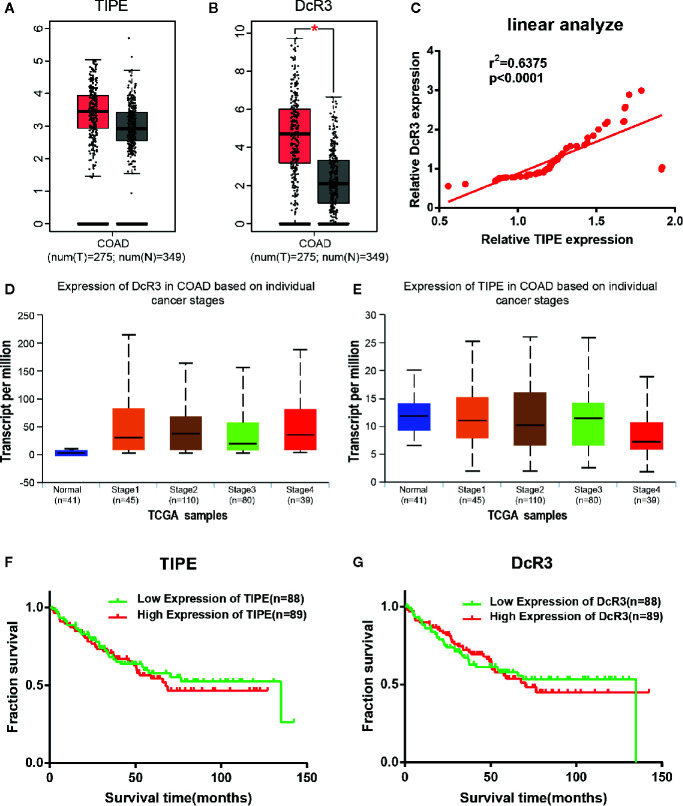
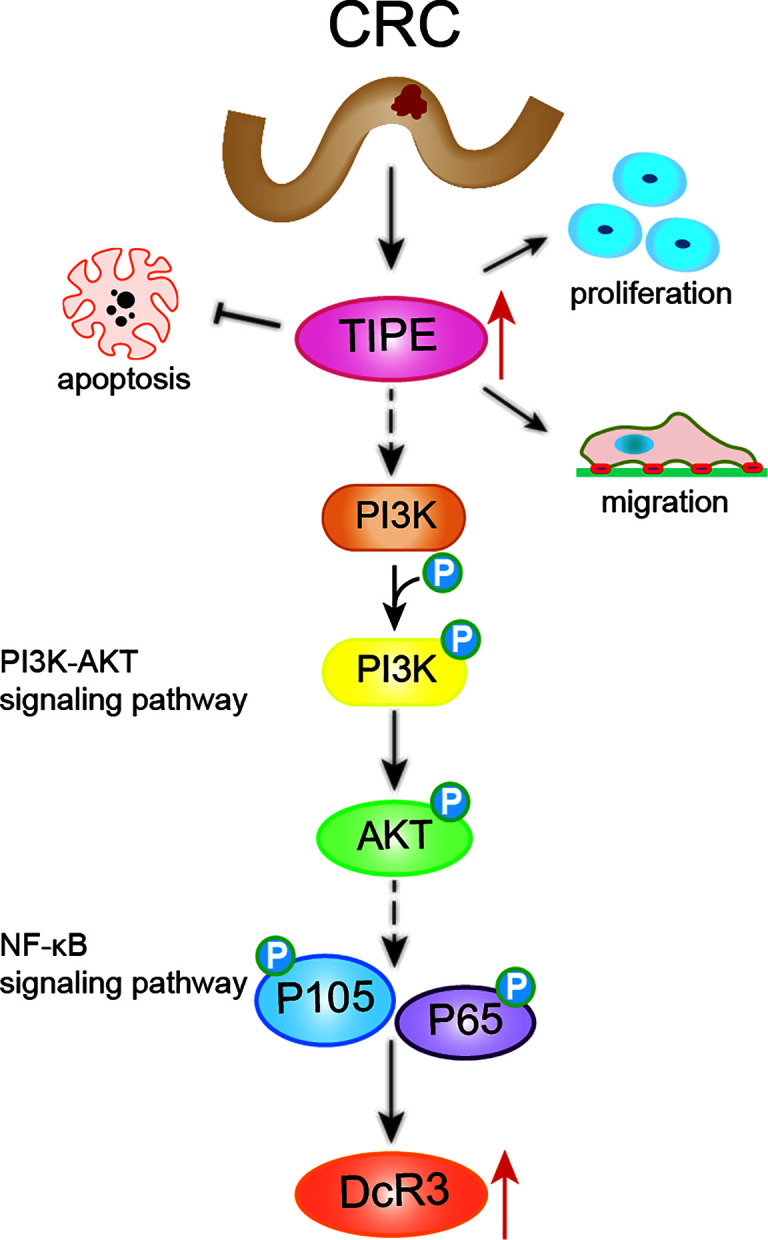
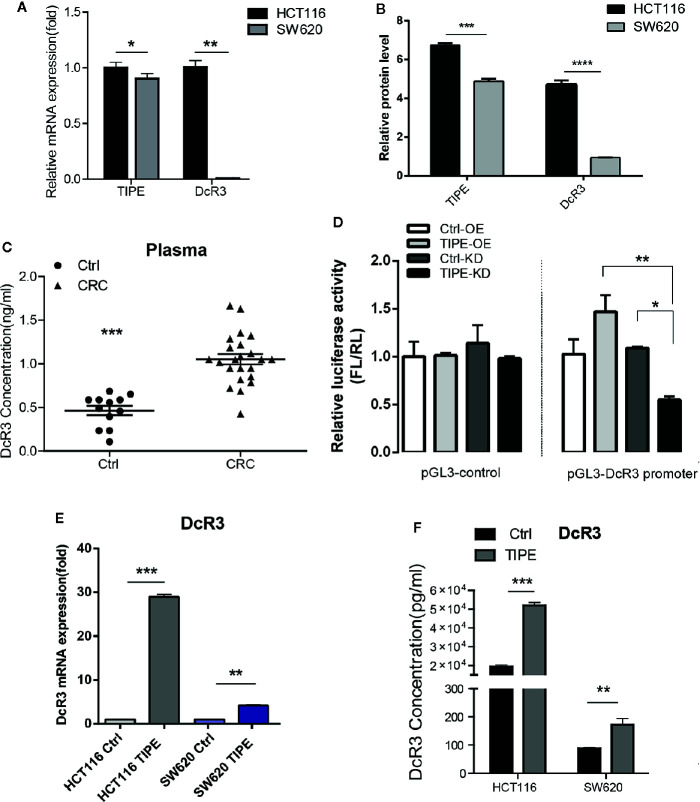
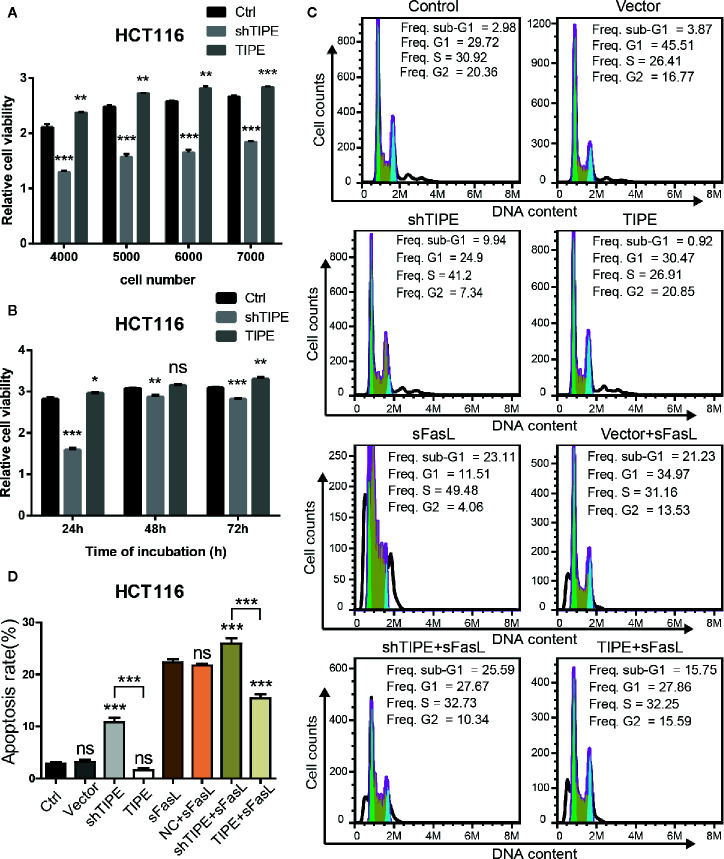
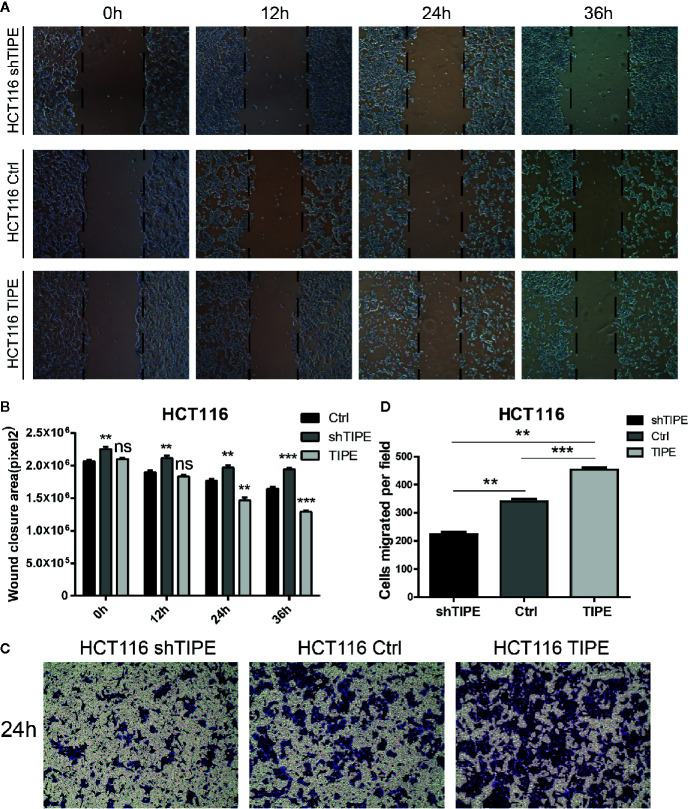
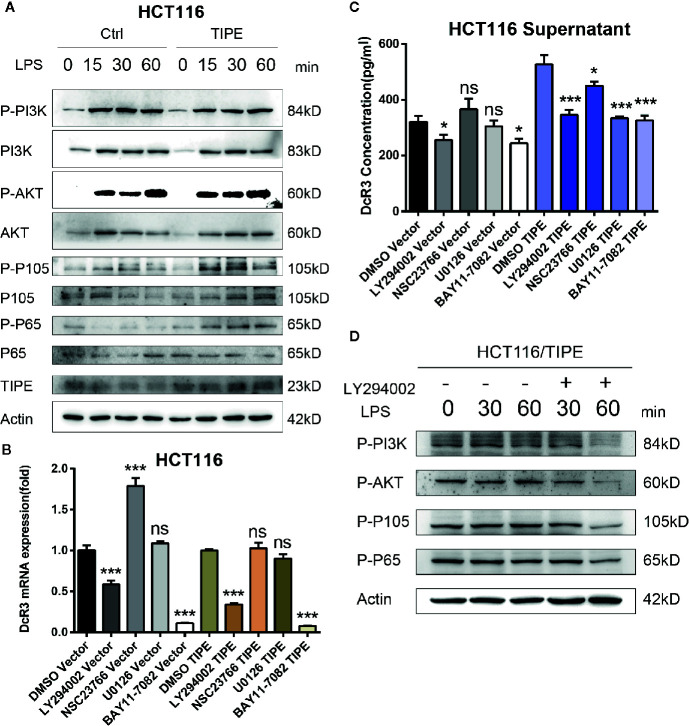
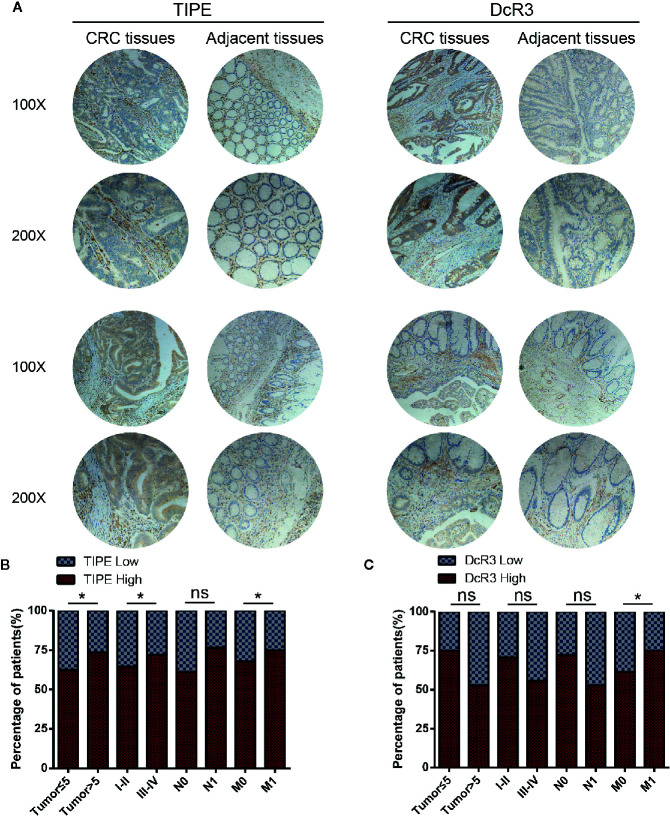
Tumor necrosis factor-induced protein-8 (TIPE) is highly expressed in colorectal cancer (CRC). Decoy receptor 3 (DcR3) is a soluble secreted protein that can antagonize Fas ligand (FasL)-induced apoptosis and promote tumorigenesis. It remains unclear whether TIPE can regulate DcR3 expression. In this study, we examined this question by analyzing the relationship between these factors in CRC. Bioinformatics and tissue microarrays were used to determine the expression of TIPE and DcR3 and their correlation in CRC. The expression of TIPE and DcR3 in colon cancer cells was detected. Plasma samples were collected from CRC patients, and DcR3 secretion was measured. Then, dual-luciferase reporter gene analysis was performed to assess the interaction between TIPE and DcR3. We exogenously altered TIPE expression and analyzed its function and influence on DcR3 secretion. Lipopolysaccharide (LPS) was used to stimulate TIPE-overexpressing HCT116 cells, and alterations in signaling pathways were detected. Additionally, inhibitors were used to confirm molecular mechanisms. We found that TIPE and DcR3 were highly expressed in CRC patients and that their expression levels were positively correlated. DcR3 was highly expressed in the plasma of cancer patients. We confirmed that TIPE and DcR3 were highly expressed in HCT116 cells. TIPE overexpression enhanced the transcriptional activity of the DcR3 promoter. TIPE activated the PI3K/AKT signaling pathway to regulate the expression of DcR3, thereby promoting cell proliferation and migration and inhibiting apoptosis. In summary, TIPE and DcR3 are highly expressed in CRC, and both proteins are associated with poor prognosis. TIPE regulates DcR3 expression by activating the PI3K/AKT signaling pathway in CRC, thus promoting cell proliferation and migration and inhibiting apoptosis. These findings may have clinical significance and promise for applications in the treatment or prognostication of CRC.
肿瘤坏死因子诱导蛋白8(TIPE)在结直肠癌(CRC)中高表达。诱饵受体3(DcR3)是一种可溶性分泌蛋白,可拮抗Fas配体(FasL)诱导的细胞凋亡并促进肿瘤发生。TIPE是否能调节DcR3的表达仍不清楚。在本研究中,我们通过分析CRC中这些因子之间的关系来探讨这个问题。利用生物信息学和组织芯片确定TIPE和DcR3的表达及其在CRC中的相关性。检测结肠癌细胞中TIPE和DcR3的表达。收集CRC患者的血浆样本并检测DcR3的分泌。然后,进行双荧光素酶报告基因分析以评估TIPE与DcR3之间的相互作用。我们外源性改变TIPE的表达,并分析其功能以及对DcR3分泌的影响。使用脂多糖(LPS)刺激过表达TIPE的HCT116细胞,并检测信号通路的变化。此外,使用抑制剂来确定分子机制。我们发现TIPE和DcR3在CRC患者中高表达,且它们的表达水平呈正相关。DcR3在癌症患者的血浆中高表达。我们证实TIPE和DcR3在HCT116细胞中高表达。TIPE过表达增强了DcR3启动子的转录活性。TIPE激活PI3K/AKT信号通路来调节DcR3的表达,从而促进细胞增殖和迁移并抑制细胞凋亡。总之,TIPE和DcR3在CRC中高表达,这两种蛋白均与预后不良相关。TIPE通过激活CRC中的PI3K/AKT信号通路来调节DcR3的表达,从而促进细胞增殖和迁移并抑制细胞凋亡。这些发现可能具有临床意义,并有望应用于CRC的治疗或预后评估。