Wang Lu, Serpooshan Vahid, Zhang Jianyi
Department of Biomedical Engineering, School of Medicine and School of Engineering, University of Alabama at Birmingham, Birmingham, AL, United States.
Department of Biomedical Engineering, Emory University School of Medicine and Georgia Institute of Technology, Atlanta, GA, United States.
Front Cardiovasc Med. 2021 Feb 26;8:621781. doi: 10.3389/fcvm.2021.621781. eCollection 2021.
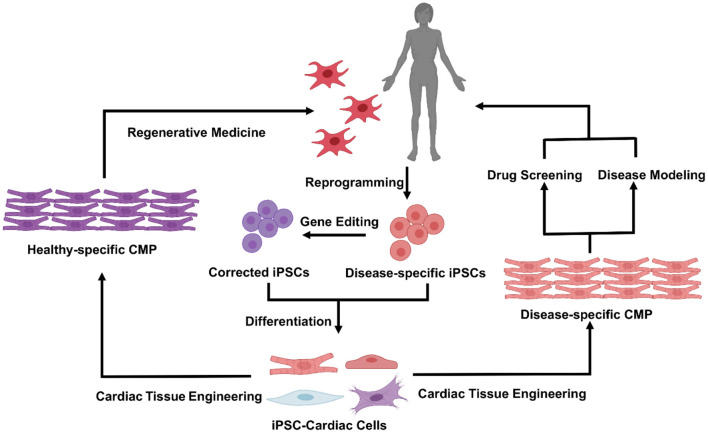
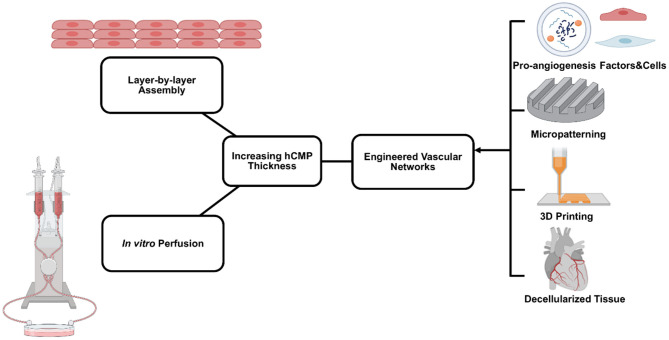
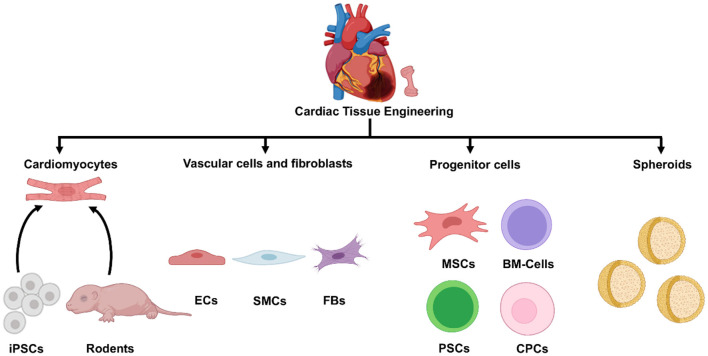
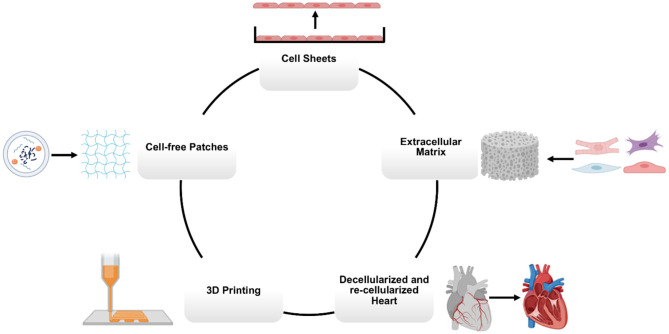
Tissue engineering combines principles of engineering and biology to generate living tissue equivalents for drug testing, disease modeling, and regenerative medicine. As techniques for reprogramming human somatic cells into induced pluripotent stem cells (iPSCs) and subsequently differentiating them into cardiomyocytes and other cardiac cells have become increasingly efficient, progress toward the development of engineered human cardiac muscle patch (hCMP) and heart tissue analogs has accelerated. A few pilot clinical studies in patients with post-infarction LV remodeling have been already approved. Conventional methods for hCMP fabrication include suspending cells within scaffolds, consisting of biocompatible materials, or growing two-dimensional sheets that can be stacked to form multilayered constructs. More recently, advanced technologies, such as micropatterning and three-dimensional bioprinting, have enabled fabrication of hCMP architectures at unprecedented spatiotemporal resolution. However, the studies working on various hCMP-based strategies for tissue repair face several major obstacles, including the inadequate scalability for clinical applications, poor integration and engraftment rate, and the lack of functional vasculature. Here, we review many of the recent advancements and key concerns in cardiac tissue engineering, focusing primarily on the production of hCMPs at clinical/industrial scales that are suitable for administration to patients with myocardial disease. The wide variety of cardiac cell types and sources that are applicable to hCMP biomanufacturing are elaborated. Finally, some of the key challenges remaining in the field and potential future directions to address these obstacles are discussed.
组织工程学融合了工程学和生物学原理,以生成用于药物测试、疾病建模和再生医学的活体组织等效物。随着将人类体细胞重编程为诱导多能干细胞(iPSCs)并随后将其分化为心肌细胞和其他心脏细胞的技术变得越来越高效,工程化人类心肌补片(hCMP)和心脏组织类似物的开发进程加快。一些针对心肌梗死后左心室重塑患者的试点临床研究已经获批。传统的hCMP制造方法包括将细胞悬浮在由生物相容性材料组成的支架内,或培养可堆叠形成多层结构的二维薄片。最近,诸如微图案化和三维生物打印等先进技术,能够以前所未有的时空分辨率制造hCMP结构。然而,致力于各种基于hCMP的组织修复策略的研究面临几个主要障碍,包括临床应用中可扩展性不足、整合和植入率低以及缺乏功能性脉管系统。在此,我们综述了心脏组织工程学的许多最新进展和关键问题,主要关注临床/工业规模的hCMP生产,这些hCMP适合用于治疗心肌病患者。阐述了适用于hCMP生物制造的多种心脏细胞类型和来源。最后,讨论了该领域仍然存在的一些关键挑战以及应对这些障碍的潜在未来方向。