Rawtaer Iris, Abdul Jabbar Khalid, Liu Xiao, Ying Thit Thit Htat, Giang Anh Thuy, Yap Philip Lin Kiat, Cheong Rachael Chin Yee, Tan Hwee Pink, Lee Pius, Wee Shiou Liang, Ng Tze Pin
Geriatric Education and Research Institute (GERI) Singapore Singapore.
Department of Psychiatry Sengkang General Hospital Singapore Singapore.
Alzheimers Dement (N Y). 2021 Mar 3;7(1):e12152. doi: 10.1002/trc2.12152. eCollection 2021.
Mild cognitive impairment (MCI) is characterized by subtle deficits that functional assessment via informant-report measures may not detect. Sensors can potentially detect deficits in everyday functioning in MCI. This study aims to establish feasibility and acceptability of using sensors in a smart home for performance-based assessments of two instrumental activities of daily living (IADLs).
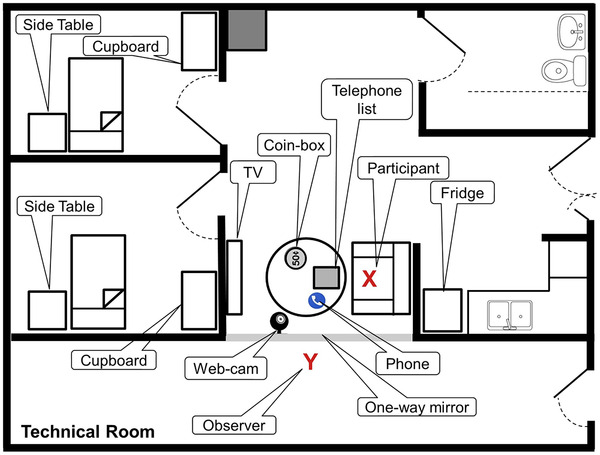
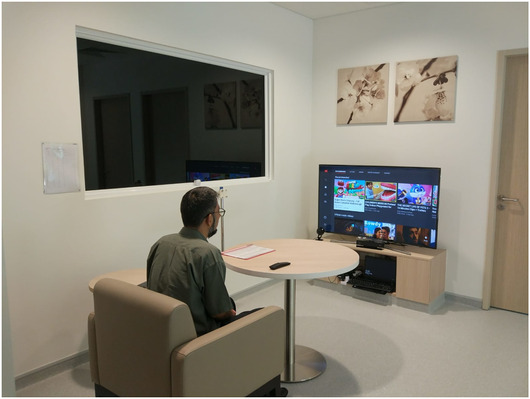
Thirty-five older adults (>65 years) performed two IADL tasks in a smart home laboratory equipped with sensors and a web camera. Participants' cognitive states were determined using published criteria including measures of global cognition and comprehensive neuropsychological test batteries. Selected subtasks of the IADL assessment were autonomously captured by the sensors. Total time taken for each task and subtask were computed. A point scoring system captured accuracy and number of attempts. Acceptability of the smart home setup was assessed.
Participants with MCI (n = 21) took longer to complete both tasks than participants with healthy cognition (HC; n = 14), with significant time differences observed only in "Cost calculation." Completion time for IADL tasks and scores correlated in the expected direction with global cognition. Over 95% of the participants found the smart home assessment acceptable and a positive experience.
We demonstrated the feasibility and acceptability of the use of unobtrusive commercially available sensors in a smart home for facilitating parts of the objective assessment of IADL in older adults. Future studies need to identify more IADLs that are suitable for semi-automated or automated assessments through the use of simple, low-cost sensors.
轻度认知障碍(MCI)的特征是存在细微缺陷,通过 informant-report 测量方法进行的功能评估可能无法检测到这些缺陷。传感器有可能检测出 MCI 患者在日常功能方面的缺陷。本研究旨在确定在智能家居中使用传感器对两项日常生活工具性活动(IADL)进行基于表现的评估的可行性和可接受性。
35 名 65 岁以上的老年人在配备传感器和网络摄像头的智能家居实验室中完成两项 IADL 任务。使用包括整体认知测量和综合神经心理测试电池在内的已发表标准来确定参与者的认知状态。IADL 评估中选定的子任务由传感器自动捕获。计算每个任务和子任务所花费的总时间。一个评分系统记录准确性和尝试次数。评估智能家居设置的可接受性。
与认知健康(HC)的参与者(n = 14)相比,MCI 患者(n = 21)完成两项任务的时间更长,仅在“成本计算”方面观察到显著的时间差异。IADL 任务的完成时间和得分与整体认知在预期方向上相关。超过 95%的参与者认为智能家居评估是可接受的,并且是一次积极的体验。
我们证明了在智能家居中使用不显眼的商用传感器来促进对老年人 IADL 进行部分客观评估的可行性和可接受性。未来的研究需要通过使用简单、低成本的传感器来确定更多适合半自动或自动评估的 IADL。