Sokolova Dimitra, Childs Thomas, Hong Soyon
UK Dementia Research Institute, Institute of Neurology, University College London, Gower Street, London WC1E 6BT, UK.
Fac Rev. 2021 Feb 24;10:19. doi: 10.12703/r/10-19. eCollection 2021.
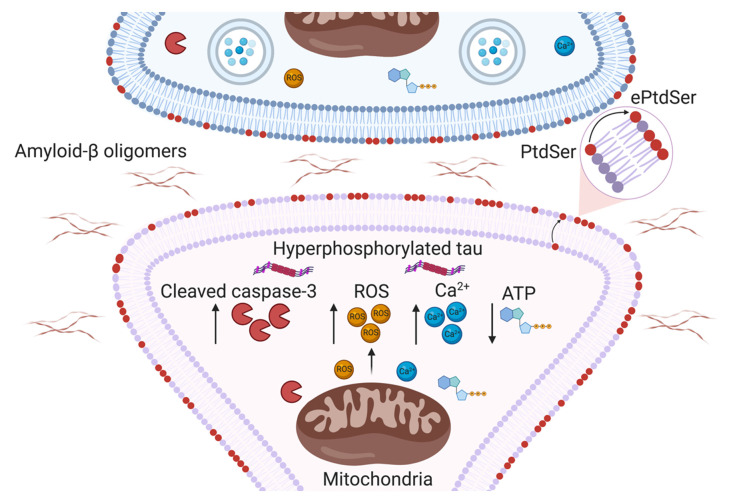
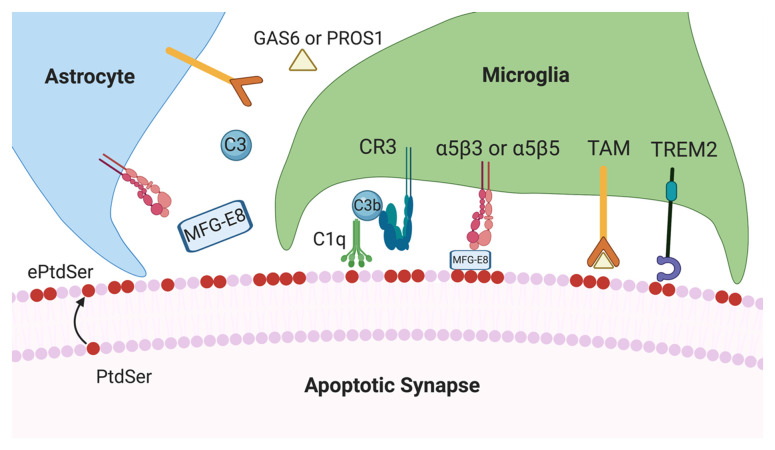
The innate immune system plays an integral role in the brain. Synaptic pruning, a fundamental process in developmental circuit refinement, is partially mediated by neuroimmune signalling at the synapse. In particular, microglia, the major tissue-resident macrophages of the brain, and the classical complement cascade, an innate immune pathway that aids in the clearance of unwanted material, have been implicated in mediating synapse elimination. Emerging data suggest that improper signalling of the innate immune pathway at the synapse leads to pathological synapse loss in age-related neurodegenerative diseases, including Alzheimer's disease. Now the key questions are whether synapses are targeted by complement and, if so, which synapses are vulnerable to elimination. Here, we review recent work implicating C1q, the initiator of the classical complement cascade, and surrounding glia as mediators of synapse loss. We examine how synapses could undergo apoptosis-like pathways in the Alzheimer brain, which may lead to the externalisation of phosphatidylserine on synapses. Finally, we discuss potential roles for microglia and astrocytes in this 'synaptic apoptosis'. Critical insight into neuroimmune regulatory pathways on synapses will be key to developing effective targets against pathological synapse loss in dementia.
先天性免疫系统在大脑中发挥着不可或缺的作用。突触修剪是发育过程中神经回路精细化的一个基本过程,部分由突触处的神经免疫信号介导。特别是,小胶质细胞是大脑中主要的组织驻留巨噬细胞,经典补体级联反应是一种有助于清除不需要物质的先天性免疫途径,它们都与介导突触消除有关。新出现的数据表明,突触处先天性免疫途径的信号传导异常会导致包括阿尔茨海默病在内的与年龄相关的神经退行性疾病中病理性突触丢失。现在关键的问题是补体是否靶向突触,如果是,哪些突触容易被消除。在这里,我们回顾了最近的研究工作,这些研究表明经典补体级联反应的启动子C1q以及周围的神经胶质细胞是突触丢失的介导因素。我们研究了突触在阿尔茨海默病大脑中如何经历类似凋亡的途径,这可能导致突触上磷脂酰丝氨酸的外化。最后,我们讨论了小胶质细胞和星形胶质细胞在这种“突触凋亡”中的潜在作用。对突触上神经免疫调节途径的关键洞察将是开发针对痴呆症中病理性突触丢失的有效靶点的关键。