Dannehl Dennis, Schwend Thomas, Veit Daniel, Schmidt Uwe
Division Biosystems Engineering, Faculty of Life Sciences, Albrecht Daniel Thaer - Institute of Agricultural and Horticultural Sciences, Humboldt-Universität zu Berlin, Berlin, Germany.
BLV Licht-und Vakuumtechnik GmbH, Steinhöring, Germany.
Front Plant Sci. 2021 Feb 26;12:611236. doi: 10.3389/fpls.2021.611236. eCollection 2021.
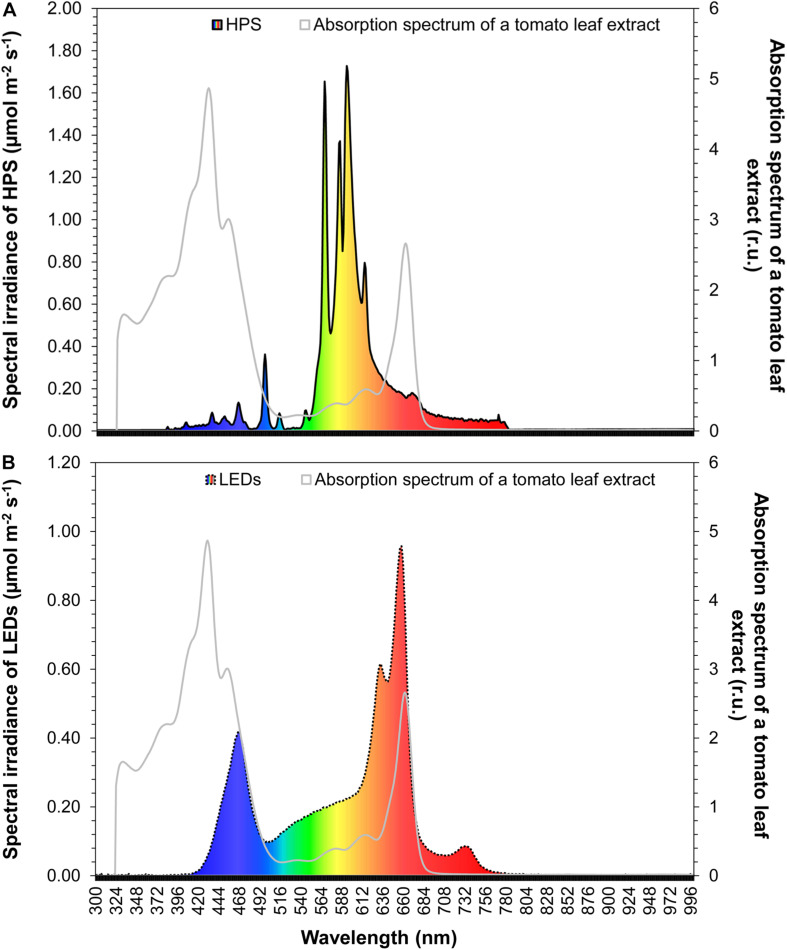
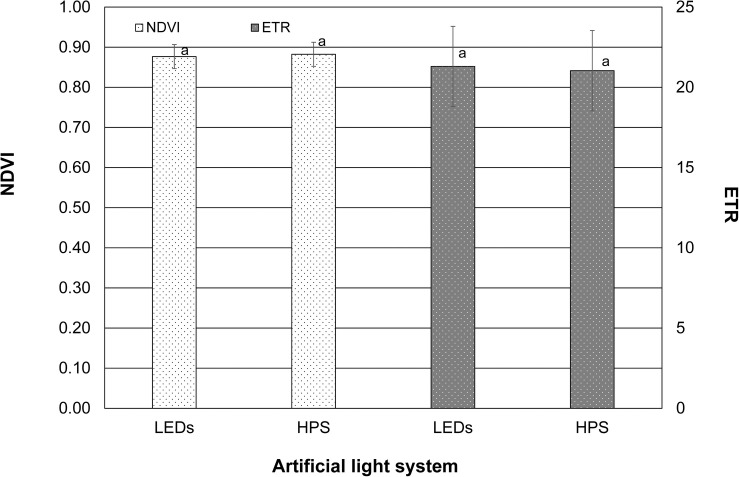
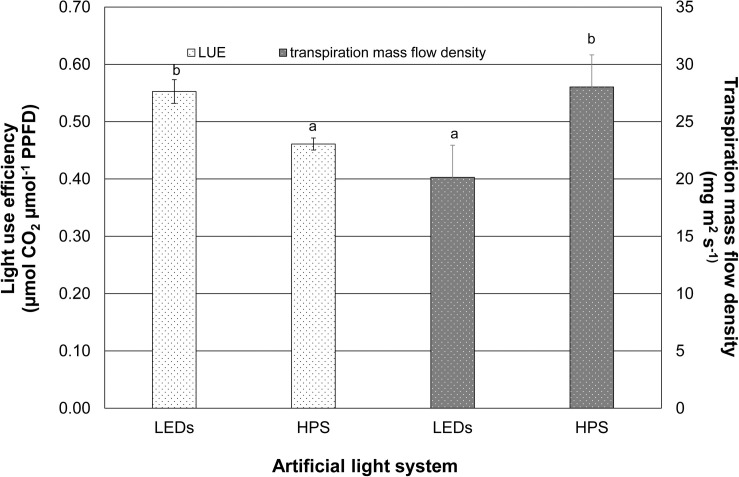
Light emitting diodes (LEDs) are an energy efficient alternative to high-pressure sodium (HPS) lighting in tomato cultivation. In the past years, we have learned a lot about the effect of red and blue LEDs on plant growth and yield of tomatoes. From previous studies, we know that plants absorb and utilize most of the visible spectrum for photosynthesis. This part of the spectrum is referred to as the photosynthetically active radiation (PAR). We designed a LED fixture with an emission spectrum that partially matches the range of 400 to 700 nm and thus partially covers the absorption spectrum of photosynthetic pigments in tomato leaves. Tomato plants grown under this fixture were significantly taller and produced a higher fruit yield (14%) than plants grown under HPS lighting. There was no difference in the number of leaves and trusses, leaf area, stem diameter, the electron transport rate, and the normalized difference vegetation index. Lycopene and lutein contents in tomatoes were 18% and 142% higher when they were exposed to the LED fixture. However, the ß-carotene content was not different between the light treatments. Transpiration rate under LED was significantly lower (40%), while the light use efficiency (LUE) was significantly higher (19%) compared to HPS lighting. These data show that an LED fixture with an emission spectrum covering the entire PAR range can improve LUE, yields, and content of secondary metabolites in tomatoes compared to HPS lighting.
发光二极管(LED)是番茄种植中高压钠灯(HPS)照明的一种节能替代品。在过去几年里,我们对红色和蓝色LED对番茄植株生长和产量的影响有了很多了解。从之前的研究中,我们知道植物吸收并利用大部分可见光谱进行光合作用。光谱的这一部分被称为光合有效辐射(PAR)。我们设计了一种发光光谱部分匹配400至700纳米范围的LED灯具,从而部分覆盖了番茄叶片光合色素的吸收光谱。在这种灯具下生长的番茄植株比在HPS照明下生长的植株显著更高,果实产量也更高(高出14%)。叶片和花穗数量、叶面积、茎直径、电子传递速率以及归一化植被指数没有差异。当番茄暴露在LED灯具下时,番茄红素和叶黄素含量分别高出18%和142%。然而,不同光照处理下β-胡萝卜素含量没有差异。与HPS照明相比,LED下的蒸腾速率显著更低(低40%),而光能利用效率(LUE)显著更高(高19%)。这些数据表明,与HPS照明相比,一种发射光谱覆盖整个PAR范围的LED灯具可以提高番茄的光能利用效率、产量以及次生代谢产物的含量。