Frimpong Felix, Windt Carel W, van Dusschoten Dagmar, Naz Ali A, Frei Michael, Fiorani Fabio
Institute of Bio- and Geosciences, IBG-2: Plant Sciences, Forschungszentrum Jülich GmbH, Jülich, Germany.
CSIR-Crops Research Institute, Kumasi, Ghana.
Front Plant Sci. 2021 Feb 25;12:633448. doi: 10.3389/fpls.2021.633448. eCollection 2021.
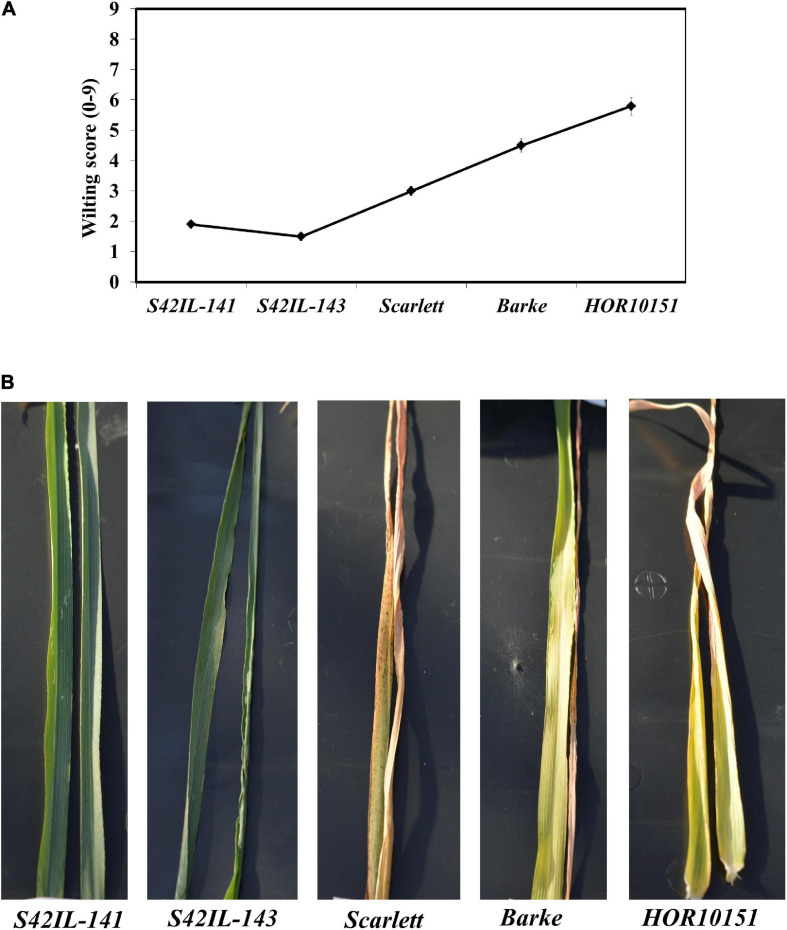
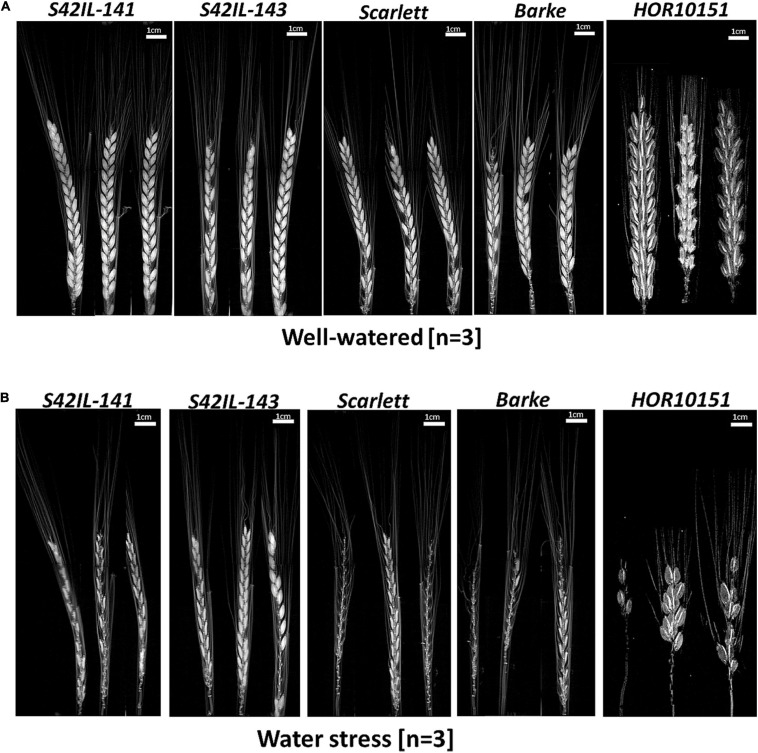
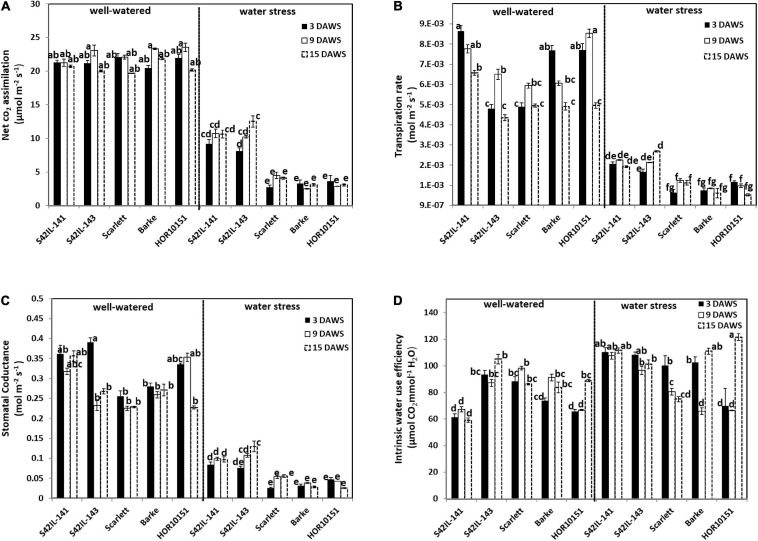
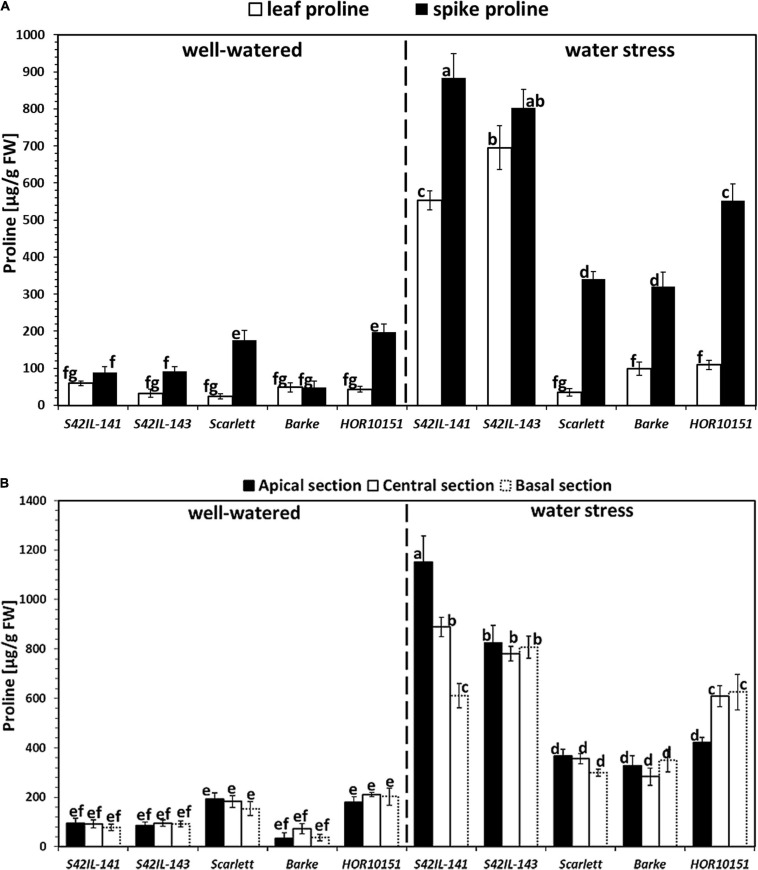
Water stress (WS) during spike development strongly affects final grain yield and grain quality in cereals. Proline, an osmoprotectant amino-acid, may contribute to alleviating the effects of cell and tissue dehydration. We studied five spring barley genotypes contrasting in their drought response, including two introgression lines, and , harboring a allele originating from the wild barley accession . We tested the hypothesis that barley genotypes harboring a wild allele at locus are comparatively more drought-tolerant at the reproductive stage by inducing proline accumulation in their immature spikes. At the booting stage, we subjected plants to well-watered and WS treatments until physiological maturity. Several morpho-physiological traits had significant genotype by treatment interaction and reduction under WS. Varying levels of genotypic proline accumulation and differences in WS tolerance were observed. Spike proline accumulation was higher than leaf proline accumulation for all genotypes under WS. Also, introgression lines carrying a wild allele at locus had a markedly higher spike and leaf proline content compared with the other genotypes. These introgression lines showed milder drought symptoms compared with elite genotypes, remained photosynthetically active under WS, and maintained their intrinsic water use efficiency. These combined responses contributed to the achievement of higher final seed productivity. Magnetic resonance imaging (MRI) of whole spikes at the soft dough stage showed an increase in seed abortion among the elite genotypes compared with the introgression lines 15 days after WS treatment. Our results suggest that proline accumulation at the reproductive stage contributes to the maintenance of grain formation under water shortage.
穗发育期间的水分胁迫(WS)对谷类作物的最终籽粒产量和籽粒品质有强烈影响。脯氨酸是一种渗透保护剂氨基酸,可能有助于减轻细胞和组织脱水的影响。我们研究了五种在干旱响应方面存在差异的春大麦基因型,包括两个渗入系,即 和 ,它们携带源自野生大麦种质 的 等位基因。我们检验了这样一个假设:在 位点携带野生等位基因的大麦基因型在生殖阶段通过在未成熟穗中诱导脯氨酸积累而相对更耐旱。在孕穗期,我们对植株进行充分浇水和水分胁迫处理,直至生理成熟。几种形态生理性状在处理间存在显著的基因型互作,并且在水分胁迫下有所降低。观察到不同水平的基因型脯氨酸积累以及水分胁迫耐受性的差异。在水分胁迫下,所有基因型的穗脯氨酸积累均高于叶脯氨酸积累。此外,在 位点携带野生等位基因的渗入系与其他基因型相比,穗和叶中的脯氨酸含量明显更高。与优良基因型相比,这些渗入系表现出较轻的干旱症状,在水分胁迫下保持光合活性,并维持其内在水分利用效率。这些综合反应有助于实现更高的最终种子生产力。在面团期对整个穗进行磁共振成像(MRI)显示,与渗入系相比,优良基因型在水分胁迫处理15天后种子败育增加。我们的结果表明,生殖阶段脯氨酸的积累有助于在缺水条件下维持籽粒形成。