Division of Sleep Medicine, Department of Medicine, University of Pennsylvania, Philadelphia, PA 19104, USA.
The Jackson Laboratory, Bar Harbor, ME 04609, USA.
G3 (Bethesda). 2021 May 7;11(5). doi: 10.1093/g3journal/jkab079.
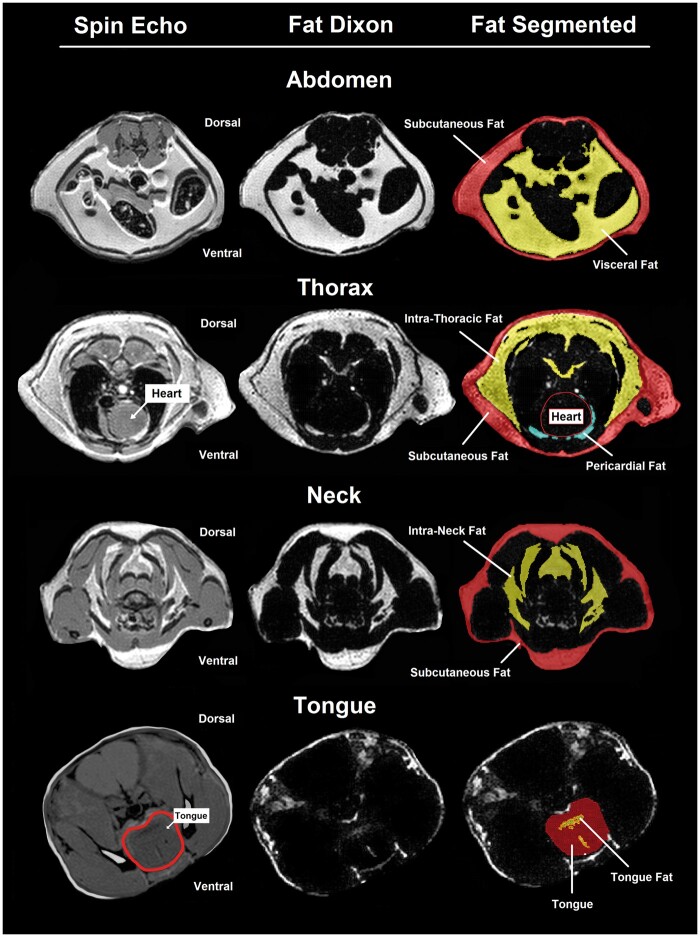
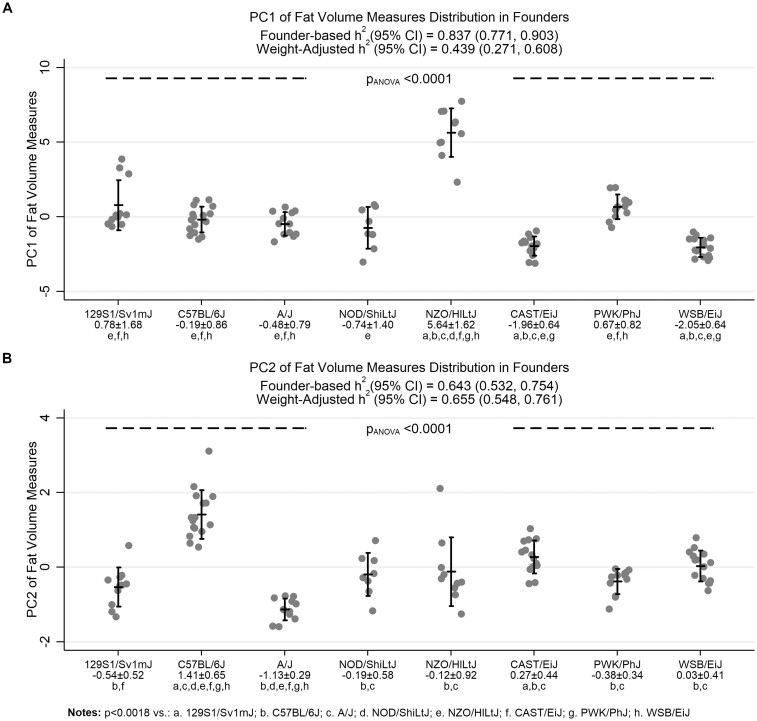
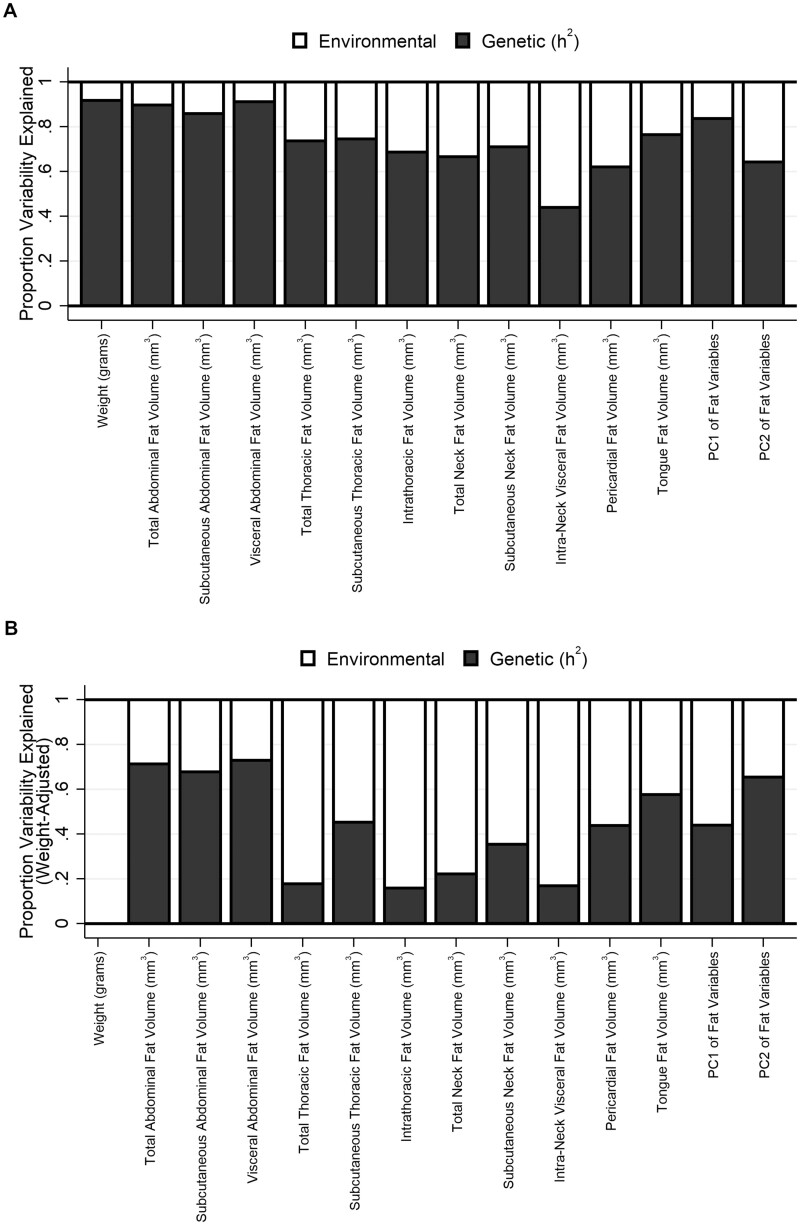
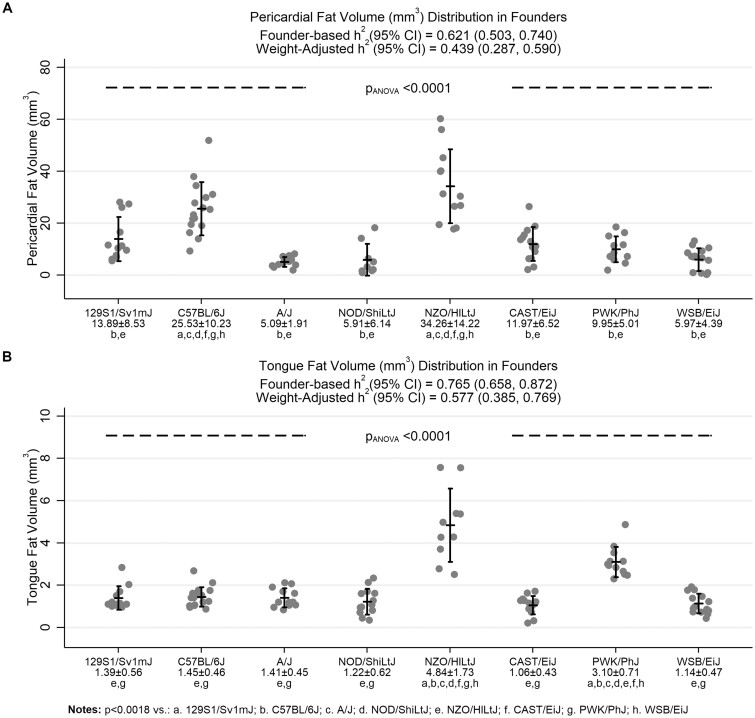
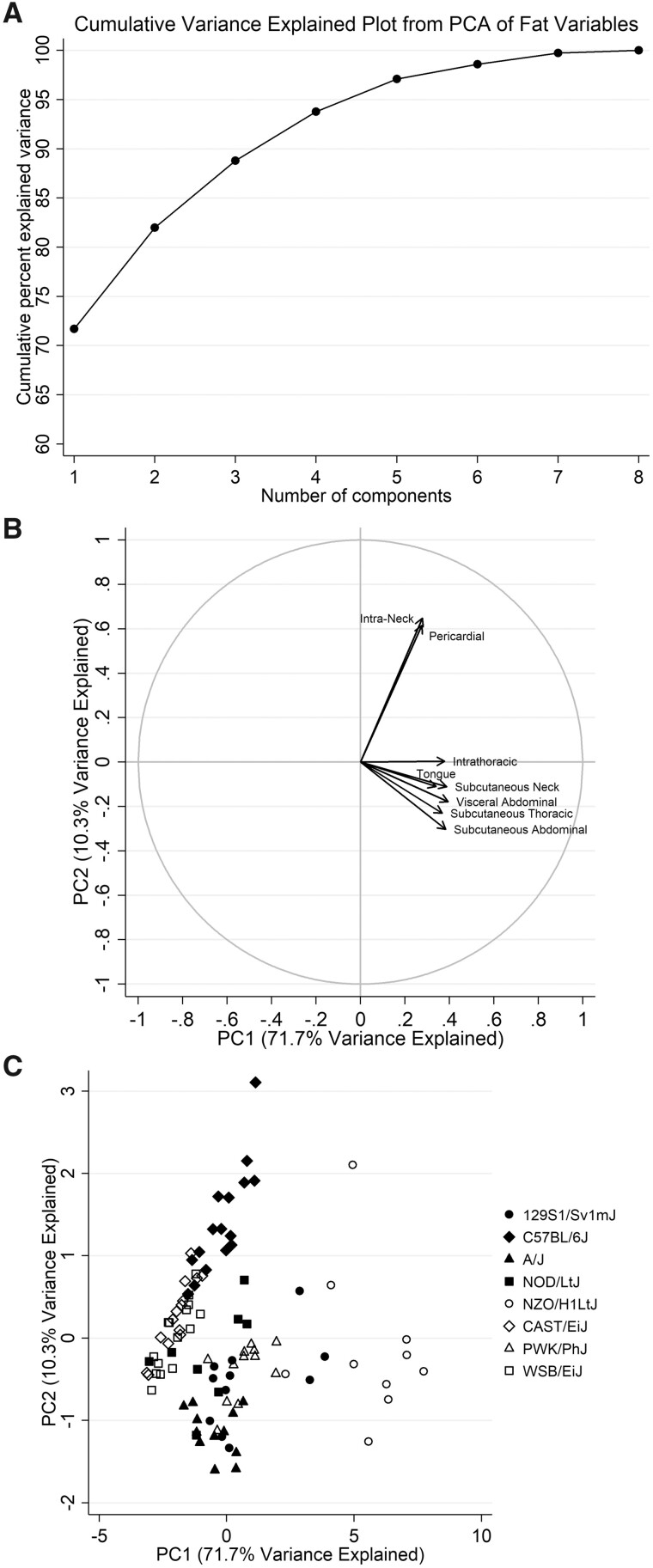
Specific fat distributions are risk factors for complex diseases, including coronary heart disease and obstructive sleep apnea. To demonstrate the utility of high-diversity mouse models for elucidating genetic associations, we describe the phenotyping and heritability of fat distributions within the five classical inbred and three wild-derived founder mouse strains of the Collaborative Cross and Diversity Outbred mice. Measurements of subcutaneous and internal fat volumes in the abdomen, thorax and neck, and fat volumes in the tongue and pericardium were obtained using magnetic resonance imaging in male mice from the A/J (n = 12), C57BL/6J (n = 17), 129S1/SvlmJ (n = 12), NOD/LtJ (n = 14), NZO/HILtJ (n = 12), CAST/EiJ (n = 14), PWK/PhJ (n = 12), and WSB/EiJ (n = 15) strains. Phenotypes were compared across strains using analysis of variance and heritability estimated as the proportion of phenotypic variability attributable to strain. Heritability ranged from 44 to 91% across traits, including >70% heritability of tongue fat. A majority of heritability estimates remained significant controlling for body weight, suggesting genetic influences independent of general obesity. Principal components analysis supports genetic influences on overall obesity and specific to increased pericardial and intra-neck fat. Thus, among the founder strains of the Collaborative Cross and Diversity Outbred mice, we observed significant heritability of subcutaneous and internal fat volumes in the neck, thorax and abdomen, pericardial fat volume and tongue fat volume, consistent with genetic architecture playing an important role in explaining trait variability. Findings pave the way for studies utilizing high-diversity mouse models to identify genes affecting fat distributions and, in turn, influencing risk for associated complex disorders.
特定的脂肪分布是包括冠心病和阻塞性睡眠呼吸暂停在内的复杂疾病的危险因素。为了展示多样性小鼠模型在阐明遗传相关性方面的应用,我们描述了五个经典近交系和三个野生起源的奠基者小鼠品系的表型和脂肪分布的遗传力,这些品系是合作交叉和多样性杂交小鼠的一部分。使用磁共振成像(MRI)在雄性小鼠中测量腹部、胸部和颈部的皮下和内部脂肪量以及舌部和心包脂肪量,使用磁共振成像(MRI)在雄性小鼠中测量腹部、胸部和颈部的皮下和内部脂肪量以及舌部和心包脂肪量。在 A/J(n=12)、C57BL/6J(n=17)、129S1/SvlmJ(n=12)、NOD/LtJ(n=14)、NZO/HILtJ(n=12)、CAST/EiJ(n=14)、PWK/PhJ(n=12)和 WSB/EiJ(n=15)品系的雄性小鼠中获得了数据。使用方差分析比较了各品系之间的表型,遗传力估计为表型变异性归因于品系的比例。各性状的遗传力范围为 44%至 91%,包括舌部脂肪的遗传力超过 70%。在控制体重后,大多数遗传力估计仍然显著,表明遗传因素独立于一般肥胖。主成分分析支持遗传因素对整体肥胖以及心包和颈部内部脂肪的影响。因此,在合作交叉和多样性杂交小鼠的奠基者品系中,我们观察到颈部、胸部和腹部、心包脂肪量和舌部脂肪量的皮下和内部脂肪量具有显著的遗传力,这与遗传结构在解释性状变异性方面起着重要作用一致。这些发现为利用多样性小鼠模型识别影响脂肪分布的基因铺平了道路,进而影响相关复杂疾病的风险。