Fissel John A, Farah Mohamed H
Department of Neurology, Johns Hopkins University School of Medicine, The John G. Rangos Sr. Building, Room 239, 855 N. Wolfe Street, Baltimore, MD, 21205, USA.
J Neuroinflammation. 2021 Mar 15;18(1):71. doi: 10.1186/s12974-021-02121-2.
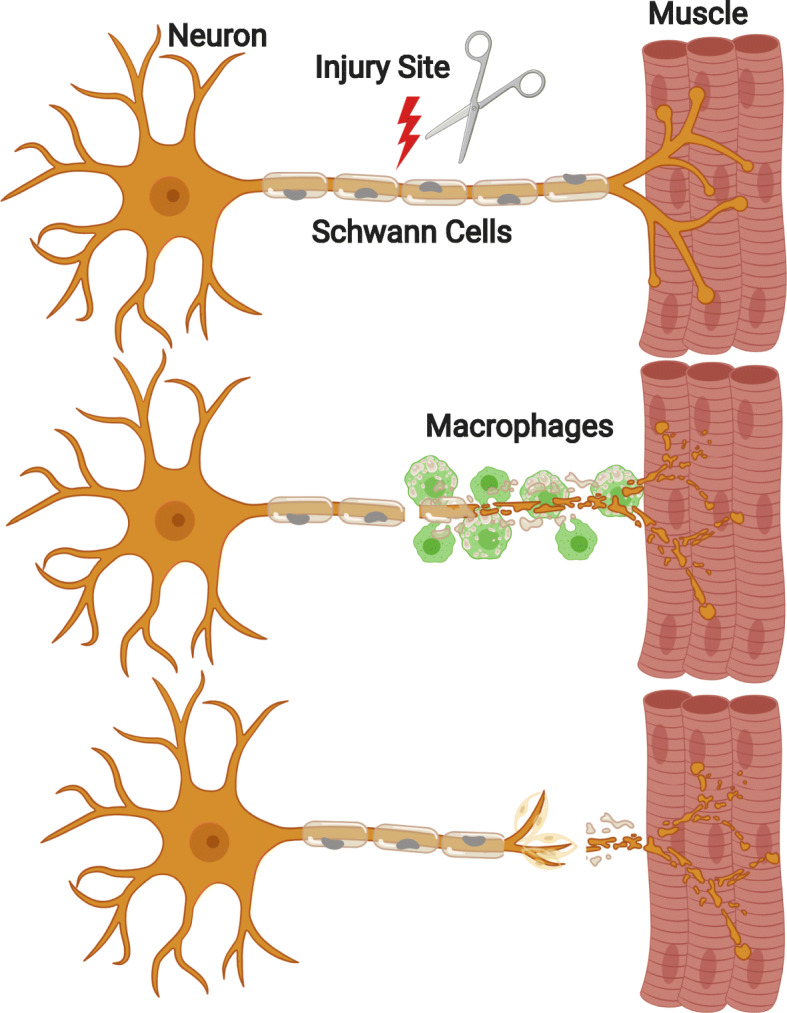
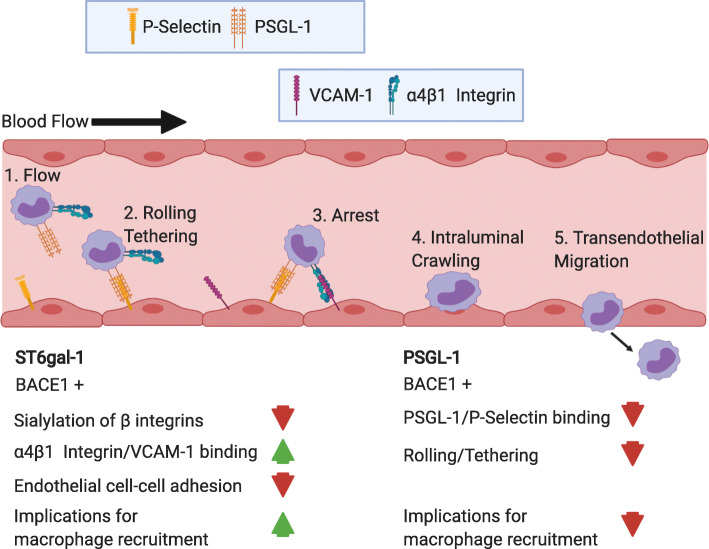
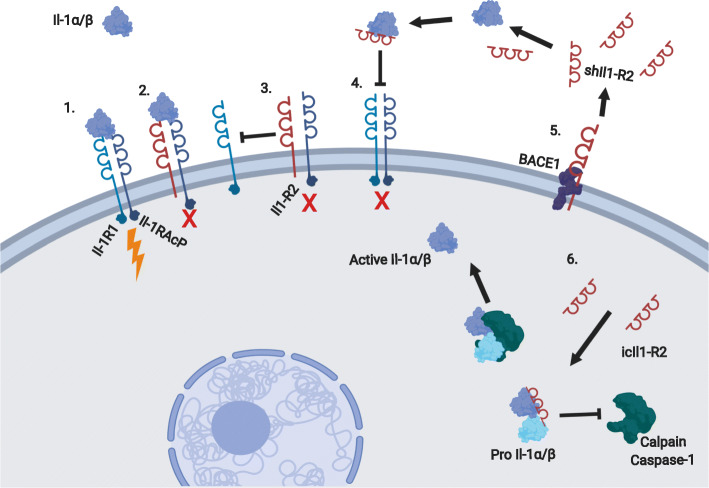
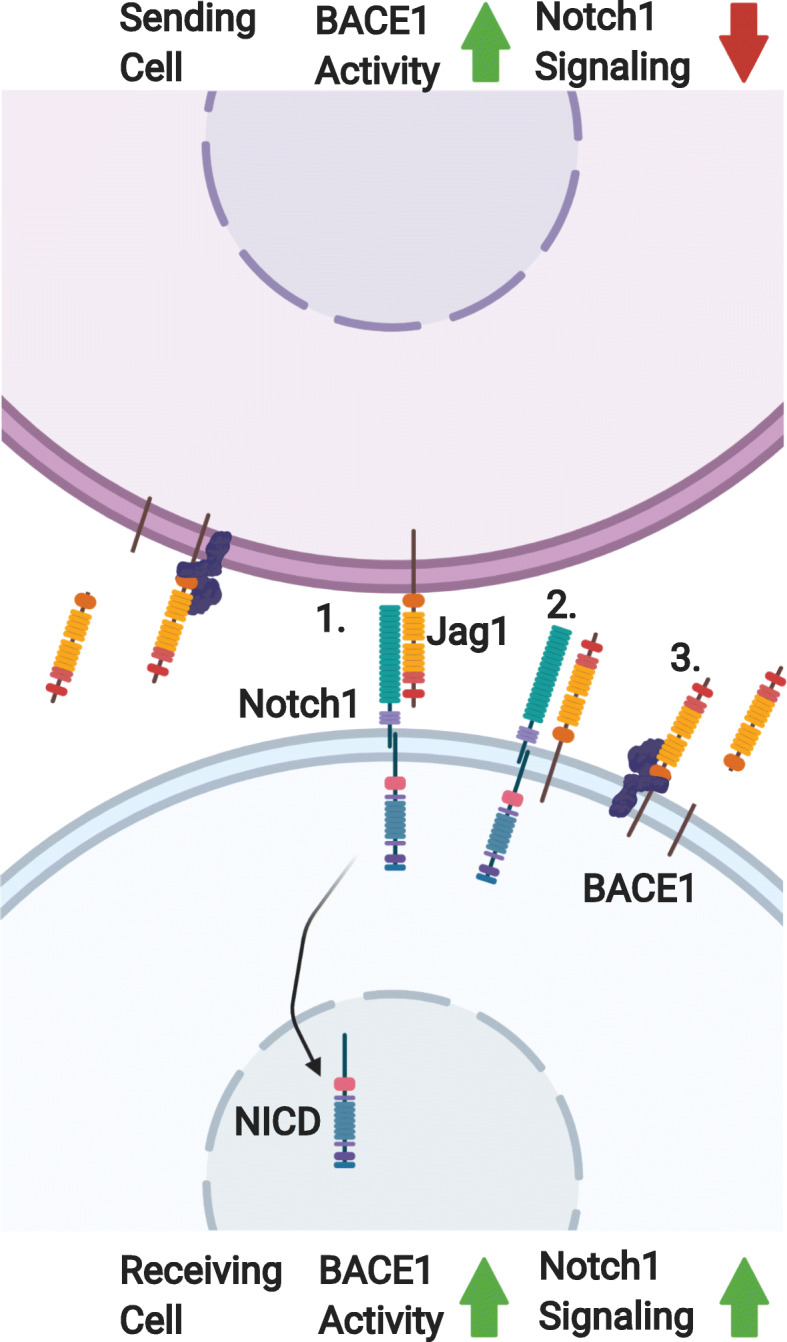
Following peripheral nerve injury, multiple cell types, including axons, Schwann cells, and macrophages, coordinate to promote nerve regeneration. However, this capacity for repair is limited, particularly in older populations, and current treatments are insufficient. A critical component of the regeneration response is the network of cell-to-cell signaling in the injured nerve microenvironment. Sheddases are expressed in the peripheral nerve and play a role in the regulation if this cell-to-cell signaling through cleavage of transmembrane proteins, enabling the regulation of multiple pathways through cis- and trans-cellular regulatory mechanisms. Enhanced axonal regeneration has been observed in mice with deletion of the sheddase beta-secretase (BACE1), a transmembrane aspartyl protease that has been studied in the context of Alzheimer's disease. BACE1 knockout (KO) mice display enhanced macrophage recruitment and activity following nerve injury, although it is unclear whether this plays a role in driving the enhanced axonal regeneration. Further, it is unknown by what mechanism(s) BACE1 increases macrophage recruitment and activity. BACE1 has many substrates, several of which are known to have immunomodulatory activity. This review will discuss current knowledge of the role of BACE1 and other sheddases in peripheral nerve regeneration and outline known immunomodulatory BACE1 substrates and what potential roles they could play in peripheral nerve regeneration. Currently, the literature suggests that BACE1 and substrates that are expressed by neurons and Schwann cells are likely to be more important for this process than those expressed by macrophages. More broadly, BACE1 may play a role as an effector of immunomodulation beyond the peripheral nerve.
外周神经损伤后,多种细胞类型,包括轴突、施万细胞和巨噬细胞,协同促进神经再生。然而,这种修复能力是有限的,尤其是在老年人群中,而且目前的治疗方法并不充分。再生反应的一个关键组成部分是受损神经微环境中的细胞间信号网络。去整合素金属蛋白酶在周围神经中表达,并通过切割跨膜蛋白在调节这种细胞间信号中发挥作用,从而能够通过顺式和反式细胞调节机制调节多种途径。在缺失去整合素金属蛋白酶β-分泌酶(BACE1)的小鼠中观察到轴突再生增强,BACE1是一种跨膜天冬氨酸蛋白酶,已在阿尔茨海默病的背景下进行了研究。BACE1基因敲除(KO)小鼠在神经损伤后显示出巨噬细胞募集和活性增强,尽管尚不清楚这是否在驱动轴突再生增强中发挥作用。此外,BACE1通过何种机制增加巨噬细胞募集和活性尚不清楚。BACE1有许多底物,其中一些已知具有免疫调节活性。本综述将讨论目前关于BACE1和其他去整合素金属蛋白酶在周围神经再生中的作用的知识,并概述已知的免疫调节性BACE1底物以及它们在周围神经再生中可能发挥的潜在作用。目前,文献表明,神经元和施万细胞表达的BACE1和底物可能比巨噬细胞表达的底物在这个过程中更重要。更广泛地说,BACE1可能在周围神经之外作为免疫调节的效应器发挥作用。