Department of Pathology, University of British Columbia, Vancouver, BC, Canada.
Michael Cuccione Childhood Cancer Research Program, BC Children's Hospital Research Institute, 950 West 28th Avenue, Vancouver, BC, V5Z 4H4, Canada.
J Exp Clin Cancer Res. 2021 Mar 15;40(1):96. doi: 10.1186/s13046-021-01835-8.
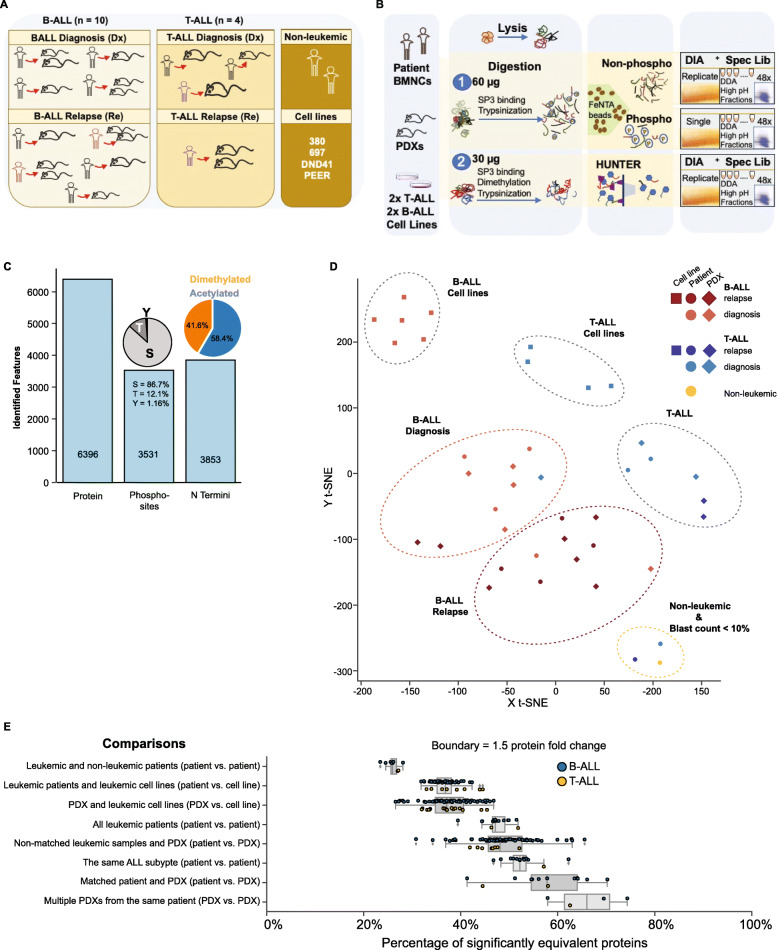
Murine xenografts of pediatric leukemia accurately recapitulate genomic aberrations. How this translates to the functional capacity of cells remains unclear. Here, we studied global protein abundance, phosphorylation, and protein maturation by proteolytic processing in 11 pediatric B- and T- cell ALL patients and 19 corresponding xenografts.
Xenograft models were generated for each pediatric patient leukemia. Mass spectrometry-based methods were used to investigate global protein abundance, protein phosphorylation, and limited proteolysis in paired patient and xenografted pediatric acute B- and T- cell lymphocytic leukemia, as well as in pediatric leukemia cell lines. Targeted next-generation sequencing was utilized to examine genetic abnormalities in patients and in corresponding xenografts. Bioinformatic and statistical analysis were performed to identify functional mechanisms associated with proteins and protein post-translational modifications.
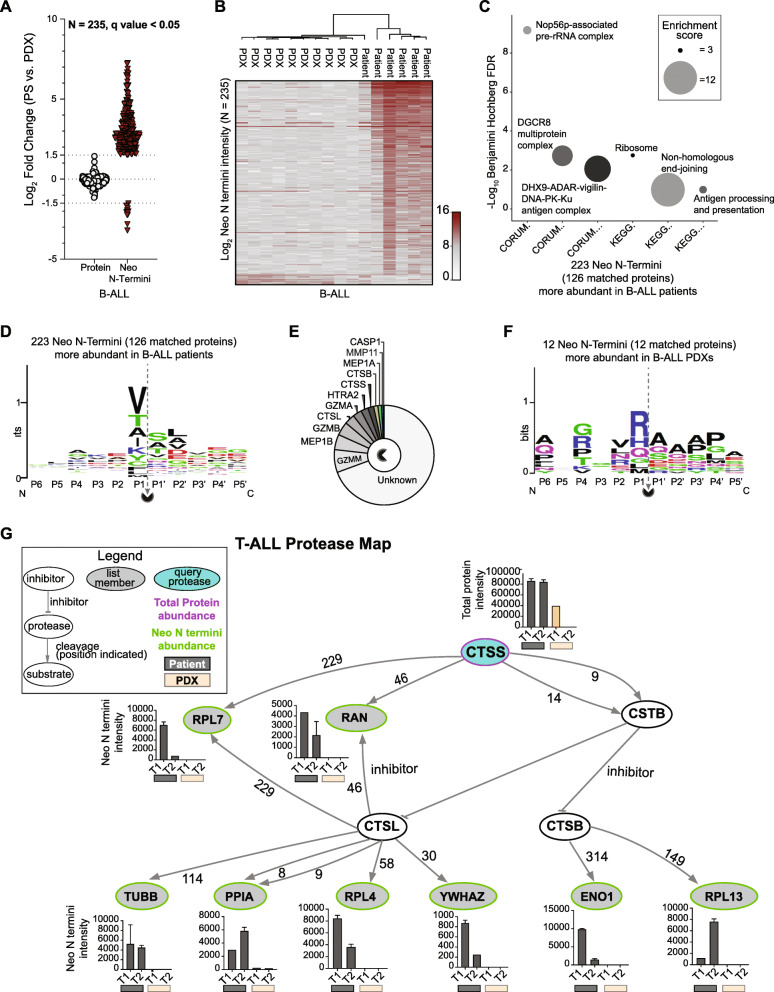
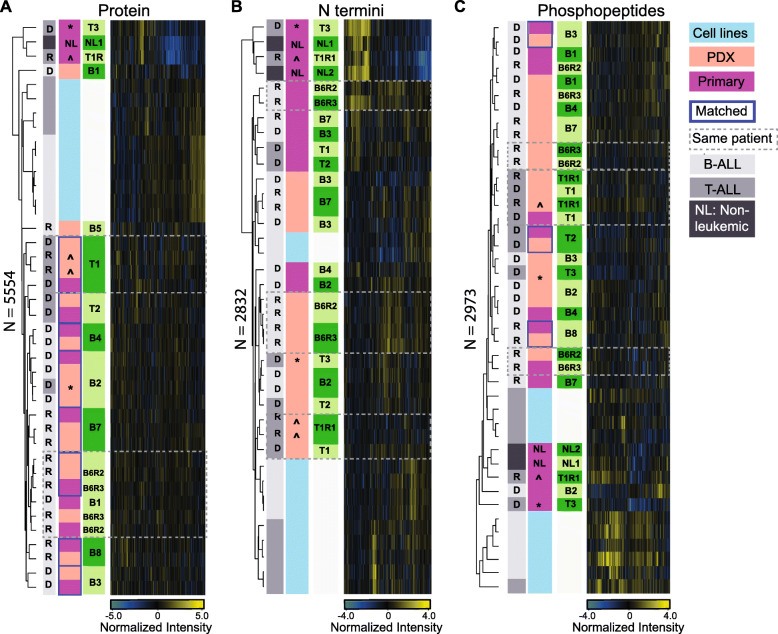
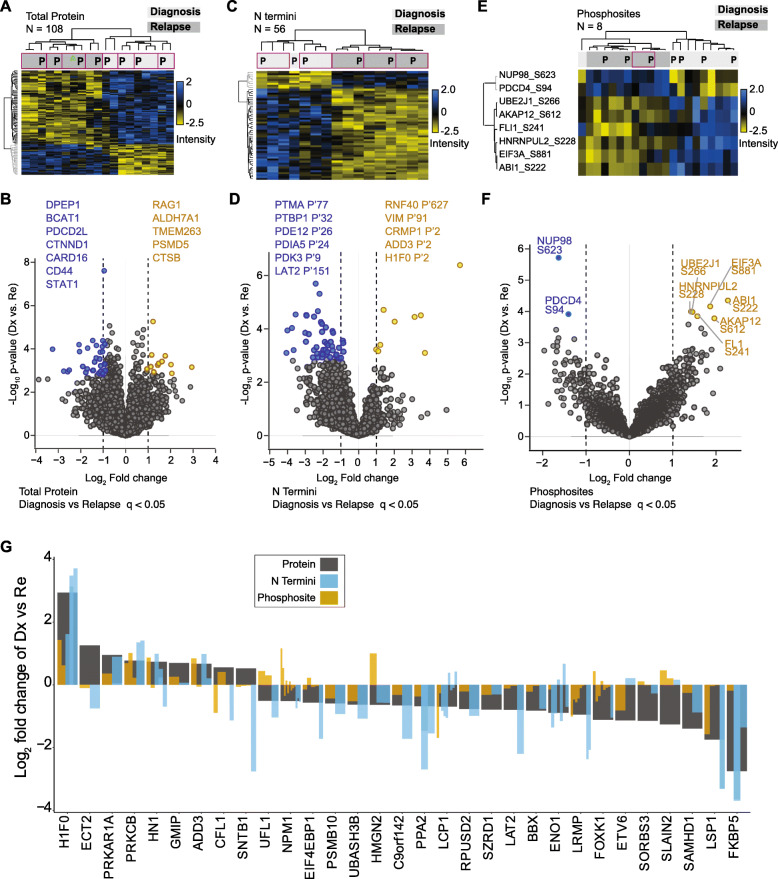
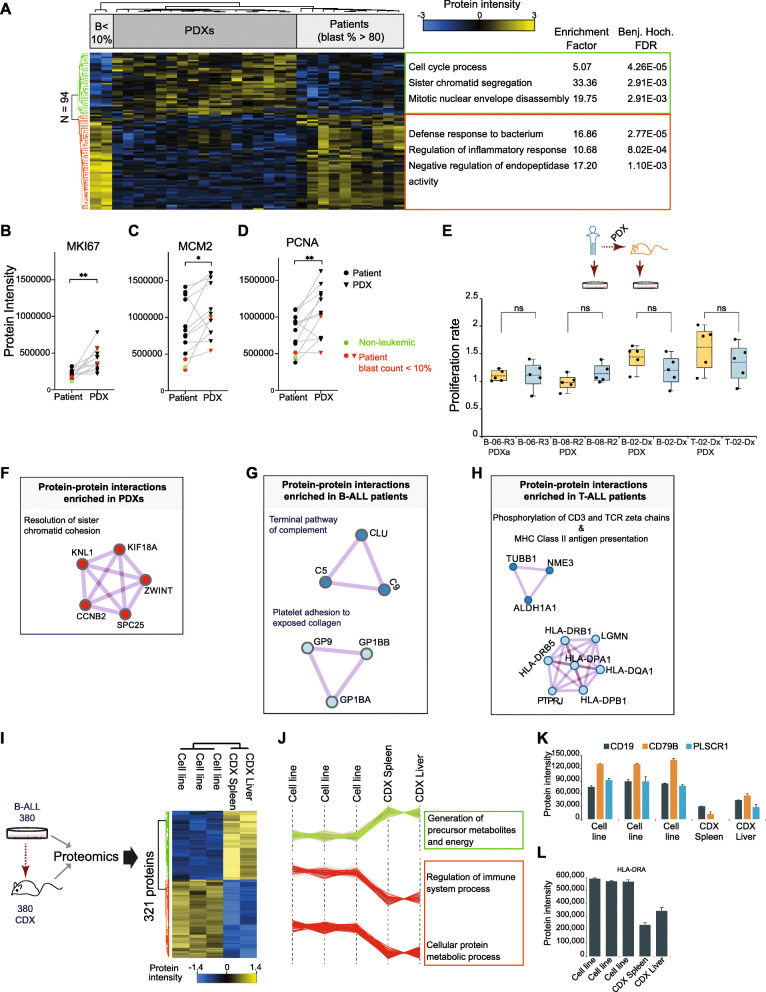
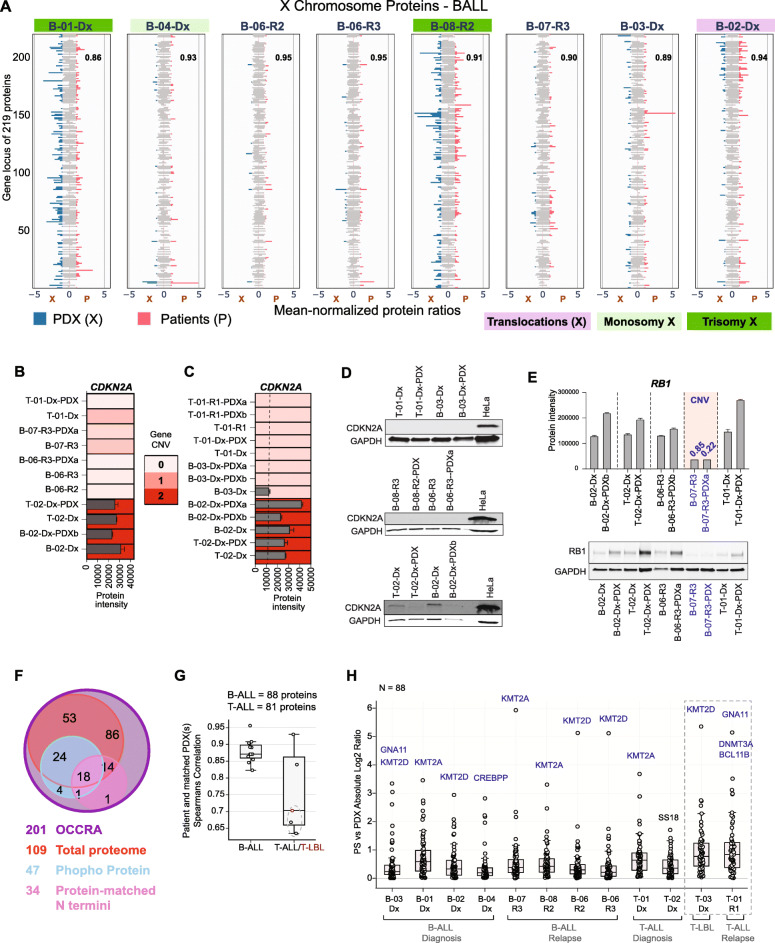
Overall, we found xenograft proteomes to be most equivalent with their patient of origin. Protein level differences that stratified disease subtypes at diagnostic and relapse stages were largely recapitulated in xenografts. As expected, PDXs lacked multiple human leukocyte antigens and complement proteins. We found increased expression of cell cycle proteins indicating a high proliferative capacity of xenografted cells. Structural genomic changes and mutations were reflected at the protein level in patients. In contrast, the post-translational modification landscape was shaped by leukemia type and host and only to a limited degree by the patient of origin. Of 201 known pediatric oncogenic drivers and drug-targetable proteins, the KMT2 protein family showed consistently high variability between patient and corresponding xenografts. Comprehensive N terminomics revealed deregulated proteolytic processing in leukemic cells, in particular from caspase-driven cleavages found in patient cells.
Genomic and host factors shape protein and post-translational modification landscapes differently. This study highlights select areas of diverging biology while confirming murine patient-derived xenografts as a generally accurate model system.
小儿白血病的鼠异种移植物准确地重现了基因组异常。但细胞的功能能力如何变化尚不清楚。在这里,我们研究了 11 名小儿 B 细胞和 T 细胞 ALL 患者和 19 个相应的异种移植物中整体蛋白质丰度、磷酸化和蛋白水解的蛋白成熟过程。
为每个小儿患者白血病生成异种移植物模型。使用基于质谱的方法来研究配对的患者和异种移植的小儿急性 B 细胞和 T 细胞淋巴细胞白血病以及小儿白血病细胞系中的整体蛋白质丰度、蛋白质磷酸化和有限的蛋白水解。利用靶向下一代测序来检查患者和相应的异种移植物中的遗传异常。进行生物信息学和统计分析,以鉴定与蛋白质和蛋白质翻译后修饰相关的功能机制。
总体而言,我们发现异种移植物蛋白质组与其原始患者最相似。在诊断和复发阶段分层疾病亚型的蛋白质水平差异在异种移植物中得到了很大程度的重现。如预期的那样,PDX 缺乏多种人类白细胞抗原和补体蛋白。我们发现细胞周期蛋白的表达增加,表明异种移植细胞具有高增殖能力。结构基因组改变和突变在患者中在蛋白质水平上得到反映。相比之下,翻译后修饰图谱由白血病类型和宿主决定,而仅在有限程度上由原始患者决定。在 201 种已知的小儿致癌驱动因子和药物靶向蛋白中,KMT2 蛋白家族在患者和相应的异种移植物之间表现出一致的高变异性。全面的 N 端蛋白质组学揭示了白血病细胞中蛋白水解加工的失调,特别是在患者细胞中发现的半胱氨酸蛋白酶驱动的裂解。
基因组和宿主因素以不同的方式塑造蛋白质和翻译后修饰图谱。这项研究强调了生物学差异的一些领域,同时证实了鼠源性患者衍生的异种移植物作为一种普遍准确的模型系统。